Feeds:
Posts
Comments

Posts Tagged ‘life’

Whew, this week.

Today, I’m anxious because I feel like I’m behind on posting on my Keeping House series. But I may just be operating from an old set of rules.

When I first started posting 31 Days series in October years ago, things were different:

  • There was an official 31 Days community that sent out prompts and encouragement. I attended local writing group meetups where we helped each other brainstorm and come up with post ideas (also there were snacks, which may seem irrelevant to the writing process but I assure you they were absolutely essential).
  • I had a job as a night desk clerk, where I was encouraged to engage in hobbies or studies (really, they were happy with me doing anything that would keep me awake at 4:00 a.m. when the students finally went to bed) any time there was downtime. There was a lot of downtime, and I had finished my degrees by the time I took the job, so hobbies, such as blogging, were the choice.
  • I only had one book club.

Now, I am pretty much doing 31 Days on my own, which is how most writing projects go for most writers. It’s not a bad thing; it just doesn’t have the built-in drive that community work does. I also do not have much downtime at my job now, and when I do, I use it to prepare for upcoming appointments so that students can use their time to ask questions and not feel like they’re interrupting me as I type up the notes I could have prepared beforehand.

And now, I have six book clubs.

So it makes sense that I struggle to write every single day of the month. Maybe that is a hint (and by hint, I do mean clear indication) that my expectations for my series should change.

Content-wise, I’m very happy with the series so far. I am still going to have plenty of time to say everything I want to say about keeping house. I have some rough drafts about a few more topics, and I’m excited to share them in the upcoming week.

Today, I am celebrating the ability to be flexible. To pivot when I need to. To honor my time and energy and not let former expectations that no longer make sense or serve my purpose sully my perspective on what I’ve accomplished. Flexibility is important for writing; it’s also important for keeping house.

Five things I’ve learned about keeping house as I’ve gotten older (and, ideally, wiser):

  • No one judges my home more than I do. When I have people over, they are just happy to see me. They like what I feed them, and they delight in my company. I don’t have to earn their approval; I already have it.
  • Having said that, it doesn’t matter if other people think my home is too messy. It does, however, matter what I think. My opinion of my home matters the very most. I am the person it most affects, and keeping house is first and foremost a kindness to myself.
  • A brush with mortality when I had cancer opened my eyes to how much stuff I accumulate but don’t really want or need. And if I don’t even want it, it’s likely that whoever is tasked with dealing with it when I’m gone won’t want it either. It’s never too early to start death cleaning.
  • My stimulus response is my guiding star. My ideal home is one that is stimulating enough to be interesting and cozy but neat enough that my brain isn’t constantly overwhelmed. In related news, my office is my next major project. It’s technically functional, but there are so many distractions. I think I’ll be calmer and better at my job when it is more organized.
  • I really am happiest when I’m surrounded by books, even if their arrangement is a bit chaotic.

I hope that you remember to be flexible and gracious with yourself this weekend (and always, really). You deserve your highest consideration.
I’m writing about keeping house for 31 days.

Read Full Post »

Part of why I want my house to be cozy is to make it more welcoming to guests. I used to really love having people over, but I’ve gotten more particular about doing so in recent years. I don’t know that I’ll ever be interested in throwing large parties again, but occasionally I do have people over, or sometimes (rarely, but still), people just pop by.

First – no, thank you, on the just popping by. I’m gonna need you to text first and ask if and when I’m free for you to do so. I’m not a fan of surprises in general, and I want my home to be, as often as possible, the place where only things I enjoy happen. An unexpected visit is not one of those things.

However, as much as I do not want people to show up unannounced at my front door, I’d like the state of my home not to be the reason I hate it. There are so many better reasons to hate such a thing (it’s assuming, it’s inconsiderate, it’s disruptive, etc.). I’d like to go with one of those. I keep house just in case the unmitigated disaster of a surprise guest occurs, so I can at least minimize one of the things that make it terrible.

Second, there is the matter of my upbringing. I was the messy child who could never quite meet the standard set by my mom on how my space should look. I’ve healed enough in this area to say that the expectations I grew up with for how a home should look are the least important reasons for my wanting to keep house, but I would be lying if I claimed they weren’t still a part of my motivation. I’m still working through my desire to meet the expectations of my mother-of-yore (the current version of her does not give a damn, actually, which is upsetting in its own way. It’s just so unlike her. But I digress.). According to the voice in my head that sounds a lot like Joy Terry in her 40s and 50s, there is a way your home should look, especially if you are expecting people over, and I occasionally find myself measuring my home with that yardstick.

Really, though, I prefer a much more relaxed standard. I find that guests feel just as comfortable if my house looks lived in as they would if it looked magazine-ready (Pinterest-ready? Or is that outdated, too?). More to the point, I find that my guests enjoy my company more when I’m not exhausted and stressed from frantically cleaning.

[Aside: This is not a judgment on people who enjoy keeping a more pristine home. I probably love coming to your house. It’s so pretty, and you’re doing a great job.]

Keeping my home generally guest-ready allows me to focus on the aspects of hosting I enjoy more. For example, I love a good menu. I love planning meals and making grocery lists and finding creative ways to work within food budgets and arranging/decorating the table, etc. I do not, however, love having to include in that calculation all the preliminary cleaning I would have to do to make the meal happen.

One of my biggest goals for getting better at keeping house is for it to take me an hour or less to prepare my home for guests. No matter how much notice I have, I want stay ready to be a gracious host.

I’m writing about keeping house during October.

Read Full Post »

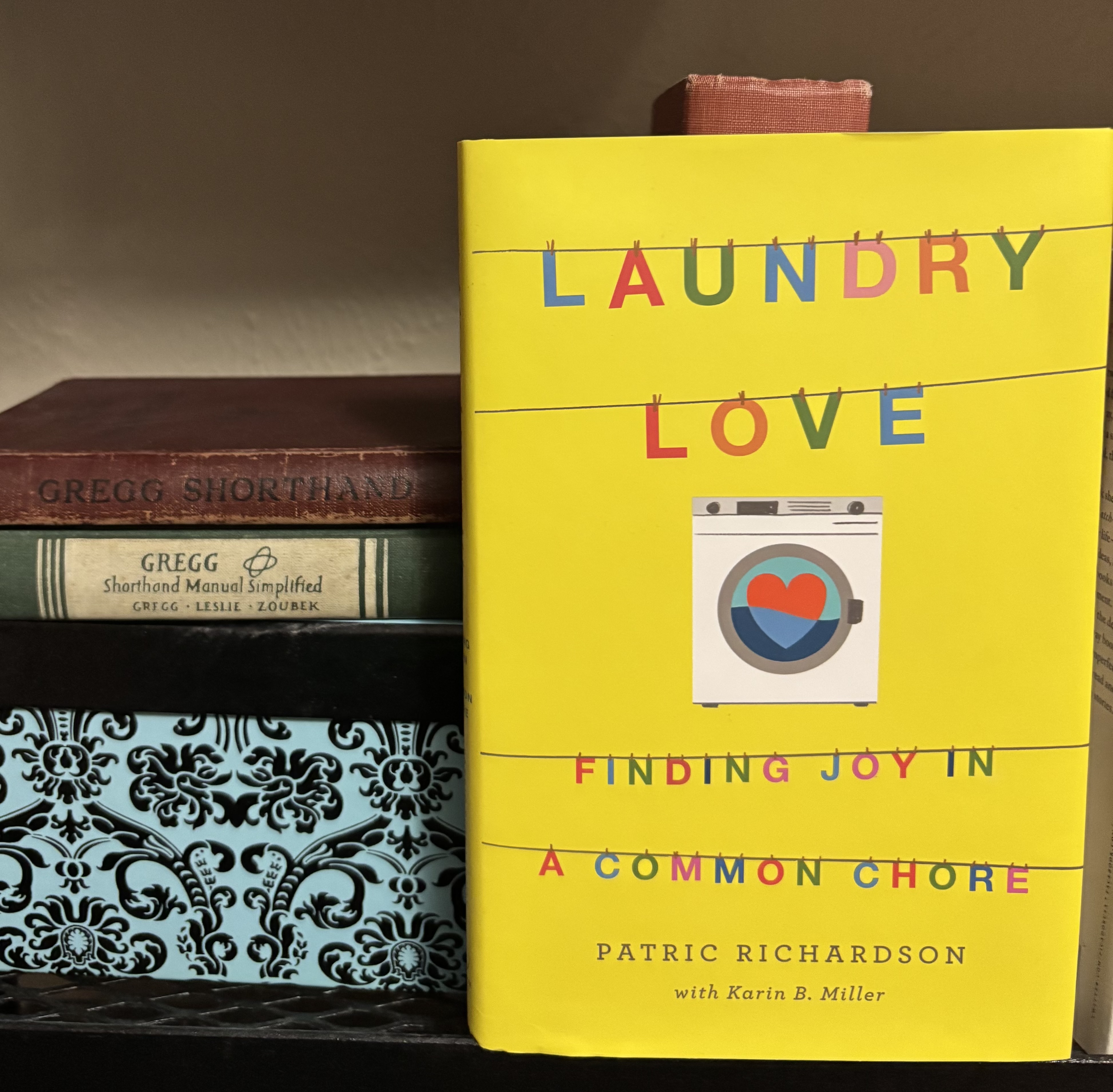
Laundry Love: Finding Joy in a Common Chore by Patric Richardson (with Karin B. Miller) is easily my favorite book about laundry.

Yes, I’ve read multiple books about doing laundry. Let’s just move right along from that.

Anyway, as the title suggests, it is a love letter to my favorite chore. It’s so much more than that, though. Aside from the diatribe against fabric softener and dryer sheets (which, fair – they are pretty awful for both humans and the environment…but so would my calmly and rationally maiming everyone around me after having to endure 45,624 small daily electrocutions from static should I decide to go without them) and the suggestion that I not launder my clothes every time I wear them (In summer?!? In Texas?!?! No, thank you. Please everyone around me – wash your clothes), it is also a great handbook for doing laundry so well that you end up not only loving the process but also the results. 

I am a sucker for a homemaking book of any kind that spells it out for brand-new adults. Someone who is leaving home for the first time and has never done laundry before could read this book and not feel so intimidated in the laundry room at their dorm. 

But the authors don’t stop there. 

They also give more advanced tips. For example, they explain how to care for wool and other fabrics that have those bossy tags that read, “Dry clean only.” If you go to the cleaners often, this book could pay for itself in just one month. They touch on the intricacies of ironing, and there is a fantastic section on how to remove different kinds of stains. I probably reference that section most often.

Richardson and Miller’s tips work for those who have a washer and dryer at home as well as those who visit the laundromat (which I sometimes still do, if I have more than three loads to do in one day and not enough time to do them separately – it’s so much faster). Their advice works for people who live alone and those with big families.

This is the book I would write if I wrote a whole book about laundry. 

My main tip for laundry is this – incorporate it into other work. This is the easiest chore to stack. Start the laundry before you begin working on something else, and you’ll be doing two chores at once. This is another reason it’s my favorite. Now that I’m working from home three days a week, I can get most of my laundry done during the day. I put a load in the washer in the morning before I start work. I switch it to the dryer at lunch, and it’s ready to fold when I log off for the day. 

I’m writing about keeping house for 31 days.

Read Full Post »

Today, I am talking about the main tasks that, if done regularly, make me the most satisfied with my home. I already talked about laundry on Sunday, and we will hear a little more about it on Thursday. I started off making these three different posts, but then I realized I don’t really have three days’ worth to say. Also, making one big post let me add a fourth and very important category.

Watering the Plants

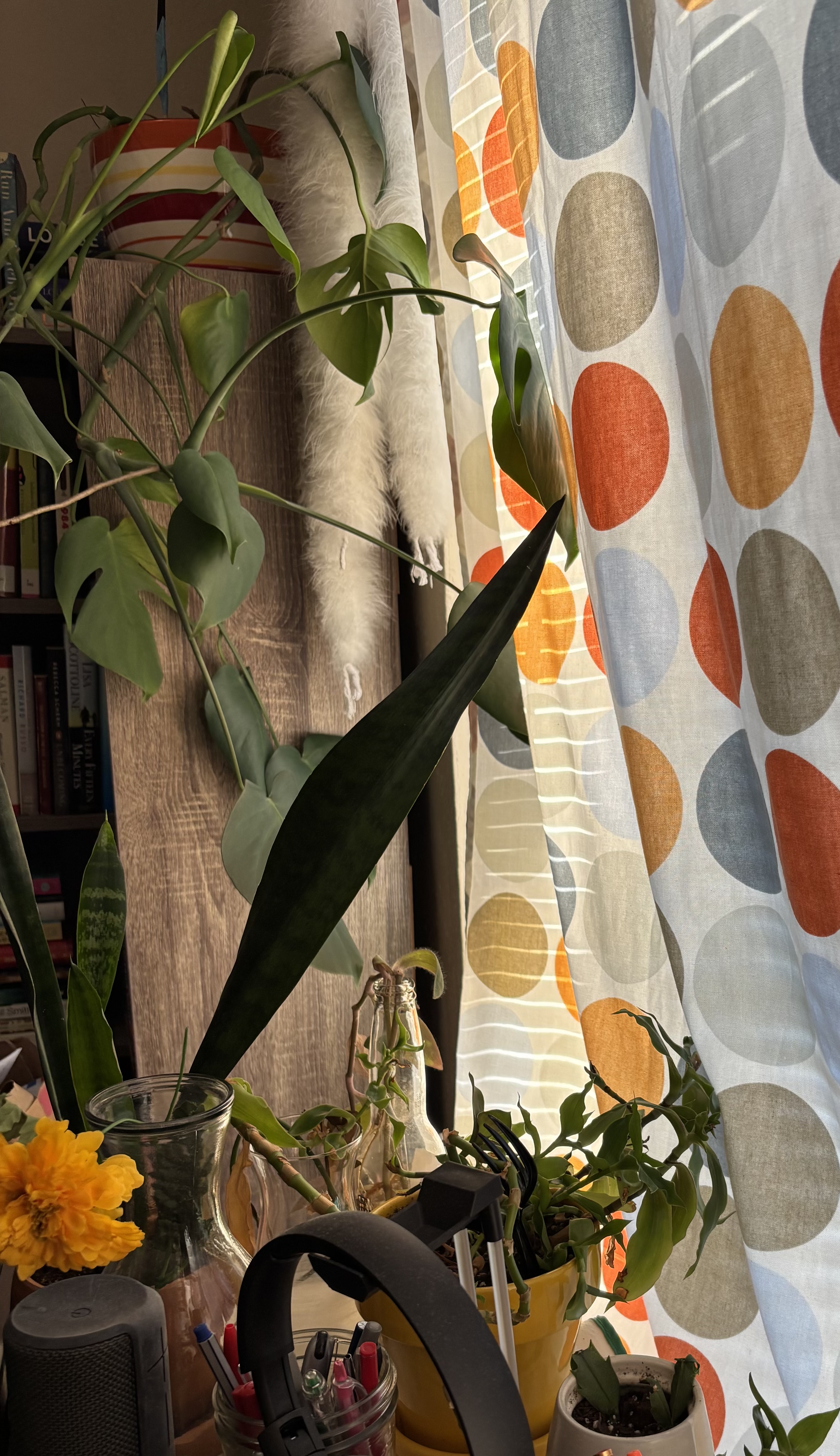
There is nothing in my home that screams, “Neglect!” to me more loudly than a droopy or dying plant. Now, sometimes my plants droop just because they’re moody, and I’m not a plant whisperer by any stretch of the imagination (which you can notice if you look closely at the picture above). Even ivy is taking a gamble at being in my home. But most of my plants generally behave and thrive per my expectations if I pay them even the tiniest bit of attention on a regular basis. 

I used to not notice if my plants needed water until they drooped. Now, however, I have a little reminder by putting a goal on Finch that shows up once a week and doesn’t go away until I mark it done. 

Doing the Dishes

I don’t often wish for a partner. I used to yearn, but now, I’m pretty happy overall with my solitary life.

Until it’s time to do the dishes.

When dishes start to pile up, I start to fantasize about getting myself into one of those I-cook-you-clean situations. The main reason I don’t cook as much as I want is because I mentally calculate how many dishes I’d have to clean afterward, and it just doesn’t seem worth it.

This is the chore I’m prone to avoid the most. Unfortunately, it has a great impact on not only how well I feed myself but also how disgusting my home gets. So I’m getting back into the habit of making it a regular ritual. 

I’m not great at it yet, so on days when I work in the kitchen, the guiding principle is: Clean what I use, plus five. That is, clean every dish, utensil, and cooking implement I used that day and then add either five more items or five more minutes to the chore. I’ve been trying to do this at least 10 days a month lately, and my kitchen is slowly becoming manageable again. It’s not really clean yet, but at least I no longer regard walking into it with the absolute dread that I did when it was chaos.

Sweeping the Floors

This chore has become so satisfying to me. It makes such a huge visual difference in a small amount of time. In just 15 minutes, I can pretty much sweep my whole apartment. I try to do this at least once a week.

It’s official day is Saturday, but I find myself doing touch-ups of missed spots throughout the week. This is especially true of the weeks when Saturdays are busy and I end up skipping it. Even when I miss a whole week, though, my floors still look so much better than they did at the beginning of the year.

Cleaning the Bathrooms

This, too, is a once-a-week task. And when I say cleaning the bathrooms, I don’t mean deep cleaning. That is not a regular-ritual conversation. This is just maintenance.

A solid maintenance cleaning for the bathroom involves:

  • Cleaning toilet bowl and sanitizing all toilet surfaces
  • Spraying and wiping down the shower (sometimes twice a week, because my conditioner is slippery)
  • Sweeping and mopping the floor
  • Gathering the trash
  • Putting any loose items back where they belong
  • Wiping down the cabinet and the sink

This process usually takes me about 20 minutes in my primary bathroom and 10 minutes in the guest bathroom. I do each bathroom on its own night, and I clean them on days when I have somewhere else to go in the evening.

This is not a welcome-home–to-stay task. It’s a get-it-done-quickly-because-we-have-places-to-be task.

I come home from work and immediately tackle a bathroom while my brain is still in go mode, on nights when I don’t have time to overthink and talk myself out of it or get distracted by something else. Then I eat a quick dinner and go to whatever I am doing that night (e.g., book club, choir, etc.).

What are some of your regular rituals?

I’m writing about keeping house for 31 days.

Read Full Post »

“Whatcha doin’?”

“Washing sheets. What are you doin’?”

“Oh, nothin’. Just…” 

That’s how every conversation with my dad on Sunday nights starts.

At first, it was our inside joke. Almost every time I called him, I happened to be doing laundry. Which made sense. When I was a young adult, the time I carved out for laundry was about the only time I was home long enough at a decent hour to make a phone call.

Over the years, it’s become our ritual. 

So when I put my sheets in the washer on Sunday night (as my faithful Finch app reminds me to do), I call my dad.

This week, I’m going to talk about the most frequent chores I do at home that make the biggest difference in keeping it functional (and also presentable, but mostly functional). On Thursday, I’ll share with you another of my favorite books and outline the things I’m picky about when it comes to laundry.

But today, I want to talk about part of why laundry is my favorite of the frequent chores.

There are the practical reasons:

  • It makes mornings easier to not have to search through piles for something to wear.
  • It makes a clear, visible difference to the state of my home.
  • It’s a mostly hands-off chore and thus the easiest chore to stack onto other tasks, making me feel twice as productive.

What cinches it for me are the emotional reasons. 

We lived on a farm while I was growing up, and my dad did farm the land for many years, but his main job for most of my life was owning and running a dry cleaning business. He taught me (almost) everything I know about removing stains, ironing and getting the creases just right, and taking care of clothes so that they last as long as possible. Any alterations or repairs that were needed were done at the shop. One of my first summer jobs was running the front while he ran the washer and the steam press. 

I can still smell the solution used in the machine.

It’s not the career my dad planned when he was younger. He took over the business from his stepfather. He always strives to be good at everything he does and do everything to the best of his ability. I think being trusted to carry on Granddad’s legacy made him really happy. 

Laundry (and being picky about it) is part of that legacy. It might even be my whole family’s favorite chore. 

It was also one of the first clues to my mom that I was even worse off than I’d led her to believe when she came to take care of me for a few weeks in my mid-twenties. There were a few months when I just couldn’t keep anything down and was in constant pain. I knew I needed help, but I didn’t want to ask. She must have heard something wrong in my voice, because she suggested that she come for a visit.

Usually, I would go into a cleaning frenzy if I knew anyone was visiting, but especially my mother, the queen of clean. I couldn’t do it, though. My roommate at the time did her best, but when Mom got there, the first thing she noticed (other than the fact that I was curled in the fetal position on the couch) was the piles of laundry at the foot of my bed. She immediately started a load and spent the next two weeks cleaning, feeding us, driving me to doctors (probably bullying the doctors a little), and making sure the laundry stayed done. 

When my sister had knee surgery, taking over her laundry schedule was one of the things she asked me to do. In that moment, I knew how my dad felt in taking over the shop. It feels good to be entrusted with the things that are important to someone.

Laundry is not just a chore in my family. It’s how we love each other. It’s the yardstick by which we measure how we’re doing.

So before I call Dad every Sunday, I make sure there is the gentle whir of the washer and dryer in the background, letting him know I’m OK.

I’m writing about keeping house for 31 days.

Read Full Post »

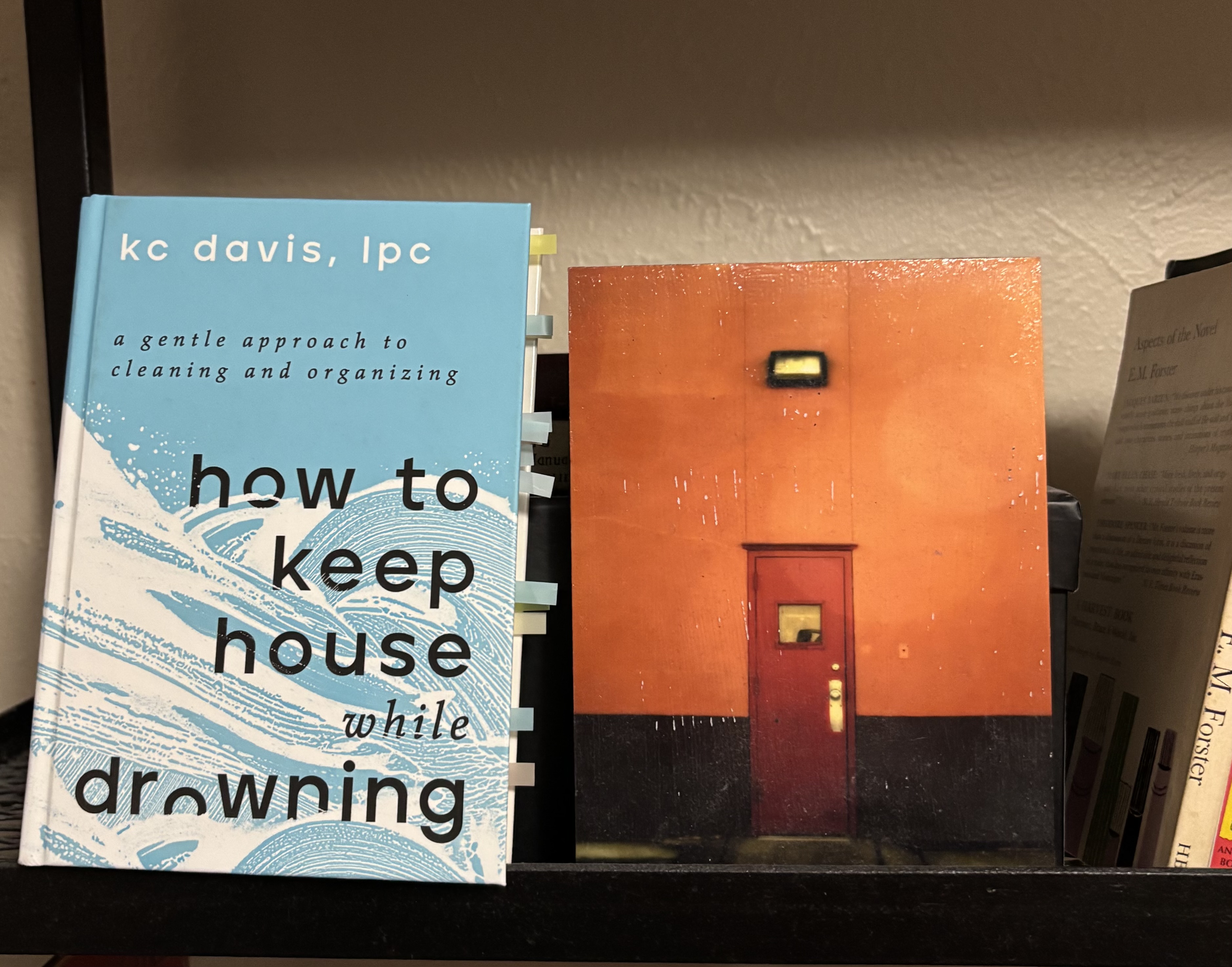
I love How To Keep a House While Drowning. The subtitle is “a gentle approach to cleaning and organizing,” and that’s just what I need. I am not motivated by what I should do or someone else’s standard. Frankly, I’m not even motivated by my own standards. 

I am motivated by grace and understanding and generosity, and this book is an abundance of those things.

In the first few pages, Davis starts in with this wisdom: “You don’t exist to serve your space; your space exists to serve you.” Many of my struggles with keeping house are based on my suspicion that I somehow owe my apartment something. But really? I am there because of my needs (to have shelter) and desires (to be cozy af). Therefore, it makes much more sense to approach it in ways that serve this purpose.

When I approach housework as a way of honoring my needs, my perspective shifts. What would make Future Me happy or help her relax? That is why I clean. That is why I declutter. Not to impress some possible guests but to please myself.

Davis also addresses the binary status of done or not done. The point of housework isn’t to mark something as “done.” Now, initially, this offended me to my very core. You know I love marking things off a checklist. But the point of keeping house isn’t to finish, but to keep it functional. If my expectation is that something is finished, I will get frustrated the next time I have to do it again. But if I change my mindset to functionality, the whole process softens into something more sustainable.

The third thing I love about this book is the statement, “Self-care was never meant to be a replacement for community care.” There’s a whole lovely section on this, but one of my takeaways is the reminder that we still need each other. I can do the best I can with every resource and ounce of energy I have and still not finish all the things. It’s not just OK to help each other; it’s critical.

Anyway, this is easily one of my top five favorite books on keeping house. Highly recommend, especially if shame and unreasonable expectations tend to immobilize you. This book will help.

I’m writing about keeing house for 31 days. You can browse the topic list here!

Read Full Post »

Wearing shoes in the house.

Yes? 

No? 

Let’s discuss.

First, taking your shoes off at the door is the norm in many cultures. I (and you) should absolutely respect the rules and customs of anyone who is gracious enough to host us. It’s not that difficult to plan ahead. If I know the homeowner allows shoes in the house, that’s fine. But if I know they don’t, or I don’t know one way or the other, I assume I’m going shoeless once I arrive and adapt my footwear/sock selection accordingly. This is why I own so many cute socks. So thank you, friends with this rule! I do love a cute sock, and this gives me an excuse to buy more of them.

This is not a rule I use in my own home, though. Please feel free to keep your shoes on.

I know. I get it. I understand that shoes are gross and thus track their grossness inside as I am tromping through the house. But also…so do…

  • My clothes
  • My hair
  • My skin
  • My bag(s)

Multiply these elements times how many people live in or visit your home on a regular basis.

Include pets in this count, especially the ones that occasionally go outside (although inside-only animals can do their fair share of spreading some dirt and other particles). This doesn’t necessarily apply to me, as I don’t currently have a pet. And I love my friends’ pets, but they do track in a fair amount of detritus. I used to think I was allergic to dogs, but my reactions change depending on the seasons. So I suspect my sensitivities are more about all the irritants that are hitching a ride on the dogs’ fur after their walk rather than the animals themselves, which is a relief but also solidifies my decision not to adopt an indoor/outdoor pet.

[Aside – No, I do not want an animal in my home. Do not send me pictures of cute, sad animals that need homes. I mean, send me all the animal pictures all the time. I love them. Just do not expect me to adopt them. Your Sarah McLachlan tactics will not work on me. You will be disappointed, and your disappointment will be 100% your own doing.]

Basically, anyone or anything that goes from outside to inside has the outside all over it and thus gets the outside on anything it touches once it comes inside. Therefore, I feel like simply removing my shoes at the door of my home would only address a small fraction of the outdoor-to-indoor filth pipeline.

The main thing from outside that bothers me is pollen. And it’s on everything. During the first few weeks of spring, I absolutely strip down and immediately shower when I get home to reduce how much of the stuff lingers in the air of my apartment. I do enjoy breathing, after all. But this is only a seasonal habit. I only do it when it is absolutely necessary.

I could be a person who does this all the time – a person who deposits outside clothes directly into the washer/hamper, lovingly empties and cleans my purse each night, and not only removes my shoes at the door but wipes them down, removing all the funk they have accumulated in my travels that day. I could, but I’m not gonna. While the idea of consistently having separate outdoor and indoor clothing is appealing to me, it’s not a habit to which I actually aspire at this point in my life. In fact, I think I said, “That’s exhausting. I’m exhausted just reading it,” out loud and then had to stare blankly at the wall for a minute when I came to that chapter in Marie Kondo’s book (which I absolutely loved otherwise – highly recommend).

Also, even if it was just my shoes, what is the process? Logistically speaking, what do I do with the shoes when I take them off at the door? Do I remove them and then pick the filthy things up with my bare hands and take them to the closet? Do I figure out some way to move my whole gigantic shoe storage to my tiny entryway so I can put them where they belong right away? Do I just leave them by the door (real talk – the most likely scenario), thus resulting in the inevitable and constant pile of shoes at the door? None of these things seems like a practical solution that I would want or actually implement, and regarding my primary goal of reducing clutter, they are all inferior to my current process, which is to wait to remove my shoes until I’m in the closet where they belong.

So, for now, in my house…I don’t care, generally speaking. I’m going to keep my shoes on at least as long as it takes for me to walk from the door to where my slippers are, and you should feel free to keep your shoes in my home, too. 

I mean, if your shoes are extra dirty/muddy, take them off or ask for something to wipe them down at the door. Don’t track visible muck through my home. Don’t be that person. 

But overall, I want you, my guest, to feel welcome and accepted just as you are, so you do what makes you most comfortable (re: shoes or no shoes and attire in general, that is – this is not a free-for-all behavioral statement.). Additionally, I believe the way people attire themselves is an art form and expression/extension of their personality, and while it may seem like a small thing, taking off one’s shoes can mess up the whole ensemble. Embracing these principles is part of the hospitality from my southern upbringing (i.e., one element of my culture that I actually like and try to embody) that I want to extend to my guests.

I’m also curious about other people’s take on the subject. Would removing my shoes at the door of my own home really make that big of a difference in how clean it is overall? If flooring is a factor, I have all hard floors, not carpet. So my floors are both easy to clean and are cleaned frequently(ish). 

Feel free to drop your opinion and links to credible research in the comments. 

I’m writing about keeping house for 31 days. Click here to see the topic list!

Read Full Post »

Reduce, Reuse, Recycle. It’s been the mantra of those who care for the planet and want to minimize the waste they produce for decades. It’s also three helpful hints for keeping house. Nothing gets stuff organized (or gone completely) faster than one of these actions.

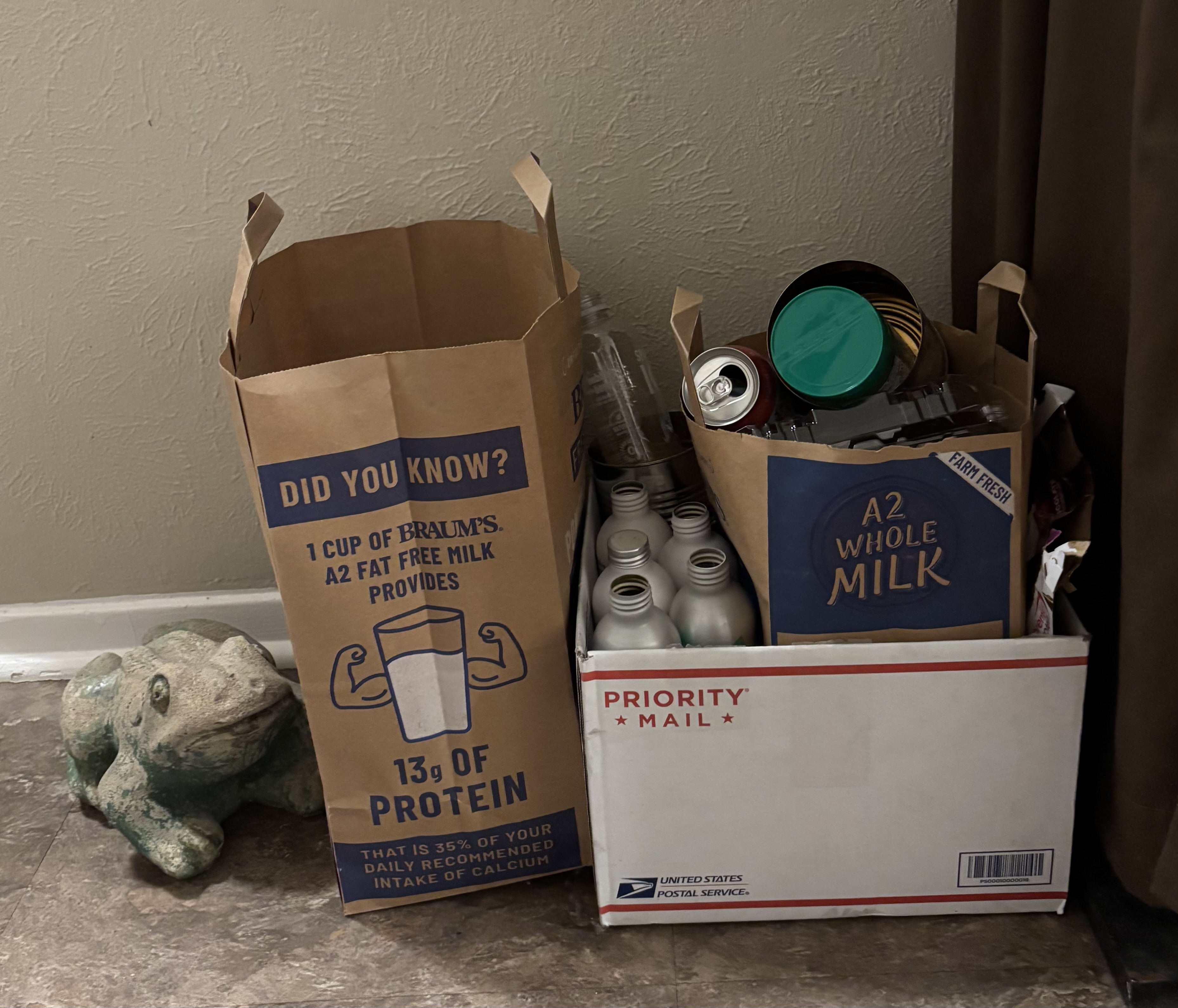
Reuse is my favorite of the three. While my main goal for extraneous stuff is to get rid of it, of course, I also really despise having to buy something again to replace that thing I JUST threw away. I am the poster child for “But I might need it someday.” I really do often find uses for the random things I keep. So before getting rid of it, I look for ways to reuse it (stay tuned for Friday for some of my favorite things to repurpose).  

Reduce is my second choice, even though I think it is the best of the three. I wish it were my favorite. After all, the most efficient way not to waste the things that come into your home is to not bring extraneous nonsense into it in the first place. 

I’m just not very good at it. I mean, I have no problem with the things I’m super picky about. For example, I’m not going to impulse buy hand soap. I have the two kinds I like (one for my bathroom, one for the guest bathroom), and while I may stock an extra of each, that’s about it. Yarn, on the other hand…I may have an issue there. 

Reduction also looks different for different households. Take food prep, for instance. Ideally, all my vegetables would be fresh from the farmer’s market where the only packaging I use is the cloth bag I bring from home, and I would prep them for use the minute I brought them inside. But I got exhausted just writing those sentences. If that was the standard I tried to hold myself to, I would be constantly overwhelmed and end up in the drive-through more often than not, which creates the most waste with the single-use cups and utensils and wrappers (oh my). Getting most of my vegetables frozen is a compromise, but it’s better than the next likely alternative.

Recycling is the bane of my existence. I am committed to doing it. I know individuals can’t solve the major environmental crises caused by corporate greed and its inevitable consequences of environmental waste and bad practices and shortcuts (although we can vote with our dollar by not shopping with them whenever possible). And I know that a lot of what goes in the recycling bins (particularly the catch-all ones) ends up as trash anyway. But I adhere to the principle that if everyone did their part by throwing fewer things away, we could maybe at least keep the landfills under better control. I know we definitely can’t keep them under control if we don’t even try. So I’m going to continue doing my part, small as it may be, even though it’s among my least favorite chores. 

[Public service announcement – There are many things that need to be recycled or disposed of responsibly (i.e., not in the dumpster/trash bin), even if doing so is a pain, so please make sure you know the right place to take these items where you live.]

My beef with recycling most things is that it can’t just be done in-house. It involves a task and then also an errand. I hate errands so much. If I ever become inexplicably wealthy, errands are the first thing I’m going to outsource. I would actually hire a person full-time to run my errands for me if I could afford to do so.

If you live in a place where people will come and pick up your donations at your house for you? That’s nice. You should take full advantage of that. If I could just leave a box on the porch and have it magically disappear to a place I trust to use the items responsibly, recycling might become my favorite chore. So step one of recycling is to research the places near you that will do this for you. You may be surprised at how easy they make it.

But most of the local places near me that recycle used items don’t pick up from apartments. Alas. So I gather. And gather. And accumulate. And then…eventually…sometimes with weeping and gnashing of teeth…deliver to the appropriate location.

Maybe if I think of recycling as a quest it will be easier to keep up with. *ponders and plots*

I’m writing about keeping house for 31 days. Click here to see the topic list!

Read Full Post »

A common characteristic of neurodivergent brains is that we switch attention easily and often. Some call it a short attention span. Some call it easily bored. Some call it multitasking (or if you’re me, rapid-succession unitasking).

Whatever you call this phenomenon, it can make menial tasks a challenge to complete (there is another beast called executive dysfunction that makes things hard to even start, but we’ll save that for another day). Most days, I don’t have a problem getting started on a cleaning project, but my follow-through often gets sidetracked by another task.

One thing I have found helpful in addressing this issue is to gamify decluttering/cleaning. I actually use this with most of the routine things that need to be habits (such as drinking water, remembering to eat, getting exercise, etc.), but it works especially well when it comes to housework, or anything that has clear start and finish points. When I turn decluttering into a game, it gives my attention span the challenge it needs to stay interested long enough to complete the given task.

Here are a few of my favorite games for keeping house.

Finch App

I loooove the Finch app. You have a character (specifically, a birb – mine’s name is Bandit). You can decorate its home and dress it up. You can send it on adventures. You earn the items you need to do all these things by completing goals, which you can customize. For example, some of my goals are:

  • Clean or tidy for ten minutes (x6 per day)
  • Drink 16 oz. of water (x5 per day)
  • Exercise for 3 minutes (x10 per day)

There are several more, and I change them based on the goals I am focusing on at the time.

In addition to getting to send Bandit on adventures and buy her cute clothes, I also use Finch to track my longer-term progress. For example, I track the number of days each month that I complete my 6 units of cleaning. If my history shows I cleaned for 15 or more days in a given month, I give myself a little pat on the back and possibly a small treat. Like, maybe I get a sausage biscuit instead of making breakfast one Saturday. Sometimes, though, just seeing progress is reward enough.

Decluttering Surges 

My brain likes brief bouts of intensity, and this game scratches that itch.  For a set period of time (a day, a week, but not more than a month, or I get bored and distracted), I perform a specific task once per a subset of that time. Sometimes there’s a preset task, sometimes there’s a preset time limit. The constraints are what make the game.

For example, on Saturdays when I am at home all day and have a lot of cleaning to do, I challenge myself to get up and tidy or clean at the end of each hour. For example, when the clock reads 1:50, I put down my book or put aside my writing or press pause on the show I’m watching, and see how much I can get done before the clock turns to 2:00. It’s a race against myself. It not only results in my home being a lot cleaner at the end of the day but also reminds me to get up and move occasionally.

Another example is the challenge I did when I noticed piles were getting out of control. For one month, I tasked myself with getting rid of one bag or box of stuff (or one item, if it was too big to fit in a bag or box) per day. It was simple but effective.

Spot Cleaning 

Sometimes stuff accumulates. Or it looks dusty. Or something is wrong that will just take a few minutes to put right. Sometimes my decluttering surges focus on one small area.

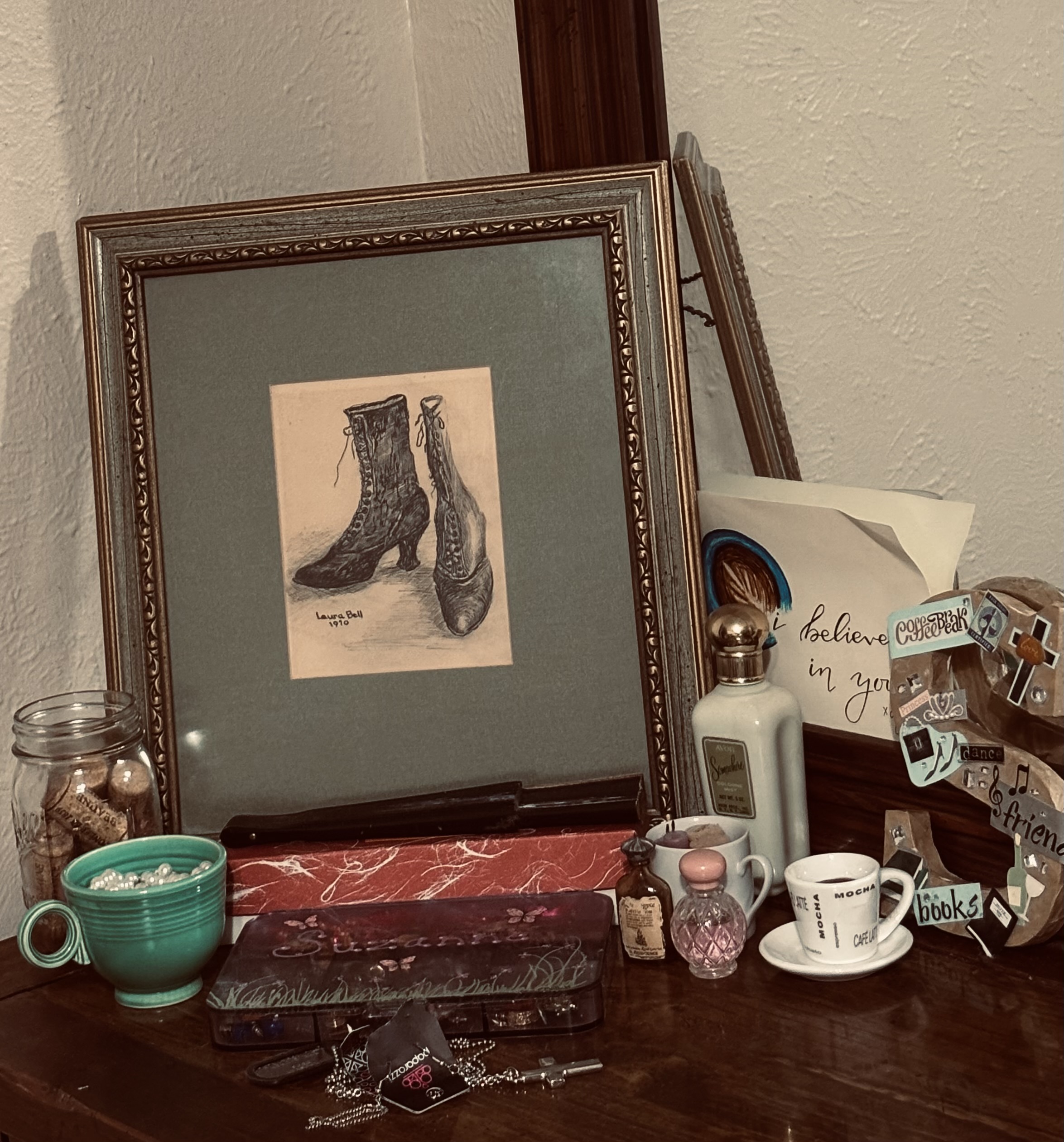
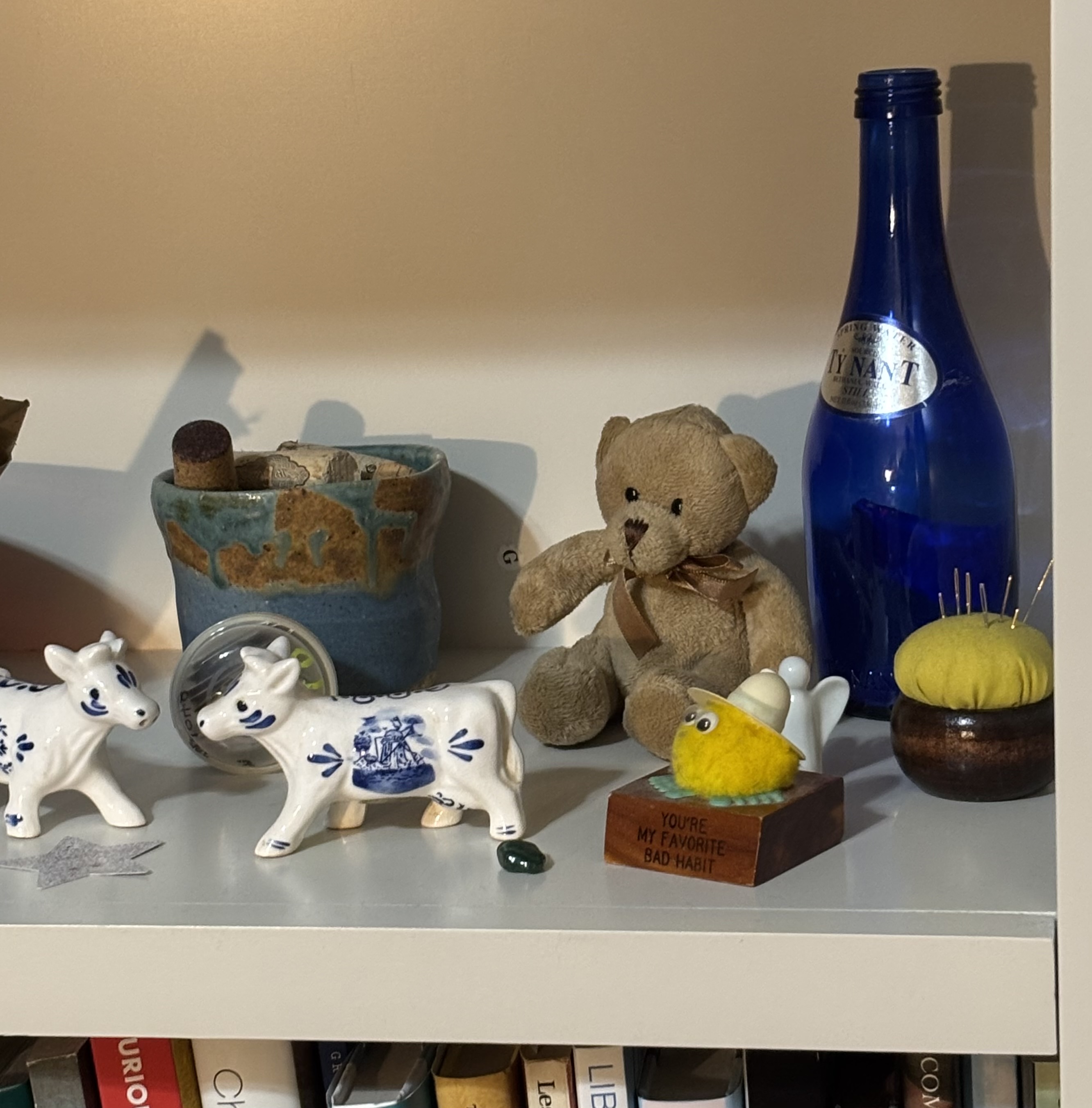
Take the shelf pictured above. It is designated as a space for mementos and knick knacks, but a couple of weeks ago, I noticed that it had also become a dumping ground for items that I was using in the area and just didn’t put away. A hammer and some nails, a hold sticker from the library, a coffee mug, etc.

So I set a 5-minute timer on my phone and got to work:

  • I removed everything from the shelf.
  • I dusted the shelf and each item that belongs there as I put them back.
  • I took the other items and put them up where they belong.
  • With the time I had left, I also dusted the shelf above it that holds the TV and moved the Christmas mouse figurine that was lingering next to it to my Christmas storage box (better late than never, I guess).

So in five minutes, I accomplished twice as much as I intended to. I won!

Spot cleaning is especially useful for those areas of my home that overwhelm me. I spot-clean my office a lot. It’s a small space that, unlike the rest of the apartment, I don’t use every day. It’s easy for it to become a dumping ground, and it doesn’t take long for it to look like it belongs on an episode of Hoarders. Such a sight makes me want to shut the door and run away. But I just got released to work from home three days a week, so it has to be functional. In the past month, I’ve made it my mission to spot-clean at least one shelf, one surface, or one square foot of floor per day, and the difference that has made in just a few short weeks is astounding.

It may seem silly to have to turn common chores into games just to get them done. But all I hear from that sentence is that they’re getting done, and any method that makes that happen consistently will always be welcome in my home.

I’m writing about keeping house for 31 days. Click here to see the topic list!

Read Full Post »

When I chose cozy for my theme this year, my home was one of the main focal points of that goal. What I quickly discovered is that the cozy elements were already there – the comfy linens, the coffee and tea nook, the fairy lights, a little reading nest in every major room, etc. Unfortunately, they were often hidden behind clutter or overshadowed by household chores waiting to be done.

Before I could have a home that I (or the occasional someone else) could experience as cozy, the issues blocking all my carefully curated comfort zones had to be addressed. I’ve spent a lot of time doing that this year.

This month, I’m talking about keeping house. Not the pristine clean of my childhood, where you could eat off the kitchen floor with no adverse consequences (other than my mother yelling at you not to mess up her clean floor). But a reasonable level of clean. What most people would consider clean. The tidy kind of clean that instantly calms me when I walk through the door.

To be clear, I am not naturally good at this. I’m prone to stacks and piles and items left wherever they landed when I got distracted by another task. I have books and journals not only piled precariously high on the table by my reading chair but also stacked on the arms of the chair itself. I often have dirty coffee and tea mugs scattered everywhere. I have a chair in my bedroom that I usually cannot sit in because it’s full of discarded clothing. I organize files for an hour only to realize that, instead of organizing, what I have actually done is create 4,321 more piles of paper.

Even so, I deserve to have a home that feels cozy and peaceful. Even if keeping house doesn’t come naturally to me, I can still maintain such a home with a few handy tricks and routines.

This is not a do-this-for-a-month series. This is a talk-about-and-plan-it-for-a-month series. This is too daunting a project for me or anyone who identifies with my struggles to be successful in just 31 days. Also, we can’t just do it for a month and call it quits. Unfortunately, no kind of cleaning, tidying, or decluttering is a one-and-done deal. It’s a lifestyle. Apparently. This is an offensive fact about adulthood and physics, and I stay mad about it.

I am writing this series because focusing on cozy this year has worked. I have become a little better at cleaning and tidying this year, and I want to celebrate that a little bit. 

I also want to share the things I’ve learned in case it does not come naturally for you either. There are the things I’ve done throughout the year to reduce the overall clutter in my home and make it a cozier place to live. For the things that seem to have become routines, I will include how often I have to do them to maintain what I originally accomplished. 

While I myself am far from being an expert, there are those whose wisdom on the subject I consume voraciously, and I have several favorites. I find their books, websites, and other resources delightful. It turns out, I absolutely love reading about cleaning and tidying. People who really nerd out about it both fascinate and charm me. I will drop links in posts where their signature advice is mentioned.

Taking care of a home is often seen as fundamental to being a functioning adult. On this particular critierion…I’m alright (most days). I suspect that a lot of people can relate to that. That’s my main target audience for this series. Let’s learn together! 

I also would love for people who are good at keeping a clean, decluttered home pretty consistently to read and chime in. Teach us your ways!

You can subscribe to follow along day by day, or just come back occasionally to this post, which I will update as a table of contents as each day goes live. As with any general, prescriptive advice – take what you need and leave the rest.

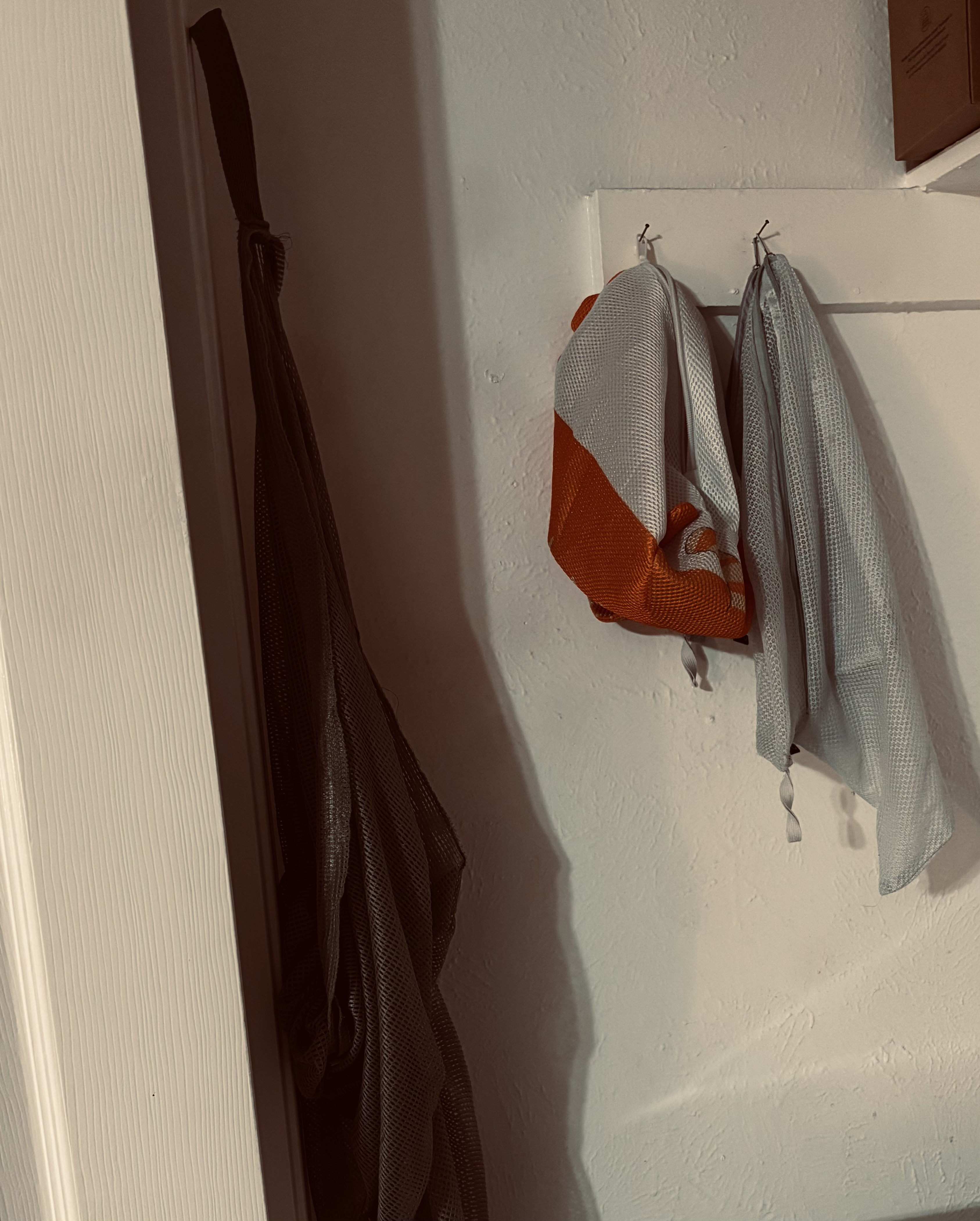
[And yes, all the pictures in the series are of my actual home.]

All the posts to date:

Read Full Post »

Older Posts »