Feeds:
Posts
Comments

Archive for the ‘Mental Health’ Category

Whew, this week.

Today, I’m anxious because I feel like I’m behind on posting on my Keeping House series. But I may just be operating from an old set of rules.

When I first started posting 31 Days series in October years ago, things were different:

  • There was an official 31 Days community that sent out prompts and encouragement. I attended local writing group meetups where we helped each other brainstorm and come up with post ideas (also there were snacks, which may seem irrelevant to the writing process but I assure you they were absolutely essential).
  • I had a job as a night desk clerk, where I was encouraged to engage in hobbies or studies (really, they were happy with me doing anything that would keep me awake at 4:00 a.m. when the students finally went to bed) any time there was downtime. There was a lot of downtime, and I had finished my degrees by the time I took the job, so hobbies, such as blogging, were the choice.
  • I only had one book club.

Now, I am pretty much doing 31 Days on my own, which is how most writing projects go for most writers. It’s not a bad thing; it just doesn’t have the built-in drive that community work does. I also do not have much downtime at my job now, and when I do, I use it to prepare for upcoming appointments so that students can use their time to ask questions and not feel like they’re interrupting me as I type up the notes I could have prepared beforehand.

And now, I have six book clubs.

So it makes sense that I struggle to write every single day of the month. Maybe that is a hint (and by hint, I do mean clear indication) that my expectations for my series should change.

Content-wise, I’m very happy with the series so far. I am still going to have plenty of time to say everything I want to say about keeping house. I have some rough drafts about a few more topics, and I’m excited to share them in the upcoming week.

Today, I am celebrating the ability to be flexible. To pivot when I need to. To honor my time and energy and not let former expectations that no longer make sense or serve my purpose sully my perspective on what I’ve accomplished. Flexibility is important for writing; it’s also important for keeping house.

Five things I’ve learned about keeping house as I’ve gotten older (and, ideally, wiser):

  • No one judges my home more than I do. When I have people over, they are just happy to see me. They like what I feed them, and they delight in my company. I don’t have to earn their approval; I already have it.
  • Having said that, it doesn’t matter if other people think my home is too messy. It does, however, matter what I think. My opinion of my home matters the very most. I am the person it most affects, and keeping house is first and foremost a kindness to myself.
  • A brush with mortality when I had cancer opened my eyes to how much stuff I accumulate but don’t really want or need. And if I don’t even want it, it’s likely that whoever is tasked with dealing with it when I’m gone won’t want it either. It’s never too early to start death cleaning.
  • My stimulus response is my guiding star. My ideal home is one that is stimulating enough to be interesting and cozy but neat enough that my brain isn’t constantly overwhelmed. In related news, my office is my next major project. It’s technically functional, but there are so many distractions. I think I’ll be calmer and better at my job when it is more organized.
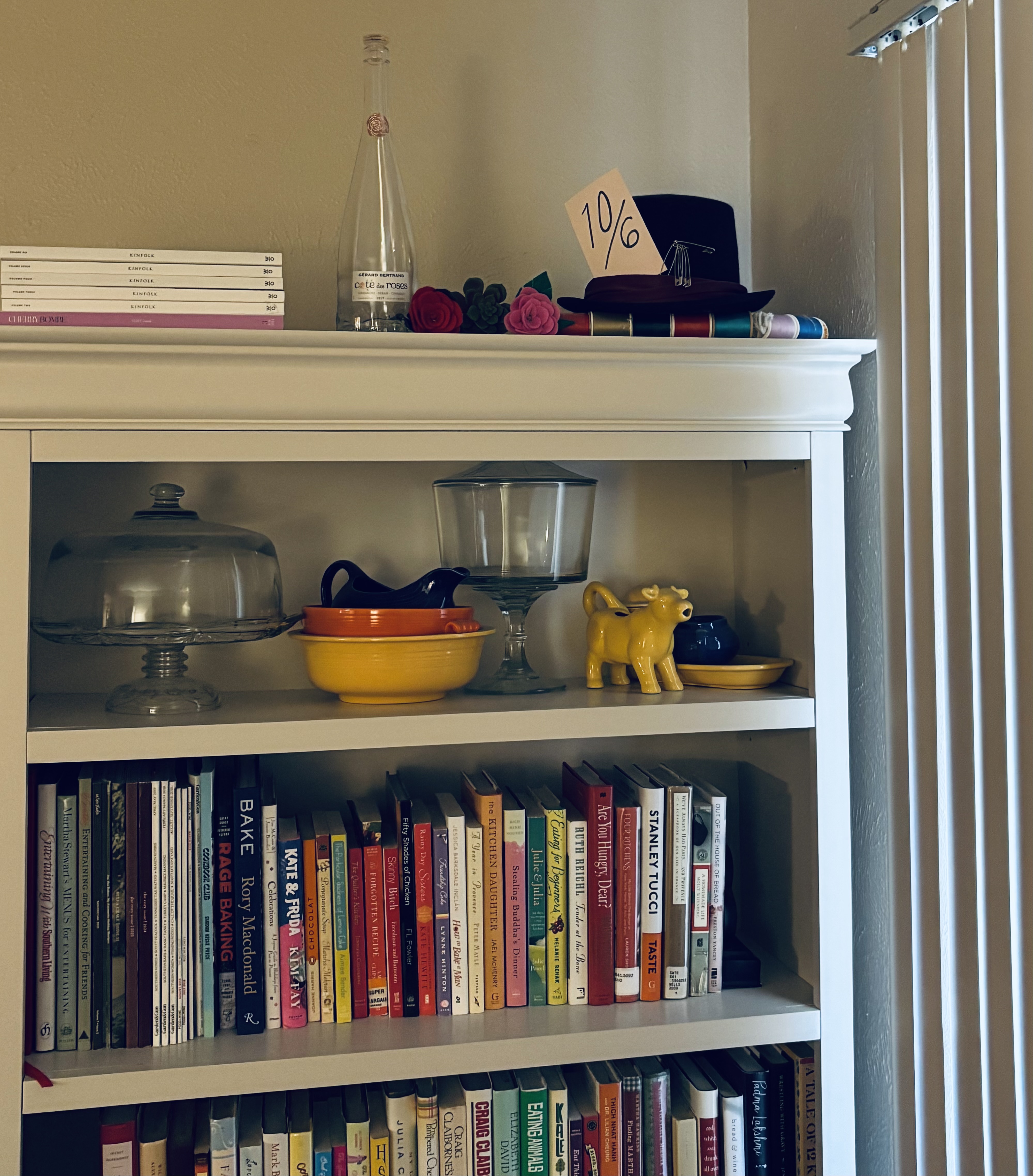
  • I really am happiest when I’m surrounded by books, even if their arrangement is a bit chaotic.

I hope that you remember to be flexible and gracious with yourself this weekend (and always, really). You deserve your highest consideration.
I’m writing about keeping house for 31 days.

Read Full Post »

Part of why I want my house to be cozy is to make it more welcoming to guests. I used to really love having people over, but I’ve gotten more particular about doing so in recent years. I don’t know that I’ll ever be interested in throwing large parties again, but occasionally I do have people over, or sometimes (rarely, but still), people just pop by.

First – no, thank you, on the just popping by. I’m gonna need you to text first and ask if and when I’m free for you to do so. I’m not a fan of surprises in general, and I want my home to be, as often as possible, the place where only things I enjoy happen. An unexpected visit is not one of those things.

However, as much as I do not want people to show up unannounced at my front door, I’d like the state of my home not to be the reason I hate it. There are so many better reasons to hate such a thing (it’s assuming, it’s inconsiderate, it’s disruptive, etc.). I’d like to go with one of those. I keep house just in case the unmitigated disaster of a surprise guest occurs, so I can at least minimize one of the things that make it terrible.

Second, there is the matter of my upbringing. I was the messy child who could never quite meet the standard set by my mom on how my space should look. I’ve healed enough in this area to say that the expectations I grew up with for how a home should look are the least important reasons for my wanting to keep house, but I would be lying if I claimed they weren’t still a part of my motivation. I’m still working through my desire to meet the expectations of my mother-of-yore (the current version of her does not give a damn, actually, which is upsetting in its own way. It’s just so unlike her. But I digress.). According to the voice in my head that sounds a lot like Joy Terry in her 40s and 50s, there is a way your home should look, especially if you are expecting people over, and I occasionally find myself measuring my home with that yardstick.

Really, though, I prefer a much more relaxed standard. I find that guests feel just as comfortable if my house looks lived in as they would if it looked magazine-ready (Pinterest-ready? Or is that outdated, too?). More to the point, I find that my guests enjoy my company more when I’m not exhausted and stressed from frantically cleaning.

[Aside: This is not a judgment on people who enjoy keeping a more pristine home. I probably love coming to your house. It’s so pretty, and you’re doing a great job.]

Keeping my home generally guest-ready allows me to focus on the aspects of hosting I enjoy more. For example, I love a good menu. I love planning meals and making grocery lists and finding creative ways to work within food budgets and arranging/decorating the table, etc. I do not, however, love having to include in that calculation all the preliminary cleaning I would have to do to make the meal happen.

One of my biggest goals for getting better at keeping house is for it to take me an hour or less to prepare my home for guests. No matter how much notice I have, I want stay ready to be a gracious host.

I’m writing about keeping house during October.

Read Full Post »

Today, I am talking about the main tasks that, if done regularly, make me the most satisfied with my home. I already talked about laundry on Sunday, and we will hear a little more about it on Thursday. I started off making these three different posts, but then I realized I don’t really have three days’ worth to say. Also, making one big post let me add a fourth and very important category.

Watering the Plants

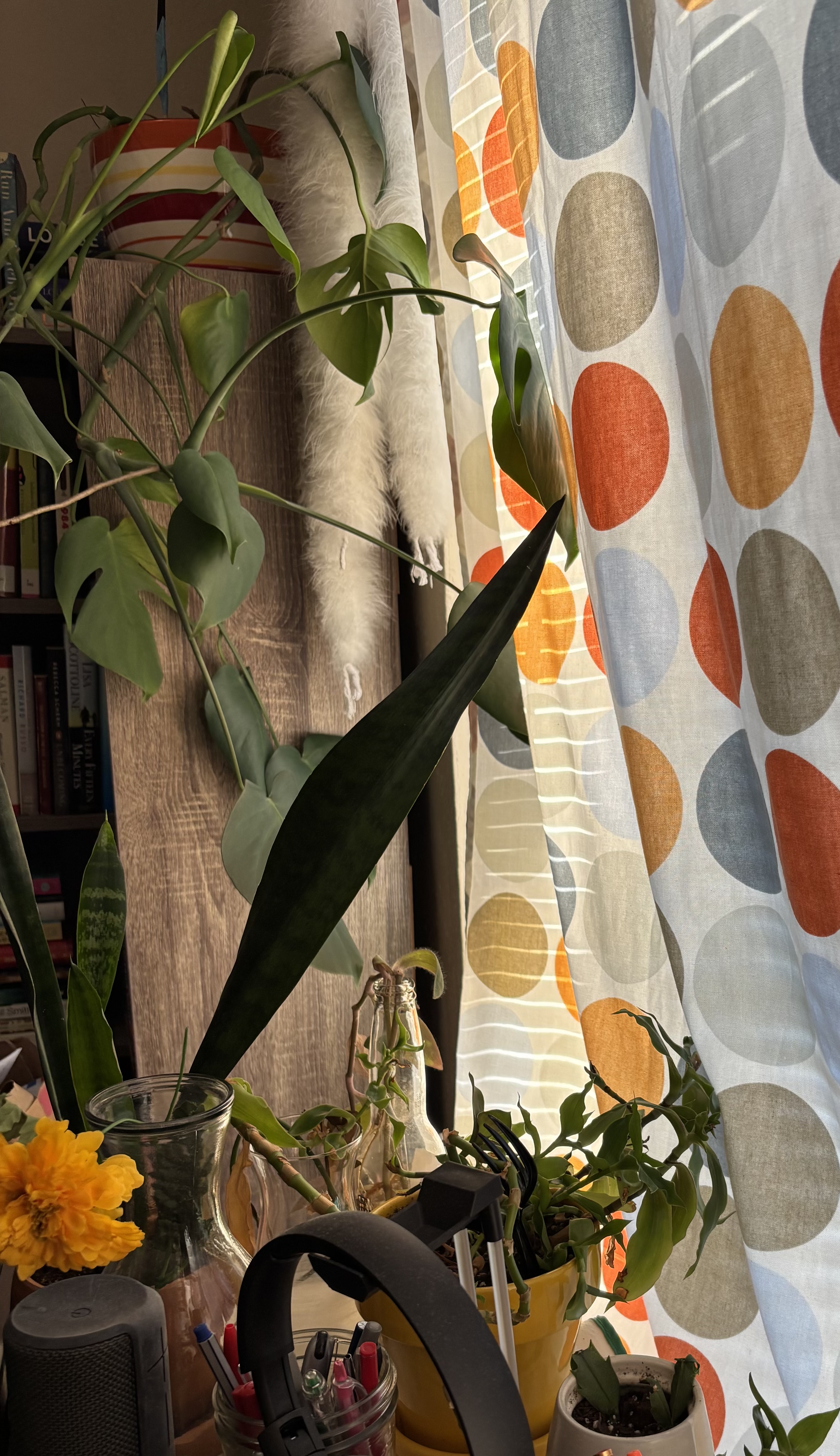
There is nothing in my home that screams, “Neglect!” to me more loudly than a droopy or dying plant. Now, sometimes my plants droop just because they’re moody, and I’m not a plant whisperer by any stretch of the imagination (which you can notice if you look closely at the picture above). Even ivy is taking a gamble at being in my home. But most of my plants generally behave and thrive per my expectations if I pay them even the tiniest bit of attention on a regular basis. 

I used to not notice if my plants needed water until they drooped. Now, however, I have a little reminder by putting a goal on Finch that shows up once a week and doesn’t go away until I mark it done. 

Doing the Dishes

I don’t often wish for a partner. I used to yearn, but now, I’m pretty happy overall with my solitary life.

Until it’s time to do the dishes.

When dishes start to pile up, I start to fantasize about getting myself into one of those I-cook-you-clean situations. The main reason I don’t cook as much as I want is because I mentally calculate how many dishes I’d have to clean afterward, and it just doesn’t seem worth it.

This is the chore I’m prone to avoid the most. Unfortunately, it has a great impact on not only how well I feed myself but also how disgusting my home gets. So I’m getting back into the habit of making it a regular ritual. 

I’m not great at it yet, so on days when I work in the kitchen, the guiding principle is: Clean what I use, plus five. That is, clean every dish, utensil, and cooking implement I used that day and then add either five more items or five more minutes to the chore. I’ve been trying to do this at least 10 days a month lately, and my kitchen is slowly becoming manageable again. It’s not really clean yet, but at least I no longer regard walking into it with the absolute dread that I did when it was chaos.

Sweeping the Floors

This chore has become so satisfying to me. It makes such a huge visual difference in a small amount of time. In just 15 minutes, I can pretty much sweep my whole apartment. I try to do this at least once a week.

It’s official day is Saturday, but I find myself doing touch-ups of missed spots throughout the week. This is especially true of the weeks when Saturdays are busy and I end up skipping it. Even when I miss a whole week, though, my floors still look so much better than they did at the beginning of the year.

Cleaning the Bathrooms

This, too, is a once-a-week task. And when I say cleaning the bathrooms, I don’t mean deep cleaning. That is not a regular-ritual conversation. This is just maintenance.

A solid maintenance cleaning for the bathroom involves:

  • Cleaning toilet bowl and sanitizing all toilet surfaces
  • Spraying and wiping down the shower (sometimes twice a week, because my conditioner is slippery)
  • Sweeping and mopping the floor
  • Gathering the trash
  • Putting any loose items back where they belong
  • Wiping down the cabinet and the sink

This process usually takes me about 20 minutes in my primary bathroom and 10 minutes in the guest bathroom. I do each bathroom on its own night, and I clean them on days when I have somewhere else to go in the evening.

This is not a welcome-home–to-stay task. It’s a get-it-done-quickly-because-we-have-places-to-be task.

I come home from work and immediately tackle a bathroom while my brain is still in go mode, on nights when I don’t have time to overthink and talk myself out of it or get distracted by something else. Then I eat a quick dinner and go to whatever I am doing that night (e.g., book club, choir, etc.).

What are some of your regular rituals?

I’m writing about keeping house for 31 days.

Read Full Post »

On the remaining Saturdays of the month, I want to talk about why keeping house is important to me. As today is World Mental Health Day, I thought it fitting to talk about how keeping house affects my mental health (and, by extension, the rest of my life).

So what does it matter if my home is in order? If I live alone, and I’m the only one it really affects, why let it affect me?

First, it’s bold to assume that I have complete control over what affects me. Sure, I can make choices about what deserves my attention and think positively. But when clutter reaches a certain level, my brain is pretty much going to remain in a state of low-grade fight-or-flight until it’s fixed. Overstimulation is an attack on my senses, and my body responds accordingly. Keeping house protects my nervous system and, by extension, my peace.

Second, I have often said that I don’t understand when people tell me to get out of my comfort zone because that isn’t really something that exists for me. In most cases, that’s true. There are very few places out in the world where I feel at ease. But more often than not, it’s not true of my home anymore. Since I’ve been paying attention to making my home cozy this year, I’m usually comfortable there, and that is the thing I love most about it. It’s a much-needed break from the tension of being out and about.

I want my home to be the place that feels most like a sanctuary to me. Of all the places in the world, my home should be the place that feels the safest. Again, this is not completely within my control. When I have angry neighbors whose fights I can hear clearly through the walls or my ceiling, my empathy is at peak attention, and my guard is up. But to the extent that I have the power to do so, I can keep my home clean and free of danger.

Even beyond matters of safety, I want my home to be an environment where I experience rest, especially as I get older. So many health problems are exacerbated by too little or poor quality sleep. I’m not a great sleeper to begin with, and it’s not getting any easier as I age. I don’t need any distractions or other barriers to a good night’s rest. Part of making my home cozy and soothing to my senses is getting rid of unnecessary stimuli.

And I don’t want all of this to take an hour to kick in. I don’t want to have to unwind or adjust to my surroundings when I get home. I want to feel relaxed as soon as I walk in the door.

And keeping house helps that happen.

I’m writing about keeping house for 31 days.

Read Full Post »

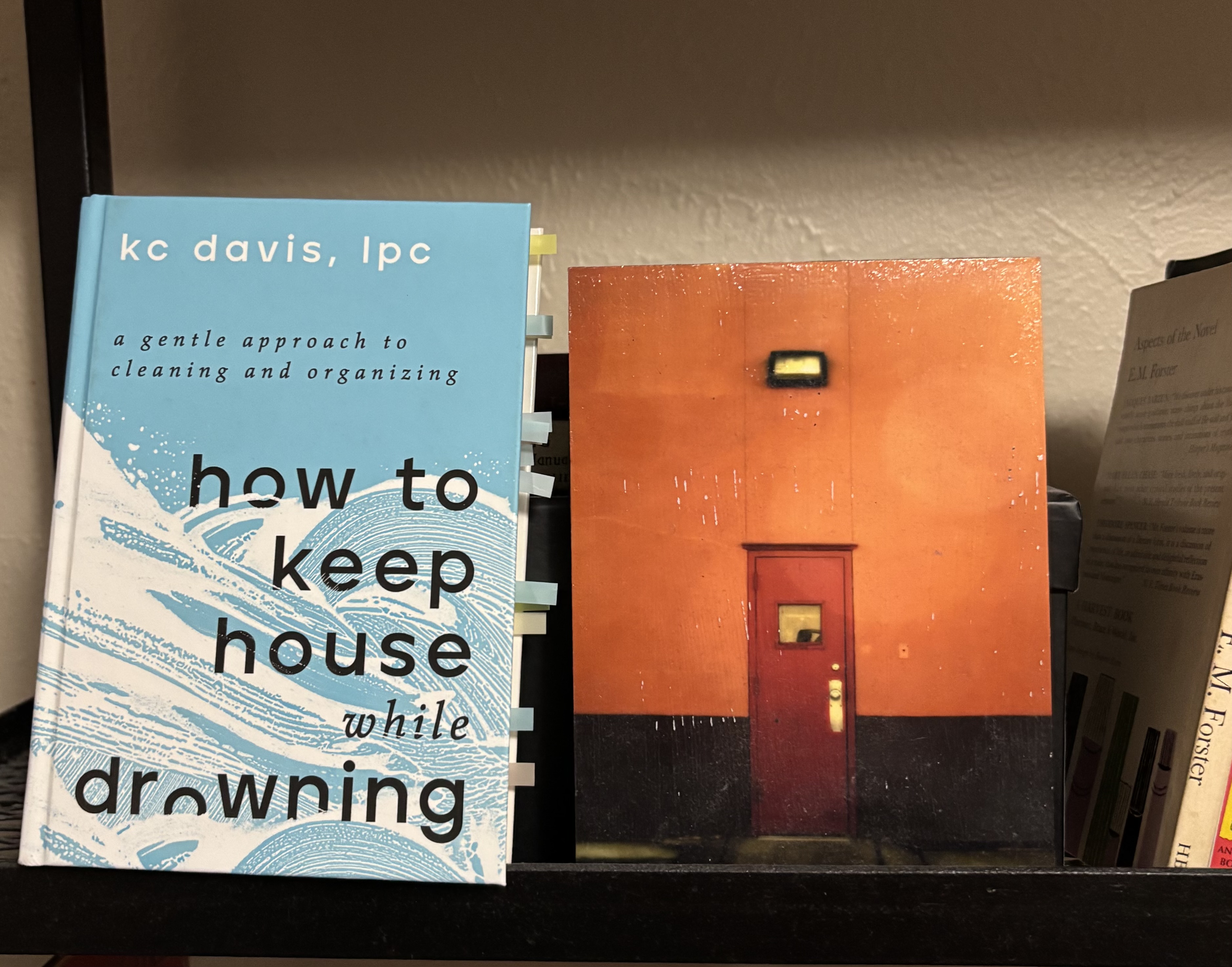
I love How To Keep a House While Drowning. The subtitle is “a gentle approach to cleaning and organizing,” and that’s just what I need. I am not motivated by what I should do or someone else’s standard. Frankly, I’m not even motivated by my own standards. 

I am motivated by grace and understanding and generosity, and this book is an abundance of those things.

In the first few pages, Davis starts in with this wisdom: “You don’t exist to serve your space; your space exists to serve you.” Many of my struggles with keeping house are based on my suspicion that I somehow owe my apartment something. But really? I am there because of my needs (to have shelter) and desires (to be cozy af). Therefore, it makes much more sense to approach it in ways that serve this purpose.

When I approach housework as a way of honoring my needs, my perspective shifts. What would make Future Me happy or help her relax? That is why I clean. That is why I declutter. Not to impress some possible guests but to please myself.

Davis also addresses the binary status of done or not done. The point of housework isn’t to mark something as “done.” Now, initially, this offended me to my very core. You know I love marking things off a checklist. But the point of keeping house isn’t to finish, but to keep it functional. If my expectation is that something is finished, I will get frustrated the next time I have to do it again. But if I change my mindset to functionality, the whole process softens into something more sustainable.

The third thing I love about this book is the statement, “Self-care was never meant to be a replacement for community care.” There’s a whole lovely section on this, but one of my takeaways is the reminder that we still need each other. I can do the best I can with every resource and ounce of energy I have and still not finish all the things. It’s not just OK to help each other; it’s critical.

Anyway, this is easily one of my top five favorite books on keeping house. Highly recommend, especially if shame and unreasonable expectations tend to immobilize you. This book will help.

I’m writing about keeing house for 31 days. You can browse the topic list here!

Read Full Post »

The smaller the space, the more easily clutter becomes a hindrance. My bathrooms are the smallest rooms in my apartment, other than the closets (are closets rooms?), so keeping them tidy is crucial to their function. 

Conventional wisdom says…many things. Clear your counters. Store items neatly away in cabinets. This keeps your small bathroom looking tidy and neat. It also makes it easier to dust and wipe down surfaces. All these things make perfect sense for a lot of people.

Neurodivergent wisdom says if I can’t see it, then it might as well not even exist. I’m more likely to not only put something away but also be able to find it again if it stays visible. 

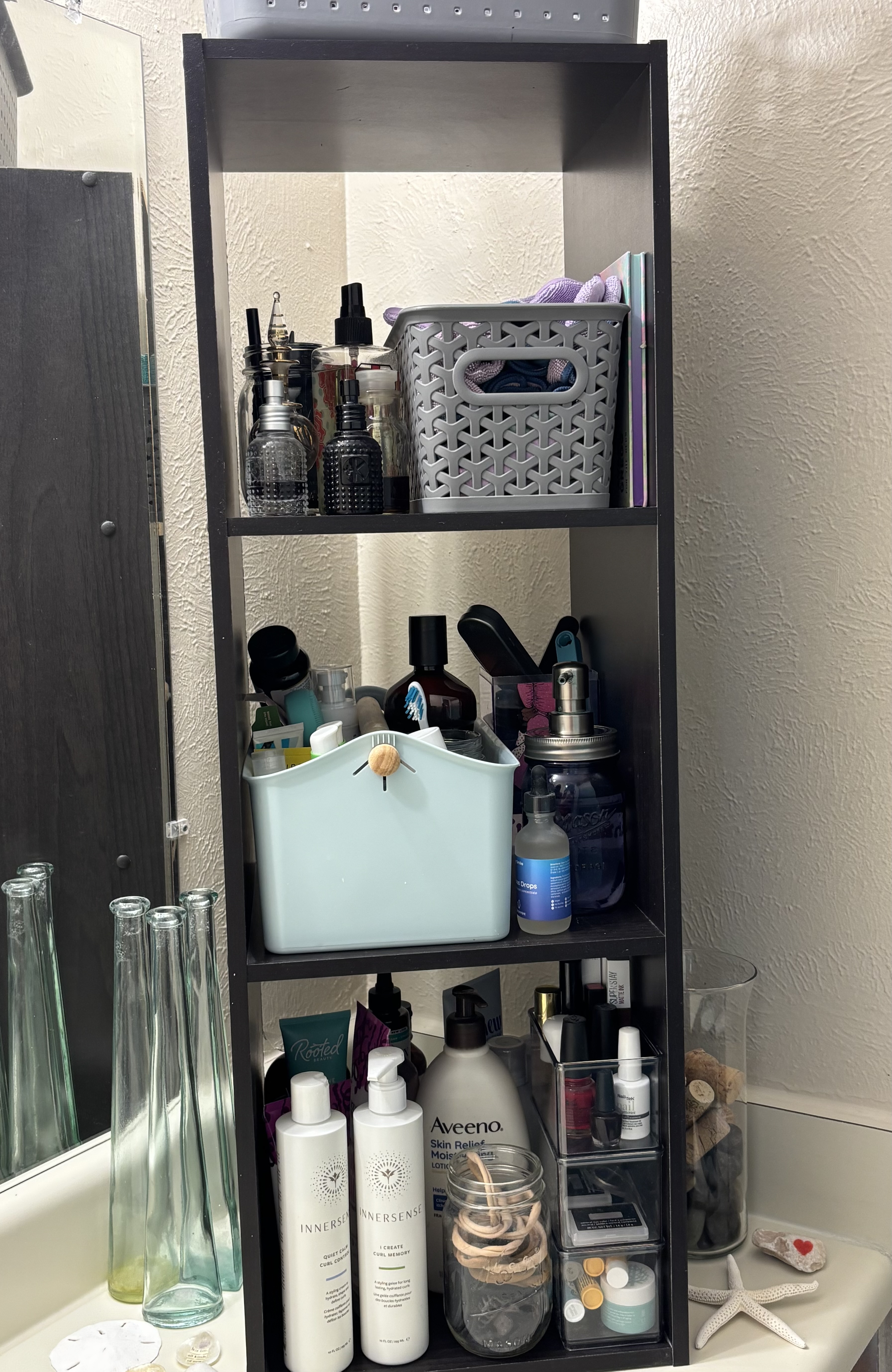
Hence the shelves.

There are two categories of items that belong on these shelves:

  • Things I use several times a week or every day, such as my toothbrush/toothpaste and hair products
  • Things I use so infrequently that I forget I have them, such as nail polish, eyeliner, or face masks.

It just makes sense to keep the things I use every day out. I mean, I’m going to anyway. There’s no way that I will tolerate taking my hair gel out of the cabinet, using it, putting it down while I scrunch it through my curls, washing my hands, and then also having to remember to put it back in the cabinet. It’s not going to happen. It’s going to end up staying out, so why not just make that the place it belongs? It takes no extra effort to put it down on the shelf than it does to put it down on the counter. Keeping it on the shelf makes it easy to keep it in its place.

As for the things that I use once a month or less, putting them away means inevitably buying ten of the same kind. For example, I used to get weekly manicures. I would pick the same color every time, so I wanted to have a bottle of that color at home in case it got chipped between visits. It didn’t chip very often, so I didn’t need to use what I bought for touch-ups. And I forgot I had it. At one point, I had seven bottles of the same nail color stashed in a drawer. Madness. So now things like that stay out in the open to remind me frequently what I already have.

As you can see in the picture above, there is still an element of design to it. Just because the main purpose of an organizational choice is to maximize function, that doesn’t mean it can’t also look cute. To tamp down some of the visual clutter, I have baskets and buckets for some of the smaller items. I also put mementos from friends and pretty bottles on either side to add a sense of whimsy.

Not shown is the drawer where I keep razors and small extras, such as contact lens supplies. I also keep cleaning products, refills, and washcloths under the sink. So not everything is out in the open. Anything that I use often enough to remember I have it, but not so frequently that it needs to stay easily accessible (the stable middle) can be hidden from sight. I occasionally buy an extra of something in this category, but it’s rare.

My bathroom organization has taught me that the way I keep house doesn’t have to look like everyone else’s. They don’t have to like it. It doesn’t have to work for them. It only has to work for me.

And these shelves really work for me.

I’m writing about keeping house for 31 days. Click here to see the topic list!

Read Full Post »

A common characteristic of neurodivergent brains is that we switch attention easily and often. Some call it a short attention span. Some call it easily bored. Some call it multitasking (or if you’re me, rapid-succession unitasking).

Whatever you call this phenomenon, it can make menial tasks a challenge to complete (there is another beast called executive dysfunction that makes things hard to even start, but we’ll save that for another day). Most days, I don’t have a problem getting started on a cleaning project, but my follow-through often gets sidetracked by another task.

One thing I have found helpful in addressing this issue is to gamify decluttering/cleaning. I actually use this with most of the routine things that need to be habits (such as drinking water, remembering to eat, getting exercise, etc.), but it works especially well when it comes to housework, or anything that has clear start and finish points. When I turn decluttering into a game, it gives my attention span the challenge it needs to stay interested long enough to complete the given task.

Here are a few of my favorite games for keeping house.

Finch App

I loooove the Finch app. You have a character (specifically, a birb – mine’s name is Bandit). You can decorate its home and dress it up. You can send it on adventures. You earn the items you need to do all these things by completing goals, which you can customize. For example, some of my goals are:

  • Clean or tidy for ten minutes (x6 per day)
  • Drink 16 oz. of water (x5 per day)
  • Exercise for 3 minutes (x10 per day)

There are several more, and I change them based on the goals I am focusing on at the time.

In addition to getting to send Bandit on adventures and buy her cute clothes, I also use Finch to track my longer-term progress. For example, I track the number of days each month that I complete my 6 units of cleaning. If my history shows I cleaned for 15 or more days in a given month, I give myself a little pat on the back and possibly a small treat. Like, maybe I get a sausage biscuit instead of making breakfast one Saturday. Sometimes, though, just seeing progress is reward enough.

Decluttering Surges 

My brain likes brief bouts of intensity, and this game scratches that itch.  For a set period of time (a day, a week, but not more than a month, or I get bored and distracted), I perform a specific task once per a subset of that time. Sometimes there’s a preset task, sometimes there’s a preset time limit. The constraints are what make the game.

For example, on Saturdays when I am at home all day and have a lot of cleaning to do, I challenge myself to get up and tidy or clean at the end of each hour. For example, when the clock reads 1:50, I put down my book or put aside my writing or press pause on the show I’m watching, and see how much I can get done before the clock turns to 2:00. It’s a race against myself. It not only results in my home being a lot cleaner at the end of the day but also reminds me to get up and move occasionally.

Another example is the challenge I did when I noticed piles were getting out of control. For one month, I tasked myself with getting rid of one bag or box of stuff (or one item, if it was too big to fit in a bag or box) per day. It was simple but effective.

Spot Cleaning 

Sometimes stuff accumulates. Or it looks dusty. Or something is wrong that will just take a few minutes to put right. Sometimes my decluttering surges focus on one small area.

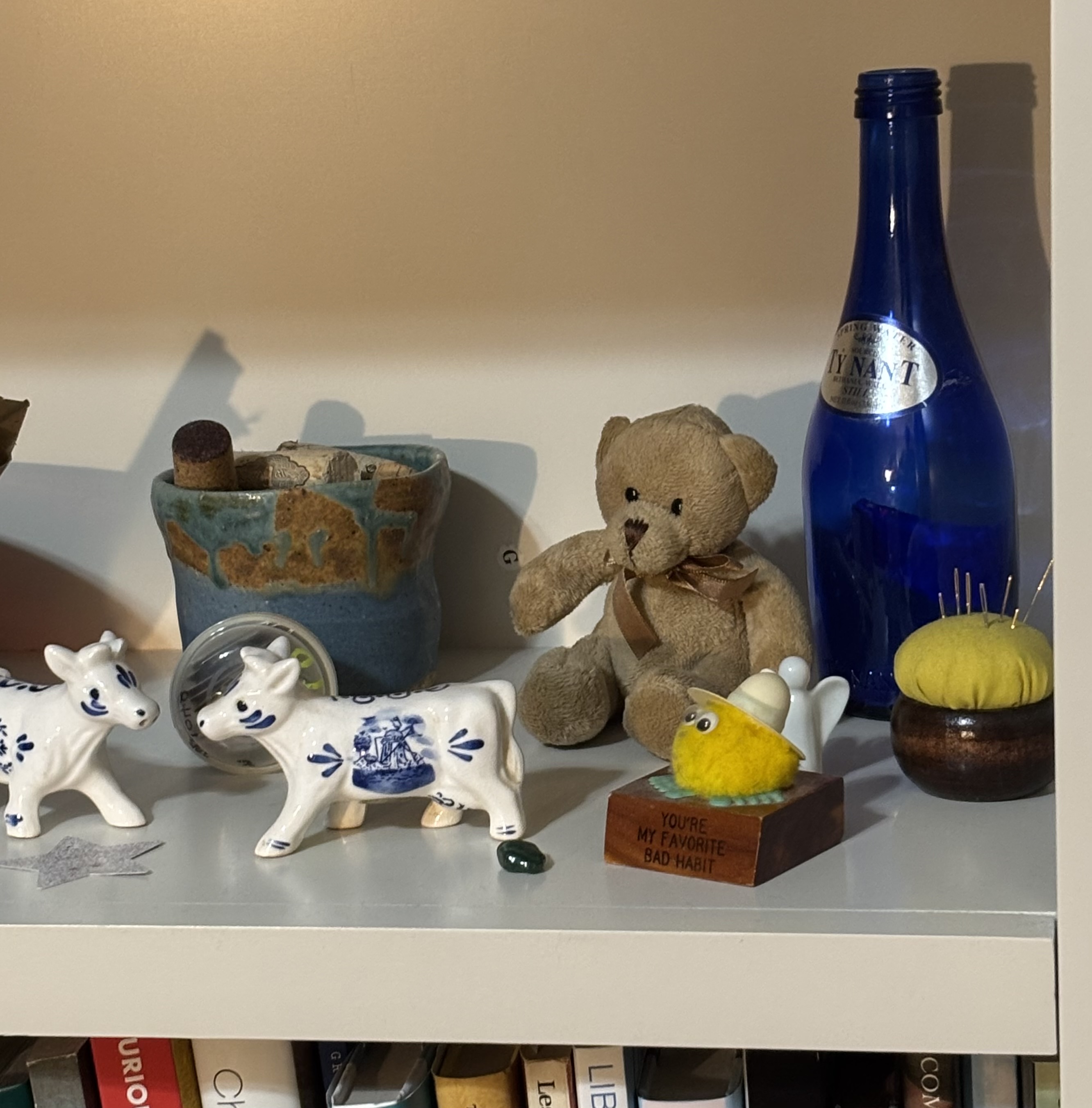
Take the shelf pictured above. It is designated as a space for mementos and knick knacks, but a couple of weeks ago, I noticed that it had also become a dumping ground for items that I was using in the area and just didn’t put away. A hammer and some nails, a hold sticker from the library, a coffee mug, etc.

So I set a 5-minute timer on my phone and got to work:

  • I removed everything from the shelf.
  • I dusted the shelf and each item that belongs there as I put them back.
  • I took the other items and put them up where they belong.
  • With the time I had left, I also dusted the shelf above it that holds the TV and moved the Christmas mouse figurine that was lingering next to it to my Christmas storage box (better late than never, I guess).

So in five minutes, I accomplished twice as much as I intended to. I won!

Spot cleaning is especially useful for those areas of my home that overwhelm me. I spot-clean my office a lot. It’s a small space that, unlike the rest of the apartment, I don’t use every day. It’s easy for it to become a dumping ground, and it doesn’t take long for it to look like it belongs on an episode of Hoarders. Such a sight makes me want to shut the door and run away. But I just got released to work from home three days a week, so it has to be functional. In the past month, I’ve made it my mission to spot-clean at least one shelf, one surface, or one square foot of floor per day, and the difference that has made in just a few short weeks is astounding.

It may seem silly to have to turn common chores into games just to get them done. But all I hear from that sentence is that they’re getting done, and any method that makes that happen consistently will always be welcome in my home.

I’m writing about keeping house for 31 days. Click here to see the topic list!

Read Full Post »

When I chose cozy for my theme this year, my home was one of the main focal points of that goal. What I quickly discovered is that the cozy elements were already there – the comfy linens, the coffee and tea nook, the fairy lights, a little reading nest in every major room, etc. Unfortunately, they were often hidden behind clutter or overshadowed by household chores waiting to be done.

Before I could have a home that I (or the occasional someone else) could experience as cozy, the issues blocking all my carefully curated comfort zones had to be addressed. I’ve spent a lot of time doing that this year.

This month, I’m talking about keeping house. Not the pristine clean of my childhood, where you could eat off the kitchen floor with no adverse consequences (other than my mother yelling at you not to mess up her clean floor). But a reasonable level of clean. What most people would consider clean. The tidy kind of clean that instantly calms me when I walk through the door.

To be clear, I am not naturally good at this. I’m prone to stacks and piles and items left wherever they landed when I got distracted by another task. I have books and journals not only piled precariously high on the table by my reading chair but also stacked on the arms of the chair itself. I often have dirty coffee and tea mugs scattered everywhere. I have a chair in my bedroom that I usually cannot sit in because it’s full of discarded clothing. I organize files for an hour only to realize that, instead of organizing, what I have actually done is create 4,321 more piles of paper.

Even so, I deserve to have a home that feels cozy and peaceful. Even if keeping house doesn’t come naturally to me, I can still maintain such a home with a few handy tricks and routines.

This is not a do-this-for-a-month series. This is a talk-about-and-plan-it-for-a-month series. This is too daunting a project for me or anyone who identifies with my struggles to be successful in just 31 days. Also, we can’t just do it for a month and call it quits. Unfortunately, no kind of cleaning, tidying, or decluttering is a one-and-done deal. It’s a lifestyle. Apparently. This is an offensive fact about adulthood and physics, and I stay mad about it.

I am writing this series because focusing on cozy this year has worked. I have become a little better at cleaning and tidying this year, and I want to celebrate that a little bit. 

I also want to share the things I’ve learned in case it does not come naturally for you either. There are the things I’ve done throughout the year to reduce the overall clutter in my home and make it a cozier place to live. For the things that seem to have become routines, I will include how often I have to do them to maintain what I originally accomplished. 

While I myself am far from being an expert, there are those whose wisdom on the subject I consume voraciously, and I have several favorites. I find their books, websites, and other resources delightful. It turns out, I absolutely love reading about cleaning and tidying. People who really nerd out about it both fascinate and charm me. I will drop links in posts where their signature advice is mentioned.

Taking care of a home is often seen as fundamental to being a functioning adult. On this particular critierion…I’m alright (most days). I suspect that a lot of people can relate to that. That’s my main target audience for this series. Let’s learn together! 

I also would love for people who are good at keeping a clean, decluttered home pretty consistently to read and chime in. Teach us your ways!

You can subscribe to follow along day by day, or just come back occasionally to this post, which I will update as a table of contents as each day goes live. As with any general, prescriptive advice – take what you need and leave the rest.

[And yes, all the pictures in the series are of my actual home.]

All the posts to date:

Read Full Post »

It’s been a sad week overall. Beloved icons have died. The death toll keeps rising due to flooding in Nepal, Tibet, and China. The summer blues have been particularly brutal this month, but I am proud of myself for doing a few things other than just working and for finding a little joy along the way.

  • One sweet thing that happened this week is the Simplified Fall Launch. Simplified has the perfect planner for next year, and I snagged one. It’s bookbound, saving me the frustration of dealing with spiral nonsense. It’s organized by calendar year, not academic year, which is how I organize my goals and thus my life. AND! It’s BERRY STRIPE, which is my all-time favorite Simplified pattern! I’m so happy about this.
  • Connor Storrie (Ilya on Heated Rivalry, for those not yet invested) now has a buzz cut instead of everyone’s beloved curls, and a large part of the fandom is in mourning. I have spent way too much time reading commentary on this man’s hair, and while I sincerely hope he is blatantly ignoring this chaos and just living his life and keeping his peace, I really needed the levity of caring about a celebrity’s locks this week. It reminded me of the HairYay!/HairNay! debates on the Michael Rosenbaum Message Board in the early days of Smallville fandom (MR played Lex Luthor, but I forgive you for not knowing that). In absolutely unsurprising news to any friends lingering from my earlier fandom days, I tend to fall on the same side of the debate as Out’s Ariel Messman-Rucker – Connor is a thoroughly attractive young man even with (dare I say – especially with) the shorn look. *cough*HairNay!forlife*cough*
  • I appreciate these notes on slowing down. I need this reminder sometimes, but it is hard to find things that make much of a difference that make sense for me. So much of the advice on slow living involves some sort of complete overhaul of how you live, and that’s not practical right now. I mean, someday I’m probably gonna make my own jam on the regular (it is on my goal list for my 50s, after all), but that day is not today (yes, I know it’s easy and delicious, but you know what’s easier and just as tasty? Buying already-made jam at the farmer’s market where I’m also buying other things and supporting local farms in the process). I like how this piece sticks to things like, “Maybe don’t schedule something social every single night of the week after you’ve already been social all day, every day” (I’m paraphrasing). Noted.
  • Very sad about Tim Curry’s death. I appreciate this compilation of tributes to him and his astounding body of work. What an iconic creative genius. 
  • And our Dolly Parton has passed. Jesus and I are in a bit of a fight about it. I know I’m curating my social media right, because all week, my feed has been flooded with memories and memorials of her kindness, grace, love, and her unwavering, fierce acceptance and protection of all. She is mourned by family, friends, co-conspirators, fellow musicians, fans, patriots, the American Library Association, and anyone who has ever needed to see a little hope in the world. Donate books and support/protect the vulnerable (with more than prayer – cash and tangible assistance – faith without works is dead, if you need a little help from James 2:26 to summon the strength, fellow believers). Maybe listen to her voice, bake yourself a little treat, and put it over ice cream this weekend. May we all live our lives even half as well as Dolly did.

I hope you have a restful weekend!

Read Full Post »

[Disclaimer: This post applies to a small subset of straight(ish) relationships. I recognize that it may not be applicable to most readers. It’s barely applicable to me, but it’s adjacent enough that I have strong opinions about it. Anyway, feel free to grab some popcorn or a cup of tea and enjoy the show.]

This video has been living rent-free in my head for a few days.

Go ahead and watch it. I’ll wait.

See what he did? How he acted? It’s got my whole dander up and my inner storm cloud rolling.

I was going to leave a comment on the post itself, but they’re having fun. I get it. People like daddies. They like to role play. They may even like to work out their daddy issues during said role play. I’m not going to kink shame.

And I love a southern gentleman. Someone who says, “Yes, ma’am.” Holds the door open or stands aside while I walk in first. Carries my stuff (extra points for this one, actually. I can trip over a speck of dust, so this is particularly helpful). Offers an elbow when we’re walking up stairs. I’m here for all these things.

But if you are a straight man who a) considers yourself a gentleman (southern or otherwise), and b) frequently laments that women no longer seem to be interested in that sort of thing – guys like this are the reason why. They remember they’re southern (and have all kinds of wild ideas about what that entails) but forget the gentleman part that is supposed to go along with it.

The man in this video may be southern, but he is not a gentleman. He seems to still want to go through the motions and be seen as one, though. He wants the credit without doing any of the work.

A true southern gentleman talks the talk and walks the walk.

He failed at both of these things.

First, a true southern gentleman would never, ever speak to a woman that way, like she is his ill-behaved child instead of a grown person and partner. The core motivation of true gentlemanly behavior is respect, not control. There was nothing respectful about his little speech. If a man I was dating talked to me like that, we would indeed be having a conversation about it, or I would be very pointedly opening my door again to get out and walk away.

Second, if he were truly a southern gentleman, she would not even have had the opportunity to open her own door, because he would have had the foresight to get there first. When that didn’t happen, his true colors came out pretty quickly, as he then proceeded to blame her for something he wanted but failed to accomplish.

Unacceptable.

I was raised to be a southern lady around true southern gentlemen. And I was taught that a southern lady does not wait out in the elements, sweating and sunburning, with her hair getting blown to kingdom come.

A southern lady does not wait for doors to be opened. Open doors wait for her. That’s what meeting the standard of southern gentleman looks like.

Certainly, there is room for grace. He may not always get to the door first, and she will open it herself. She will start up the stairs before he gets there. She may get so excited to see him that she rushes out the front door before he has a chance to come knock on it when he picks her up.

But as Footloose, my mom, and my memaw taught us, the correct response in that situation is “You look beautiful,” not “Have patience.”

The shriek I shrieked when he said that to her. Bold of him to stand that close, I’ll give him that.

Behavior like this is why the southern gentleman trope is one of my least favorite in fiction. It’s too easy for a man to act polite when his heart is really just a wasteland of misogynistic bullshit. And then people start thinking that’s the way it’s supposed to be in reality.

It is not.

Respect and kindness have to be at the core, or your “southern gentleman” persona is just a smokescreen for abuse.

Read Full Post »

Older Posts »