Feeds:
Posts
Comments

Archive for the ‘31 Days’ Category

Day 9 – Gear Up

photo (8)

FAVORITES

We are starting off our discussion of safety by talking about what to wear and how to run. Safety begins before you ever take a step.

First, you need the right gear.

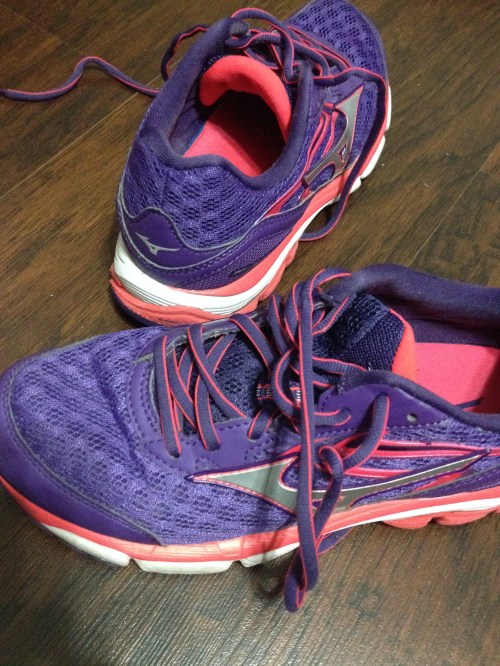
I recommend going to a place like Luke’s Locker, at least to buy your first pair of running shoes. Everyone’s foot and foot strike are different, so it’s important to find the right shoe for your particular needs. Most people, left to their own devices, will buy the wrong size shoe because they fail to take into account issues like sweat and swelling, both of which tend to occur when running. Find a store where the sales associates will measure your foot. I like Luke’s Locker because they also have you walk and run and watch your foot strike. I was skeptical at first, but then they matched me with my favorite running shoes I have ever worn, so now I’m a firm believer. I was astounded at the difference this service made.

Fair warning, though – if you take your shoes off without untying them first, the sales associate will yell at you. It compromises the integrity of the shoe’s structure (and thus its ability to protect you). I mean, they’ll yell nicely, because customer service, but still. They’re pretty passionate about it, which I can appreciate.

In related news, if such a store also sells other running gear (e.g., bras), have them measure you for that as well. You won’t be sorry. Best bra ever. It’s also a good idea to buy shorts, leggings, shirts, etc., that wick moisture away from you. Chafing is unpleasant no matter where it occurs.

Once you are properly outfitted, start thinking about your form. We will discuss form in the next post.


I’m spending 31 days running wild.


Read Full Post »

Day 8 – Safety Week

Note: I am at my parents’ farm for the first part of the week, and I am experiencing technical difficulties. For example, the fun thing we seem to be doing tonight is only allowing one browser to be open at a time (yes, I’ve checked all the things. It’s not any of them. It’s just the Internet hates the country). As you can imagine, I’m taking this in stride with the utmost patience and grace (/sarcasm). Posts are being written, but they might take a minute to get to the Internet. Ditto for pictures.

But safety is a crucial topic, so we press on.

The first couple of days of safety week will be about physical safety. These are important issues for everyone, but especially those of us who aren’t as nimble as we used to be.  We will spend some time talking about gear and preparation but also about awareness when you are out running, particularly if you are running in a new, unfamiliar area.

The two days after that will be about personal safety. Of course, this is also physical but it has less to do with safely performing the act of running and more to do with being as safe as it is in your control to be. We’ll talk about things to look out for and things you might think of avoiding (or at least think of never, ever telling me if you refuse to avoid them).

We will end the week with five exercises that go well with running and can help you strengthen so that you can run more safely.

Hope you enjoy!


I’m spending 31 days running wild.

Read Full Post »

photo-7.jpg

Still Life with Scale

Progress for Week 1:

Miles completed: 6.14
Days of proper hydration: 1/7
Days of good food choices: 0/7

If you just look at the numbers above, you might think I had a bad week. But progress and perfection are not the same word.

Those numbers don’t tell you that, even though I’m not an exact 7/31 of the way through my 50-mile goal, I’m actually a little bit ahead of the training schedule for safely increasing my intervals. My goal for the week was five miles, and I reached it Thursday.

Those numbers don’t tell you that, even though I only reached my goal of 100-120 ounces of water once this week, it’s still one day more than I reached it the week before, and I almost made the goal every day. My skin is also remarkably less scaly this week. Water is a frickin’ miracle.

Those numbers don’t tell you that, although I didn’t have one day when I could honestly say I ate well all day, I was more mindful of choices and made a few good ones. A day that I consider a good food day is one in which my food choices leave me satiated but not sluggish or squirrely. This typically looks like lots of fruits and vegetables, limited meat, and a low salt and sugar intake (which automatically controls for the carbs I tend to overindulge in). Even though I ate like crap this week, I maintained my weight from the week before.

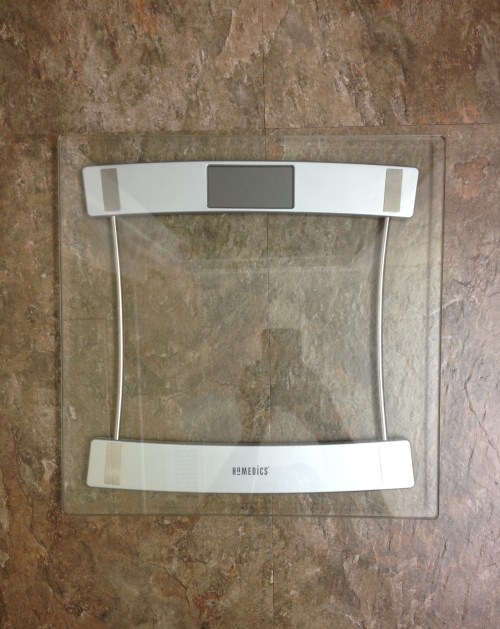
You might notice, however, that weight loss is not one of the goals I’m measuring during this project. In fact, I’m going to talk about it once, and then you won’t see or hear about the scale the rest of the month. I keep track of my weight because, as I personally do not have any condition that makes me gain or lose weight regardless of the food and activity choices I make, it’s an easy way to get an overall view of how I’m doing. But it’s not the only way (or even the primary way) I make this assessment. In my adult life, the time period when I weighed the least was also the time I was the least healthy, so I know weight doesn’t always tell the truth. My focus, energy, and anxiety levels are much more accurate when it comes to understanding how well I’m doing both physically and mentally. Noticing improvements in those areas are how I decide that a new habit is working.

Tomorrow (erm, later today), we start our week on safety.


I’m spending 31 days running wild.
 

Read Full Post »

Day 5 – Hydration

photo (17)

Don’t leave home without it!

The week I’m talking about hydration is the short week. More accurately, it’s two days. There’s not a lot to say about hydration except, “Do it.”

Our bodies need water, and they need more than a lot of us drink. If I don’t think about it, I might drink 20 ounces of water a day. That is abysmal. Sure, I get water from tea and vegetables and fruit, but still. That is not enough.

There are many websites out there that tell you how much water you need. Some of them will tell you to get a certain number of ounces, period. Some of them will offer you a way to input a few factors and then calculate how much you need (keep in mind that the calculation in that link is for the hours that you spend exercising. Otherwise, that is sooo much water and probably not necessary). Most of them include amounts as part of a larger discussion on how to tell you are getting enough water. I like those the best.

We each have different hydration needs depending on various factors: age, weight, activity level, etc. Through trial and error, I have discovered that I operate best on about 100 ounces of water a day. If I am more active some days (or if I’m spending time out in Texas’s signature heat), I will add 10-20 ounces on those days to compensate for the extra water loss through sweat.

If you are starting to add more activity to your life, what I encourage you to do is try out different levels of fluid intake and see how it affects you. Then you can make the choice that is best for you.


I’m spending 31 days running wild.

Read Full Post »

photo 1 (14)

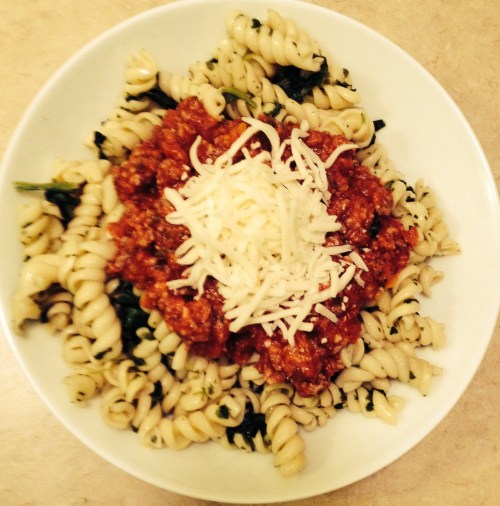
Carb-load, you say? Don’t mind if I do.*

*Warning: eating this much pasta at once might come closer to inspiring you to lie on the couch rather than replenishing you. There’s a difference between fueling and outright gluttony.

One thing I love about having a regular running practice is that I don’t necessarily monitor what I eat, but I end up eating better anyway. I tend to cut out soda, because running (walking…hiking…breathing) on days that I’ve had a Dr. Pepper is so much harder. I had a Cherry Coke today, and I thought that little hill back to the office was going to kill me. I am also not a fan of running when I’ve had a lot of dairy-intense food, regardless of how many pills I’ve taken to corral the lactose. I tend to stop doing things that make me feel extra exhausted or nauseated.

I also more readily notice food that gives me more energy. I eat pasta more often than usual, but instead of the ratio of pasta-to-vegetable pictured above, it reverses. Veggies become the stars of the dish. I tend to eat more fruit, and I tend to eat more eggs.

I have tried to follow several recommended diet plans for runners in the past. These are not bad plans. Most of them tell you to eat real food and stop eating junk, which is good advice for anyone, really. My focus would wane, though, after about the first couple of weeks (i.e., after the first round of groceries disappeared). I also found I had to tweak most plans too much to make them work for me. So I made my own plan. Running is probably what taught me to meal plan effectively.

What are your go-to snacks/meals when you are increasing your activity level?


I’m spending 31 days running wild. 

Read Full Post »

Day 3 – Rest

photo (6)

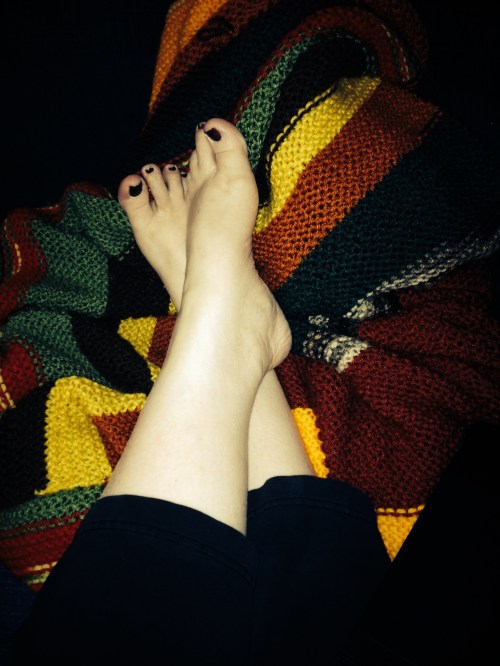
Swollen, raggedy feet. Lest you think my running life is glamorous.

When you are training for a race, a good trainer will tell you that rest days are as important as run days. Rest can help alleviate soreness and prevent injury. For me, rest gives me something to look forward to, especially in the early days of training when it’s the hardest to be motivated.

What constitutes rest will depend on your fitness level. For a triathlete who is a couple of weeks away from the race, rest could look like 20 leisurely laps in the pool or a 1-mile jog.

That is not what rest looks like for me. That is what a workout looks like for me.

At my current stage of fitness, rest for me is a slow walk. I’m talking mosey-level walking. Like…barely moving and smelling all the roses. Or it’s an extended stretching period (i.e., 30-45 minutes instead of my usual 15-20), minus the preliminary walking/running. The last time I was running regularly, rest days were spent in the pool, doing side-stroke laps or treading water for a half hour.

Rest days can also be just rest. Not doing any activity other than your normal getting-through-the-day. Whatever gives your muscles a chance to relax and rebuild, that counts as rest.

That kind of rest is the easy part.

Good sleep and psychological rest are also important to overall wellness. These are trickier for me.

I do fall asleep more easily when I’m active, but I still wake up several times a night as per my usual habits. Later this month, I’ll be talking more about good sleep practice, sharing tricks learned from others and what worked for me when I was working night shift.

Psychological rest is often elusive for me. It’s not that I don’t know what works. It’s just that those things are hard to want when in the throes of distress. Especially when there is cake in the house. Cake, however, freaks all my chemicals out and does not help me.

*whispers* It’s so delicious, though…

I need to work on incorporating best practices for rest into my life.

What are your best practices?


I’m spending 31 days running wild.
Read Full Post »

Day 2 – Safety

photo (5)

When I’m up this early in the morning, clutching a coffee cup makes everyone around me safer.

When I run or walk – no matter where I’m going – safety is my primary concern.

Nothing is more frustrating than hurting myself because I’m pushing too far past what my body can do. I want to set a training schedule and stick to it so much that sometimes I don’t pay as much attention to pain as I should. I haven’t been consistently active in my body at this size, so I am still learning through trial and error where the limits lie.

I need to learn (or at least refresh my memory) the strengthening exercises that make running safer. I need to remember to stretch instead of just collapsing into a chair at the end.

In the past, running has been an effective way to deal with anxiety, but sometimes, running induces it instead. Watching the news, particularly on weeks like this, make staying inside with the door locked seem really attractive. If I go out, I want it to be under very strict guidelines. I want it to be daytime so that the path cannot help but be well lit. I am hesitant to go without people I know, even if the place I’m going is well populated, because you never know who is lurking within that population, looking for the weakest of the herd. I sometimes come across as the weakest of the herd. Walking or running with friends takes care of the nerves, but friends aren’t always available.

I need to unlearn a little of the fear. To some extent, it is realistic and healthy. I will still take certain precautions (not going it alone in the dark, for example). But I also need to practice walking in it, because while those with malicious intent may very well be out there on my path, they don’t get to control me. I won’t stay caged for my own protection. That’s not the sort of life I want to live.

And that’s the question this issue of safety asks – what do I want my life to be? Do I want to be sedentary, unsure of my body and what it can do? Do I want to stay where I am comfortable or challenge myself to grow?

How are you challenging yourself physically? How are you challenging yourself otherwise?


I’m spending 31 days running wild.


Read Full Post »

Running Wild 1.3

My 31 Days series this year is going to be about running. This post is going to be a deconstruction of what I mean by “running wild.” We will be taking rampant liberties with the phrase.

First, a disclaimer – I am an amateur. I am not a coach, nutritionist, physical therapist, or trained professional of anything that has to do with running. I am not even particularly good at running. Some days, I am barely good at walking. This is simply a 31-day project to get me out of the house (read: out of my comfort zone), and the posts will be a combination of how that’s going and what I’ve learned.

Expect many references.

The main goal is to walk/run 50 miles in the course of the month. That should be a doable goal, even for someone starting from scratch. What I am hoping is that there is a little something for everyone here.

I will be mostly walking, because what I do know about running is that, unless you are in reasonably good shape already, it’s not something to jump right into. I’m going to have to work up to it. Again. For those of you who are looking to add more activity in your life, I invite you to join our discussions about how you’re easing into it, as I will be doing the same.

I will also be reflecting on the challenges of walking with friends vs. the challenges of walking alone. I don’t know about you, but I am more consistent with my workouts when there is someone who is depending on me to go with them. I also know that busy schedules keep that from always being feasible. I get nervous when I go alone, and I talk myself out of it. If you have something to say about staying motivated when you’re on your own, or if you have a brilliant plan for making schedules work with others, there will be days to discuss that.

Part of the month is going to be about body image. One of the reasons I don’t like to run (or exercise at all, really) out in public is that I do not look like a runner. There will be people whose reaction to this is, “A runner doesn’t look a particular way.” They, of course, are technically correct. I know this. I know the right answers about body image and body positivity. That does not in any way erase the reality of the struggle, at least not for me. There will be days we will talk about that.

I will be running wild. Probably not in the wild. Don’t be absurd. I’m not changing personalities. But I will be exploring areas I haven’t been before.

Each week will follow a basic structure. This week, I am introducing the four themes of the month: safety, rest, fuel, and hydration. Each Sunday is the week overview. Monday-Thursday are topics related to week’s theme. Friday will usually involve five outside sources pertaining to the week’s theme. And Saturday will be my progress report on how my goal to run/walk 50 miles is going, as well as a discussion of my favorite place I walked/ran that week.

Each day in the series will be linked below:

Day 1 – Overview (this post)
Day 2 – Safety
Day 3 – Rest
Day 4 – Fuel
Day 5 – Hydration
Day 6 – Friday Five: What I Read About When I Read About Running
Day 7 – Progress and Paradox
Day 8 – Safety Week Overview
Day 9 – Gear Up
Day 10 – Good Form
Day 11 – Rules of the Road
Day 12 – Running in the Dark
Day 13 – Friday Five: Five Moves for Safety
Day 14 – Week 2 Progress Report
Day 15 – Rest Week Overview
Day 16 – Rest Days
Day 17 – Sleep
Day 18 – Un-damage Your Calm
Day 19 – Sabbath
Day 20 – Friday Five: A Body at Rest
Day 21 – Week 3 Progress Report
Day 22 – Fuel Week Overview
Day 23 – What I Eat
Day 24 – What I Avoid
Day 25 – Decadence
Day 26 – Moderation
Day 27 – Friday Five: Snacks for Runners
Day 28 – Week 4 Progress Report
Day 29 – Hydration Overview
Day 30 – Water Wonder
Day 31 – Project Recap

I’m also linking up with Crystal Stine’s Write 31 Days project. If you want to explore what others are writing, hover over the “Linking Up” tab at the top and choose a category.

Read Full Post »

photo-1-8

There is at least one day every June when this is what dinner looks like.

When I started meal planning, I over-planned. I was trying to follow the advice of the existing meal planning wisdom that was available at the time, and it was not written for single people. I was convinced I needed to cook something every night. I was also convinced that I needed to go to the store every week, because that’s what every book I read on the subject advised regarding keeping the pantry stocked. At the time, I was working three part-time teaching jobs in three different counties, so the intention of going to the store every week died quickly. That’s also how my drive-in habit started, because the thought of still having to come home and cook after teaching five classes and being on the road for a collective three or four hours was not appealing.

After complaining to my mother about the difficulties of trying to make this square peg plan fit into the round hole of my life, I was slightly offended when she started laughing. She asked why I was making my life harder than it needed to be. She reminded me that I was the sole decision-maker of my household, and I could therefore decide what to eat and how often I wanted to cook. She also reminded me that I love cereal and sandwiches and that sometimes they make perfectly respectable suppers.

These simple reminders revolutionized my whole thought process about food. They taught me to be flexible.

Flexibility is the ultimate key to a solid meal plan. Many of us associate food with some kind of memory or longing. Most of us make dining choices emotionally at least part of the time. Otherwise, we would only eat what is perfectly good and healthy for us, and we would only eat it at sensible times and in sensible amounts. We also wouldn’t enjoy our meals as much, and I like to enjoy as many aspects of life as possible.

So rather than propose that you rid your plan of flexibility, I say embrace it. Have an idea of what you want to do, but don’t get too upset if your calendar doesn’t exactly reflect your reality. Mine seldom does, and the months with the most change are usually the months that I remember the most fondly.


I hope you have enjoyed reading my strategies for Epic Meal Planning this month. I am hoping to make the book – which will include my personal recipes and ways to expand or contract the tips to adjust them to your lifestyle – a reality by February. If you would like to keep up with its progress (as well as the progress of future projects), you can sign up for my newsletter here. My first newsletter will go out on Monday, so you can be a part of my inaugural group!

Read Full Post »

photo-5-2

Merely a cute cup display, or future tiny herb garden?

Yesterday, we talked about self-awareness and the limits that might impose as part of the wrap-up of our Epic Meal Planning journey. Today, we’re reviewing the theme of being aware of the space you have available and finding ways to maximize its usefulness.

I have always wanted to have a garden. I like digging in the dirt, and I like the feeling of accomplishment when I plant something that produces something pretty and/or useful. I have yet to have a backyard of my own where a proper garden would be feasible.

I am not easily daunted, though.

One of my former roommates gave me a green onion plant (i.e., green onion cuttings in a cup of water – dirt optional) one summer. I nurtured it on my sunny windowsill, and I didn’t buy green onions for six months. It only stopped producing because I went away for a week at Christmas and left the temperature of the apartment low enough that it got too chilled to survive.

This little experiment taught me that my space doesn’t have to be my ultimate ideal in order to be useful. And neither does yours.

I can grow enough onions and herbs for me with nothing but a windowsill. And now that I have a small patio, I can start expand into a small container garden next spring. Maybe I’ll grow tomatoes. Maybe I’ll even grow a lemon tree. That will cut down on the grocery list a little.

What are some things you can do to stretch your own space into working better for you?


I’m sharing my Epic Meal Planning Strategies for Write 31 Days – click to see the master list.

Read Full Post »

« Newer Posts - Older Posts »