Feeds:
Posts
Comments

Archive for the ‘Food’ Category

photo-3-1

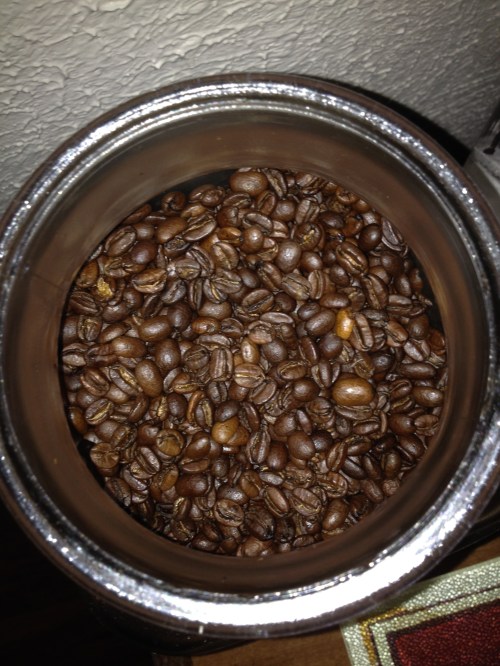
Coffee – my most important basic staple

Congratulations! You made it! Whether it’s actually Day 7 for you or Day 72, you have gotten your kitchen and life ready for Epic Meal Planning. Take a little moment to celebrate.

For the next three days, we will be talking about staples for your pantry, fridge, and freezer. Today we’ll cover basics, and this weekend we’ll talk about the special staple lists that will give your plan the fluidity to keep it interesting.

Your basic staples list will be the guiding force of your meal planning. You can search all over for a basic list to get you started, but the truth is that, unless you are also willing to follow someone else’s meal plan and eating patterns to a T, your list will be different from theirs. I recommend making your own list because you are more likely to commit and follow a plan that works specifically for you than if you are constantly trying to make someone else’s love of walnuts your own.

The purpose of your basic staples are to give you a myriad of options for meals. They need to be foods that you can combine to make several different things, which will infuse your meal planning with endless variety, the lack of which is probably the greatest reason people give up on plans they’ve had in the past.

An easy way to start your list is to choose categories. My categories are pretty standard:

  • Grains
  • Beans
  • Dairy/dairy substitutes
  • Meat
  • Vegetables (frozen)
  • Produce (fresh)
  • Canned goods
  • Condiments
  • Spice rack
  • Beverages
  • Baking

But that’s where the standard ends. To illustrate, I have listed some (not all – my spice and tea collections are massive – another reason to buy the book /shameless plug) of my basic staples for each category below:

  • Grains – long grain rice, arborio (risotto) rice, brown rice, corn tortillas, oatmeal
  • Beans – cannellini, black, pinto
  • Dairy/dairy substitutes – almond milk, coconut milk (canned and refrigerated), goat cheese, butter
  • Meat – ground beef, canned chicken
  • Vegetables (frozen) – spinach, broccoli, peas, lima beans
  • Produce (fresh) – onions, celery, carrots, seasonal fruit
  • Canned goods – roasted red peppers, black olives, veggie broth, chicken broth, applesauce
  • Condiments – brown mustard, yellow mustard, balsamic vinegar, apple cider vinegar, Worcestershire sauce, homemade pesto (frozen), olive oil, vegetable oil, coconut oil, grade B maple syrup
  • Spice rack – curry, my custom Italian blend, cayenne pepper, vanilla beans
  • Beverages – coffee, at least one black tea (current obsession – Irish Breakfast), peppermint tea, green tea, Emergen-C, red wine
  • Baking – bread flour, AP flour, self-rising flour, eggs, yeast, baking chocolate, baking cocoa, baking powder, baking soda

Just looking at that truncated list makes me hungry for the hundreds of meals I could make from these items alone. And, because it is specific to my tastes and preferences, I would actually be excited about eating them. Alone, not many of them are very invigorating, but with their powers combined, the choices are gloriously endless. Because I have limited storage space, I have to limit variety of most items (although clearly rice is not one of those items – I love all the rices), but across categories, I’ve chosen items that mix and match nicely so that I don’t have to limit the variety of my meals.

The beauty of having a good plan for cooking for yourself is that you are never at the mercy of something you only sort-of like. You don’t have to keep mayonnaise if you don’t want to. So your task today is to think of the things you like to eat most often and use that to form a list of staples that you will be able to keep in your house in the space you have available. Start with some basic categories and see where that leads you.


I’m sharing my Epic Meal Planning strategies for Write 31 Days – click to see the master list.

Read Full Post »

photo-13

Some of my overflow. I love bread flour for pizza crust. Not oranges, though. That would be weird.

Today is the last prep day before we begin setting up your meal planning system. Until now, we have been preparing your kitchen (and possibly your heart) for implementation. If this process were a painting, we would be finishing the canvas-stretching and gesso portion of the work. Tomorrow, we start the brush strokes.

This blog series will run 31 days, but keep in mind that the time needed to complete the process varies greatly from person to person, and most of that variation depends on these first few preparation steps. If you were able to map out several weeks of meals with the ingredients you already have, then it will delay the time when you will need to make your first grocery trip. You will still be able to plan your system this month, but implementation will take a little longer. So don’t worry if you see that happening. That’s part of why it was easy to expand this series into a book – not everyone starts at the same place, and that changes the timing of the process a little. Well, that and I think you’re really going to want my slow cooked tomato sauce recipe.

This first trip to the grocery store will happen toward the end of the meals you have planned for your snowed-in period, whether that’s two days or two weeks.  This is the trip where you take the list designed to help you use up random strange ingredients and buy as close to the amounts needed as possible.

In talking to people about this project, I discovered three main groups of grocery shoppers – those who stick to their lists, those who use the list more as suggestions rather than rules, and those who shop without any list at all. Obviously for this step you don’t need to fall in that third category (and frankly, if meal planning is something that interests you, you probably don’t fall in that category anyway). But I want to address those who tend to fall in the middle category. I consider myself to be one of you. I have a list for things I absolutely must get, but I budget for more, knowing that I will run into something extra that I want (usually of the cheese or bread variety, both of which always find a home in my kitchen).

For this particular step, however, it is vital that you stick exactly to your list. The whole purpose of this trip to the store is to help you prepare for the next step, and extra bread doesn’t help you (scandalous statement – I know). Extra anything doesn’t help you. Resist! There will be room for extra bread soon enough.

Tomorrow we will start building your fridge, pantry, and calendar to make them work better for you.

I’m sharing my Epic Meal Planning strategies for Write 31 Days – click to see the master list. 

Read Full Post »

photo-12

I write my shopping list directly in my planner – i.e., my lifeline – so that I know I won’t forget it.

Once you finish the meals you can make now, your next steps will be preparing for and going to the grocery store. This, however, is not going to be a regular store visit.

Three times during this process, you will have a specific shopping list and grocery trip, and they all have different purposes. The purpose of the first list/trip is to help you finish reducing the pantry to its bare bones so that it is ready to be built up with the staples that you use regularly.

In order to do this, though, you will need to confess.

That jar or box you still have in your pantry that you did not give away, throw away, or find a use for? You know the one I’m talking about – don’t try to act innocent with me.

We need to find something to do with it. We need to find something to do with all the things in your pantry or refrigerator that you don’t use very often but couldn’t bring yourself to get rid of when you were cleaning them.

When I first started putting my meal planning system in place, I had jars and jars of pickles. I had taken a canning class, and that was one of the things we made. It was a great class; I enjoyed it immensely.

The problem is that pickles aren’t my favorite food. I like pickle slices on hamburgers, and I will occasionally eat a pickle spear as part of an antipasto plate. But I had opened one of the jars for myself, and I had given several jars to friends. I still had five jars of pickles left. I knew that if I didn’t do something with them before I started filling my pantry back up, those five jars would stay there indefinitely, taking up space where food I actually wanted to eat could be stored.

So I searched for recipes that used pickles. For the next two months, my diet was pickle-intensive. I ate:

  • Pickle slices in my grilled cheese
  • Pickle hummus
  • Pickle chunks in tuna salad
  • Pickle chunks in pasta salad
  • Fried pickles
  • Pickle-brined chicken breast

With every meal until those jars were gone, if I could throw a pickle in it, I did.

(Do not try to make savory pickle waffles, even if you liberally spread sour cream all over them. Oh, the humanity! /psa)

I got really sick of pickles. You know what else I got? I got rid of all those jars so that I could move on with my life.

And that is what I want for you. So here are your tasks for this step:

  • Identify your outlier ingredients that you held onto.
  • Search for recipes in which to use said ingredients.
  • Based on the recipes, make a shopping list of the things you will need to buy in order to use up those ingredients. Be very specific about the amounts needed and make plans to purchase as close to exactly what you need as possible, because if you just end up accumulating an overflow of different random items, that doesn’t help you.
  • Plot the meals you will make with these recipes on the next open spots on your calendar.

This may be the weirdest shopping list you’ve ever made and the weirdest food you’ve ever eaten. I promise it won’t last forever (although if you have five jars of pickles, it may seem that way). When you are finished with this phase, you will actually have the space in your kitchen to make it start working better for you.


I’m sharing my Epic Meal Planning Strategies for Write 31 Days – click to see the master list.

Read Full Post »

photo-11

Sometimes, when the weather is hotter than I like (i.e., approximately 96.84% of the time), I crank up the A/C so I can snuggle in a blanket and pretend Texas has real seasons.


This is one of my favorite steps of the Epic Meal Planning process. This is the part of the process where I get to put a number on exactly how many days I could feed myself without leaving the house. This nourishes my rich fantasy of one day being a hermit.

I’m kidding. Sort of. Most days.

Let’s move on.

Today, we will break out our calendars and write down meals that we can make right now without having to buy anything extra to put with them. We are going to identify meals, count servings, and plan the days that we can go without shopping.

Identify meals

If you already cook a lot, this part will be easy. After spending the last couple of days peering at your fridge and pantry, you could probably do it without even looking. If you don’t cook a lot, take a few minutes and look back at your inventories to see what you have available. It’s not cheating to search for an ingredient via Google or Pinterest and see if there’s something interesting you can do with it.

List the different types of meals you can make. In order to count as a meal, it has to be able to make enough to feed everyone you feed on a daily basis at least once. For me, that’s one, but if you have a spouse/kids/roommates, you, of course, will make sure your ingredients cover enough for them, too.

Example: Right now, I can make…

  1. pasta and some sort of sauce
  2. pizza
  3. antipasti platters
  4. chicken salad
  5. frittata
  6. vegetable soup

I also note that I have sufficient breakfast supplies for three or four weeks.

Count servings

After you know what you can make, you need to determine how much of it you can make. This will determine your number of servings. Take your list above and calculate the number of times you can get a full meal out of the ingredients (again, a meal – even of leftovers – equals a meal for everyone you feed). If it’s something you can cook twice (see examples below), note that as well.

Example:

  1. pasta and some sort of sauce – 8 servings (cook twice – 4 servings each)
  2. pizza – 12 servings (cook three times – 4 servings each)
  3. antipasti platters (cheese, deli meat, bread, olives, roasted red peppers) – 6 servings
  4. chicken salad – 4 servings
  5. frittata – 6 servings
  6. vegetable soup – 6 servings

I’m ridiculously excited about these numbers.

Plan your days

Pull out your calendar. First, choose the days when you are going to cook. If you have multiple servings, and you embrace leftovers, try to space out your initial meal cooking days. Keep in mind days when you have plans in the evening to make sure you have time to cook.

Once you have all your meals plotted on their cooking days, fill in the extra servings on subsequent meal times. Try not to stretch one meal too long, because mold and bacteria are not proper food groups.

Example:

After plotting cooking days and taking into account meal times when I have planned to go out with friends (and thus don’t need to plan for a meal at home), I can eat heartily without going to the grocery store for about three and a half weeks. My inner hermit rejoices!


All hermit “jokes” aside, I actually recommend going through this step before each trip to the grocery store, particularly if it’s not your favorite errand. Either you will discover some hidden gem meals that allow you to postpone your market trip (and the hefty bill that goes with it) for a little while, or the random meals you find will be so unappetizing that a trip to the store will suddenly seem fun in comparison to enduring them. Either way, you win.

I’m sharing my Epic Meal Planning strategies for Write 31 Days – click to see the master list.


Read Full Post »

photo-2-3

I confess an unholy obsession with jarred roasted peppers.

My pantry stays pretty well organized. Before you prepare to pat me on the back and ring out a hearty, “Great job!” you should know that this accomplishment is due more to the necessity of small space rather than to my organizational diligence. I have six shelves that are approximately a square foot apiece, and those few shelves house all shelf-stable food – from dry beans and jars of sauce to baking basics.

I was raised on a farm under the wide West Texas sky, so I like a lot of space. For everything. I have a few friends who love the tiny house movement, and when they post pictures of their favorite layouts, I think, “Oh, what a cute closet that is.”

But being short of space in the pantry has been a gift. It means that unless I want my stockpile to leak out onto my table and cabinet tops (which I do not, for the record), I have to keep it organized. It forces me to use the space wisely. I have to keep in mind what items are staples (which we will discuss later this week) and what items are extraneous.

Today, you have two tasks:

Task 1 – Take inventory of your pantry space by answering these questions:
1. How much space do you have? Is it enough? Is it too much?
2. Which of the items currently in your pantry are staples (i.e., things you use frequently)? Which of the items currently in your pantry are extras (e.g., junk food, leftover jars from a former recipe that you no longer plan to use, etc.)?

Task 2 – Reorganize your pantry, prioritizing things you will actually use. To do this, follow these steps:

  • Take everything out of the pantry and set it on a table or some other open space.
  • Divide items into these categories: keepers (things you know you will use within the next month or two), give-aways (things you will not use but can still be used by someone), and throw-aways (things you will not use and should not be ingested by anyone ever).
  • Cut your pantry space in half. Yes – half. Don’t worry – this will not last, and you’ll have your space back by next week. We’re just carving out a little space to work with when we talk about staples.
  • In your new, smaller space, put your keeper items back in. They may not all fit right now, and that’s okay. Just leave them out in the organizing space, and alert family, housemates, etc., that they are a temporary work in progress.
  • Find friends or a local food bank where you can donate your give-aways. Toss your throw-aways in the garbage.

Once you have completed this, you will be ready to make your first meal plan tomorrow!


I’m sharing my Epic Meal Planning strategies for Write 31 Days – click to see the master list.

Read Full Post »

photo-1-2

Ominous-looking, isn’t it? Don’t be scared – show it who’s boss!

Before you can plan, before you can shop, before you can cook – you must take inventory. In the next few days, we will look at your pantry, make lists of all the things you could make without going to the store, and then make your first grocery list based on the things that you just need one or two ingredients to make something awesome (because you can’t wait to eat until the end of this month).

 Today, we are going to talk about the refrigerator.

 My fridge is my least favorite place to clean. No matter how many times I got advice from Mom or how many books/articles I read on the subject, the fridge is the one place that always seemed to get away from me. I’d do pretty well for a while, but soon I had more leftovers and weird odds and ends than I knew what to do with. So I used to do nothing (because I’m very mature and not at all avoidant of unpleasant tasks) and that’s how I ended up with forgotten, unrecognizable goop in a jar in the back of the fridge more often that I’d like to admit.

 Nothing worked until I took inventory and decided – once and for all – what belongs in my fridge and what does not.

 Step one is knowing what is there, right at this moment. You can write everything down if seeing it in list form helps you. For this stage, I prefer taking pictures, because I’m better at organization when I can see it spatially laid out.

 Step two is deciding what goes where. For this step, I did make a list of fridge rules. Until I consistently followed the rules, I put them on the front of my fridge as a reminder. Your rules may not be the same as mine, but here are mine as an example:

 – No half jars of obscure ingredients that you only used once for that one recipe that you didn’t really like and have no plan or desire to use again. I’m looking at you, capers.

– Stay aware of expiration dates. Expired items are a telltale sign that I kept something I never meant to use. There are many helpful lists online, such as this one, that will help you keep track of how long different foods keep in the fridge.

– No items whose size extends beyond the use I intended for them. Did I like that specialty marinade? Sure. Did I like it enough to justify buying the economy size bottle? No. Can I really use two dozen eggs in a week? Probably not, so that coupon that only works if you buy two doesn’t actually work for me. It’s not a bargain if half of it goes to waste.

– Limit space available for drinks (e.g., coconut milk, juice, white wine, etc.) to avoid having a shelf of half-empty cartons and bottles that will go bad before you use them.

If you live alone, this will be easier than if you live with others, particularly if they have varying orange juice pulp needs. In this case, I recommend having a family meeting where each family member gets their own space. That way, everyone gets to be picky about one thing. The rest of the allotted space is for things you share. For this space, everyone gets a say, but not everyone gets their way.

– Fight the urge to buy good-intentions ingredients. This is anything you have no actual plan to eat in the future or anything that requires more effort to prepare than you know you’re willing to spend on it.

 You’ll notice that I only have five rules. I recommend a short list, simply because you are more likely to keep the rules if they are small in number. If I stick to these five guidelines, I keep a much cleaner fridge, which leads to greater meal planning ease.

 We would be remiss if we didn’t also talk about what the rules for the freezer are. Your rules, like mine, might be an extension of the fridge rules. The main difference is that my freezer rules are a bit more relaxed because things last longer (but not forever) in the freezer. The freezer gives me an idea of what next month’s meals could be.

 So today, take your inventory and make your list of rules. Tomorrow, we tackle the pantry!

I’m sharing my Epic Meal Planning strategies for Write 31 Days – click to see the master list.

Read Full Post »

epic-meal-planning-large-icon

I have a calendar that hangs in my kitchen that is specifically for meal planning. Once a month, I pull it down and schedule specific shopping days and specific cooking days, and I decide what I’m going to cook and use that to create my grocery lists. I try to aim for Friday evenings for shopping days, and I really prefer having lightly scheduled weekends for cooking time so that I don’t have to cook during the week.

I like having a plan because it keeps me from making habitual terrible food choices that zap my energy.  I do not like having to find an hour or two a month to produce said plan.

Enter epic meal planning.

This level of meal planning is not for the faint of heart. It is structured and detailed but also magically flexible. This is go-on-a-dangerous-quest, feed-a-horde-of-hangry-dragon-slayers, survive-NaNoWriMo-without-gaining-20-pounds meal planning.

Once you’ve completed this process, you will be able to make each month’s plan to feed yourself and your loved ones – choices, schedule, and lists – in about ten minutes. And once you’ve done it, it works forever. I occasionally tweak my plan – add some new, exciting ingredient to kitchen staples, add a new recipe I liked, archive an old recipe that doesn’t seem appealing anymore – but that only takes a few minutes.

Having a structured plan doesn’t mean that you can never find a new recipe on Pinterest, go straight to the market, and make it that night. It also doesn’t mean you have to give up the drive-through forever. It does mean that you have something to work with on all the other days (and will help you say no to making the drive through a major habit). It perpetually answers the “What will we have for dinner?” question.

I’m so certain that this process will work for you like it works for me that I’m writing a book about it. It started as getting posts ready for Write 31 Days and has morphed into something larger. The book will include a lot of my own personal recipes and tips on how to expand the plan to fit your personal lifestyle, but this blog series will get you started.

Here are a few things to know about my approach before we get started:

– I looooove leftovers. I can happily eat the same thing three or four times a week, especially if I can throw a poached egg on top and call it breakfast. My favorite weeks are those when I have an open weekend where I can cook three or four meals and just eat on those the whole next week.

If you do not share this love, this will still work for you. You’ll just need to cook more often. If you despise leftovers or have intense appetites in your household that make leftovers as elusive and mythical as a unicorn, and you don’t already have a meal planning system in place, then we are going to be besties by the end of this month. Having a plan will revolutionize your life. You’re welcome, and I love you, too.

– I am not you; you are not I. The minute details of our meal planning will be different because we are different people with different lives. I am single, and I live alone in a spacious two-bedroom apartment with a not-spacious kitchen and an abysmal lack of food storage space. My kitchen staples are probably going to look a lot different from yours. That’s okay – there is still something to be learned from that step.You may have more storage space and thus more freedom in this area than I do, and I encourage you to embrace it.

You may also probably shop less often than I do. You probably have a real pantry and a full-size freezer in your utility room or garage. I commend you on your great use of space. Feel free to send me pictures so that I can live vicariously through you, as having a pantry and extra freezer is one of the top five reasons I’m saving up to buy a house. If you have the space and would like suggestions of freezers to buy, I have been making eyes at a couple of units at Lowe’s and would be happy to advise.

Focus on the instructions, not the examples. The purpose of examples is to see how concepts might be applied, not to become the concepts themselves. The goal of this month is to create a plan that works for you, and that probably won’t work if you’re trying to replicate exactly what I do and eat.

– I’m 41. I’ve been the adult who is primarily responsible for my nourishment for quite some time. Most of the information I will pass on in the next thirty days is from my own trial-and-error experience. I also read a lot on the subject of food, and I will give recommendations for further study whenever the opportunity arises.

If you are twenty and have moved out of the dorm and away from its meal plan into your first apartment, there may be some things that I’ve forgotten to include simply because I am old and forget that people don’t know how to do them. First of all – welcome, and good for you! If I had started doing this when I was twenty years old, I would be a lot healthier right now and wouldn’t have had to unlearn so many bad habits to get to a decent relationship with food. Second, please feel free to ask questions. That’s what a comment section is for. And third, if you are currently staring into the blank canvas that is your first kitchen, a couple of great additional resources for getting started are Alton Brown’s Gear for Your Kitchen and Kallio and Krastins’s The Stocked Kitchen.

– You can use a computer to collect recipes and compile your grocery lists, and I encourage this if you are starting fresh, because copy-paste-print is super efficient. If you prefer to kick it old school (as I do), you’ll need a recipe box with dividers, index cards, a pen, a hole punch, and a binder ring (for shopping purposes). For both methods, you will need some sort of calendar system to assign meals to days. Regardless of which method you use, once you’ve completed the overall process, meal planning will be a breeze.

If you want to review any section we have covered, they’ll all be archived here (archive may be delayed on days I’m without a computer, but all links will be up by the end of the month):

Section One – Pre-planning Phase: Taking Stock

Day 2 – Confronting the Fridge

Day 3 – Confronting the Cupboard

Day 4 – If I Got Snowed in Right Now…

Day 5 – Grocery List #1

Day 6 – Shopping Day #1

Section Two – Planning Phase 1: Making Lists

Day 7 – Basic Staples

Day 8 – Meal Staples

Day 9 – Saving Graces

Day 10 – Recipes for Fall

Day 11 – Recipes for Winter

Day 12 – Recipes for Spring

Day 13 – Recipes for Summer

Day 14 – Breakfast

Day 15 – Grocery List #2

Day 16 – Shopping Day #2

Day 17 – Freezer Tips

Section Three – Planning Phase 2: Monthly Planning

Day 18 – Recipe Cards

Day 19 – Revisiting Inventory

Day 20 – Master Calendar

Day 21 – Shopping Days, Cooking Days

Day 22 – Schedule Reminders

Day 23 – Grocery List #3

Day 24 – Shopping Day #3

Section Four – Planning Phase 3: Entertaining and Special Occasions

Day 25 – Traditions

Day 26 – Party Planning

Day 27 – Anticipating Needs

Day 28 – Recipes – Finding New Loves and Rekindling Old Flames

Section Five – Review

Day 29 – Self-Awareness

Day 30 – Space-Awareness

Day 31 – Flexibility

Read Full Post »

The Magic of Onions

photo (8)

We had a church potluck on Sunday to welcome back the college students who go away for the summer and to welcome the new school year.

It came at a good time. I have been eating terribly for the last few weeks. Work is busy, and I’m trying to finish a manuscript (about meal planning, oddly enough), so home has been easy food (sandwiches, cereal, the occasional drive-through) and comfort ice cream. I needed to get back in the kitchen and make something again.

I am going to the farm this coming weekend, so I decided to use up some of the veggies in my fridge and on my counter while they were still at their peak. I chopped everything Saturday night so that I could just load up the slow cooker in the morning to create a little ratatouille/caponata hybrid.

Then I went about my evening. It didn’t go as planned. I planned my usual evening of late – sitting in front of the television or reading until I was tired.

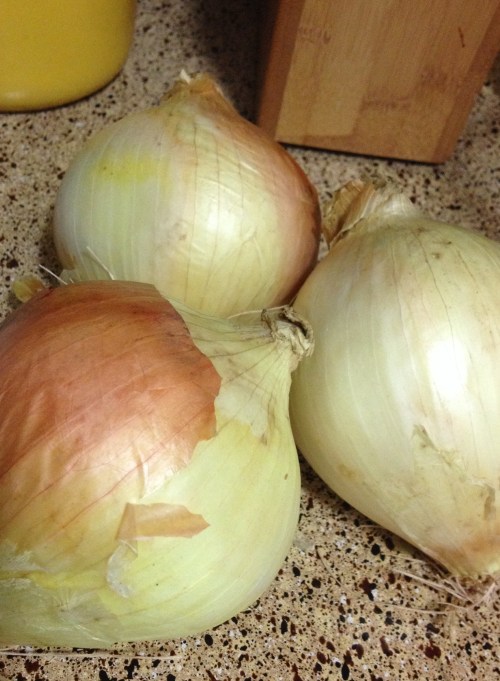
But there’s something about onions.

The smell of onions in the air changes my mood. It reminds me of MeMaw’s garden and kitchen. It makes me want to read cookbooks and dream of future dishes. It got me off the couch and into the office to write another 1,100 words on meal planning.

Onions might be my favorite vegetable.

I mean, I’m not going to sit and eat a raw onion like an apple, but I put them in almost everything I cook. I like raw onions just fine but if a dish contains them, they are so overpowering that they’re all I can taste. Then my mouth gets confused, because why is this onion creamy?!?! Oh, wait. Because it’s actually guacamole. My taste buds register it as an oddly green onion dip.

When I make guacamole, I mince the onions (and the peppers, because ditto on the strong taste of peppers) and soften them for a few minutes in a little olive oil. Then I drain the oil and reserve it for a future stir fry or scrambled eggs and let the onions and peppers cool while I prepare the avocado, tomatoes, and celery (yes, celery. Do it! You know, if you like celery). Then I mix it all together, sprinkle in some fresh cilantro, salt, and pepper, and enjoy, usually straight from the mixing bowl.

What’s your favorite veggie? What’s your favorite way to eat it?

Read Full Post »

photo 1

April was a month of celebrations and change. I typically am opposed to changes,  but I like these ones.

Mom and Dad, my brother-in-law, and several friends all have birthdays in April. I didn’t get to see my parents on their birthdays, but we talked on the phone. I got to go out to dinner with several friends and my brother-in-law on their birthdays, though. I forget how expensive going out to eat is. How did I do that so often when I was in college? Mystery.

I did get to deliver good news on my parents’ birthdays, though. On Mom’s birthday, I got to tell her that I got a new job (which started today!). And on Dad’s birthday, I got to tell him that I found a new place to live (moving in June). I think they’re even more excited than I am. Mom broke out that chipper, squeaky voice that she usually reserves for babies and feral cats she’s trying to woo.

I’ve been binge-watching Grey’s Anatomy. This show has taken over my life. I’m on season five, and I already know the terrible thing that happens toward the end of the season, and my heart is angry already.

Most of my reading has been cookbooks. Simple Food, Big Flavor by Aaron Sanchez makes me want to roast all the things and make them into sauces. I don’t like the way he writes, but the food makes up for it. Simply Done Well Done by Aaron McCargo, Jr. also had some great food ideas. There was a lot of deep-frying and heavy cream involved, though, so they’re going to have to be sometimes-food. My favorite cookbook I read this month was Sunny’s Kitchen by Sunny Anderson. I appreciate her stories about how her travels have affected her cooking. I also appreciate that she cooks exactly the way I do. Usually when I read a cookbook, I find myself saying, “That’s a good idea, but I would change this and substitute that.” Not on hers. I will follow those recipes exactly.

In March, I started a new health plan that basically involves drinking more water, eating better, and exercising regularly. At the beginning of April, I had already lost 6 pounds. Now I’ve lost 3 more pounds, even though I have eaten luxuriously and only completed about half of my exercise days. Yippee!

photo 3 (1)

I’m linking up with Leigh Kramer. Hop over there and tell us what you’re into!


Read Full Post »

Superheroes and villains. Family and pie.

In other words – the essentials.

I spent NaNoWriMo fleshing out a new story wherein the main character is a superhero who currently has telepathy and mad combat skills. Her powers are up in the air – I had a lot of fun writing different scenes where she has different powers and seeing how that would play out. In the end, my favorite scenes (or the ones that I can actually piece together and make into a story) will probably dictate what her powers will be. I only finished about 10,000 words, but I love her, so this will be a story I revisit.

Of course, this meant I watched a lot of Smallville. You know, for inspiration. And trips down fandom memory lane. And eye candy.

Thanksgiving was fun but seemed rushed. I took the whole week off last week so that I could have two days of getting-things-done and be able to relax when we went to see the parents on Wednesday instead of spending the holiday making lists of all the things I needed to remember to do when we got home Sunday. Of course, like a fool, I then told people I took the whole week off, and because I would much rather have dinner and hang out with people I miss than clean my nasty apartment…well…that’s how that went.

You’re right. I totally told them on purpose.

To-do list completely not done, we left around noon on Wednesday to travel to the parents’ house. This was my view:

photo 1 (18)

Love that sky.

But I still managed to relax a little at Thanksgiving, although my lists on my phone are out of control now and I might never get them done. We had traditional fare and lots of dessert. I ate four different kinds of pie (over the course of the weekend, to be clear). There was coconut cream pie and chocolate meringue pie and lemon pudding pie and because that went so well (and so quickly), a chocolate pudding pie. There was also a pecan pie, but I am not a fan, so I left that one to others.

I really love pie, y’all.

The weather is finally exactly how I like it. Cold. And not the “cold” that some people start complaining about in late October when it dips slightly below 70. Like…ice has formed. I mean, not here. But at my parents’ house –

photo 2 (21)

Ice on the kitchen window.

photo 3 (8)

Frozen vines and icicles on the trellis in the backyard.

I didn’t read a lot this month, but it definitely had a theme to it. Holidays apparently make me want to look at my relationship with food. I picked Unbearable Lightness by Portia de Rossi for my memoir/biography discussion for book club. She already had me at this:

photo 1 (17)

This is the best, rawest, most honest capture of what it’s like to have an eating disorder that I’ve ever read. Sometimes, it was like reading pages out of my own journals from my late teens/early twenties. It would be tempting to write a memoir on this subject from a heavy now-looking-back perspective – to rush to lessons learned and mountains moved. But she didn’t do that, and that’s why this book is so important. She takes you through the details of her thoughts and feelings, which, if you’ve ever thought and felt similar things, doesn’t give you the chance to say, “Well, that’s not me.” It hits you in the gut and makes you deal with it. I cannot recommend this book enough.

I also read a lot of Mireille Guiliano. I loved the food philosophy (i.e., common sense) of French Women Don’t Get Fat, so I tried French Women for All Seasons (I liked it…and found it charming that she included sections on how to tie scarves in each season…but otherwise meh) and Women, Work, and the Art of Savoir Faire (I found some parts very useful and some parts very baffling). She reminds me a little of my mother.

So that’s what I’ve been into this month. What have you been doing/eating/reading?

I’m linking up with Leigh Kramer – click the button below and join us!

What I'm Into button

Read Full Post »

« Newer Posts - Older Posts »