Feeds:
Posts
Comments

Archive for the ‘Epic Meal Planning’ Category

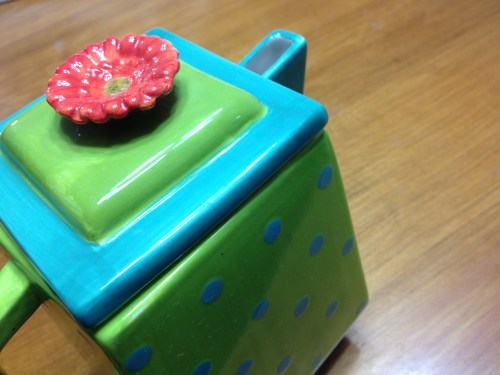
photo-2-4

This is my springiest teapot. I love tea parties. Mostly for the hats.

My meal plan in the spring is driven by the farmers market. Whatever is fresh out of the ground or off the vine is what I want to eat. This leads to all kinds of experimentation as I try to figure out what I’m going to do with this weird vegetable, fruit, or herb I just bought. I occasionally eat something that I don’t care for, but more often, this is my favorite season to cook, because I find so many new things to love.

  1. Roasted red pepper and asparagus quiche – Asparagus has a small window of time when it is actually fresh and seasonal (at least in Texas). There are about three weeks in March/April when asparagus grows like a weed. Then you just have a pretty plant. Dishes like this help me take full advantage of those weeks.
  2. Pasta primavera – A dish so made for seasonal produce that it’s even in the name.
  3. Salad – when you bought so many things at the market that you basically have to eat nothing but vegetables so that they don’t go bad before you get to them.
  4. Maple dijon roasted carrots – I love a roasted vegetable and honey mustard. Double win.
  5. And before it gets too hot to use the oven, I like to squeeze in some last-minute pie. Blueberry is my favorite.

Spring is when I most often want to read about food, too. Ruth Reichl is one of my favorite food people. Check out My Kitchen Year for a nice read with some amazing recipes. You know what? Go ahead and check out all the things she’s written and contributed to.

I cannot wait to get my hands on Padma Lakshmi’s The Encyclopedia of Spices and Herbs. I may just spend all of next spring covering veggies in different spices. Love, Loss, and What We Ate is also beautiful.

What is your favorite spring vegetable? How do you like it prepared?


I’m sharing my Epic Meal Planning strategies for Write 31 Days – click to see the master list.
Read Full Post »

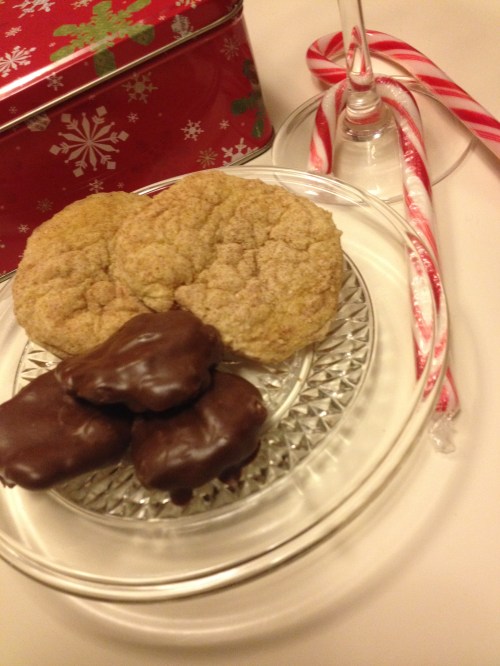
photo 4 (5)

I’m excited for my baking staples to make an appearance in my house soon. I’m also excited for candy-making time.

Winter recipes are designed to create warmth. Winter recipes make me think of Carla Hall and her insistence that food should hug you.

I eat a lot of casseroles in the winter. They are easy to make, and they feed a lot of people. Your mind may be going to memories of weird potlucks of the past, but let me share a few delicious things that will make casseroles some of your go-to favorites, too.

  1. Stuffed shells – so easy to make; so tasty to eat.
  2. Cauliflower pepperoni pizza casserole – this is a sneaky way to get a lot of vegetables in a dish, for those of you who either a) have a hard time getting all your vegetables in or b) are responsible for feeding people who love pizza but not so much vegetables.
  3. Lazy Sunday casserole – this makes an appearance in my house almost as often as roast in the winter.
  4. Stacked chicken enchiladas – stacked enchiladas are pretty much the only enchiladas I ever make. All the flavor of regular enchiladas with none of that rolling nonsense.
  5. Fancy green bean casserole (with goat cheese) – I love a green bean casserole with the salty cream-of-whatever soups and the canned fried onions on top, but this version is glorious. I leave out the mushrooms because life is too short to eat fungus on purpose, but I can vouch heartily for the rest.

In the winter, I also love to bake bread. I am excited right now, because the countdown has begun – I have a loaf of bread in the fridge and half a loaf in the freezer, and by the time those are eaten, it will be cool enough for bread-baking. One of my favorite bread resources (and the one I recommend if baking your own is daunting to you) is The New Artisan Bread in Five Minutes a Day by Hertzberg, Francois, and Gross.

What foods do you look forward to eating this winter?


I’m sharing my Epic Meal Planning strategies for Write 31 Days – click to see the master list.

Read Full Post »

photo

Proof from The Weather Channel that it was fall-ish earlier in the day. I need to come up with a breakfast stew so that I can usher in the autumn as soon as the mornings start feeling like it.

This week gives you some time to catch up– to finish your snowed-in meal days or finish your pantry lists. While we’re still working on those steps, I’ll be linking you to some of my favorite recipes (arranged by season, of course) and some of my favorite books on building different parts of your pantry, planning meals, and building a recipe repertoire.

 As we are currently in fall (allegedly), that’s the season we will start with. Fall means comfort food to me. And this year, during this particular election season, being bombarded with the terrible human Trump has always been and continues to show no real remorse for being, I’ll take all the comfort I can get.

 If you are looking to change things up, here are some recipes that I have tried and love especially in the fall.

  1. Pumpkin bean soup – I cook the cannellini beans from dry and substitute rosemary for the sage, but otherwise, this is a simple soup that will both fill and warm you.
  2. Roasted butternut squash – With everything. On everything. Side dish or main dish over rice or in a tortilla. This particular recipe calls for paprika and turmeric, but you can use any spice or spice blend, and it will be awesome. I even used a mole rub one time, and it was still delicious. I don’t even like mole all that much, but I liked that.
  3. Ditto for roasted Brussels sprouts.
  4. Or put those two ideas together and make a salad. Or a skillet meal.
  5. And I love everything Joy the Baker does – including this delicious tart to eat up the last of the tomatoes that are still hanging on from summer.

 Speaking of Joy the Baker, her Homemade Decadence is full of ideas that I can’t wait to try out on people at parties. And because fall often finds me clinging to fresh local vegetables, Martha Stewart’s Vegetables and Alice Waters’s Chez Panisse Vegetables often have my attention more at this time of the year.

What are some of your fall favorites?

I am sharing my Epic Meal Planning strategies for Write 31 Days – click to see the master list.

Read Full Post »

photo-1-3

This is what a perfect Saturday morning looks like.

You should have a comprehensive staples list by this point in the process, and that will be the groundwork of a meal planning system that is easy and organized (and thus effective).

But we all have our weaknesses, and most of us particularly have weaknesses when it comes to food.

My weakness is Whataburger, specifically the patty melt meal with onion rings. And a Dr. Pepper.

I could have a delicious meal on the calendar that would not only satisfy my hunger but also energize me and nourish my body (word on the street is that food is supposed to be fuel and actually make your body feel good instead of bloated, exhausted, and generally gross). I could even have it made – where all I’d have to do when I got home is put some on a plate and pop it in the microwave.

But then I hear the burger’s siren call, and I’m turning into the drive-through.

There is no shame in doing this occasionally. I don’t even want to live in a world where this patty melt doesn’t exist. Three times a week is probably (read: definitely) too much, though. Three times a week might be (read: definitely is) why my blood pressure got high in March.

So I need a saving grace.

Saving graces are comfort foods that will keep me out of the drive-through. Just knowing that I have them at home, readily available for me to eat, offer me the tiny nudge of help that it takes at the end of a long work day to keep my wheels on the path to home and keep them from turning into the parking lot of the Whataburger.

My saving graces are frozen tator tots, popcorn, and frozen pizza. I love all these things at least as much as I love that patty melt.

I’m sure you will notice that these foods are not super healthy. They don’t have to be. The beauty of a saving grace is not that you always choose it but knowing that you could choose it. The purpose of a saving grace staple is to satisfy an emotional need, not a physical one. And the benefit of recognizing it and naming it as an emotional need (i.e., putting it on this list) is that recognition alone often satisfies it. When I am driving and think, “Ohhh…I could have eggs on tator tots instead…” and then continue merrily on my way, I seldom actually end up having eggs on tator tots. I will usually get home, see that vegetable stew in the fridge, and decide to have that instead.

Knowing the saving grace is a possibility puts the Pavlovian* impulse to rest long enough that I end up making better choices.

Also, it ensures that I occasionally get pizza (and also that I will probably eat it with a huge side of veggies). And that I have popcorn to snack on instead of candy.

If you have saving graces, add them to your staples list. For the next few days, we’re going to be looking at recipes and meal ideas. This will help those of you just starting out or those who want to change things up a little. This will also give you a few days to tweak your staples list before your next shopping trip.

*Thanks for the assist, Maggie.

I’m sharing my Epic Meal Planning strategies for Write 31 Days – click to see the master list.
Read Full Post »

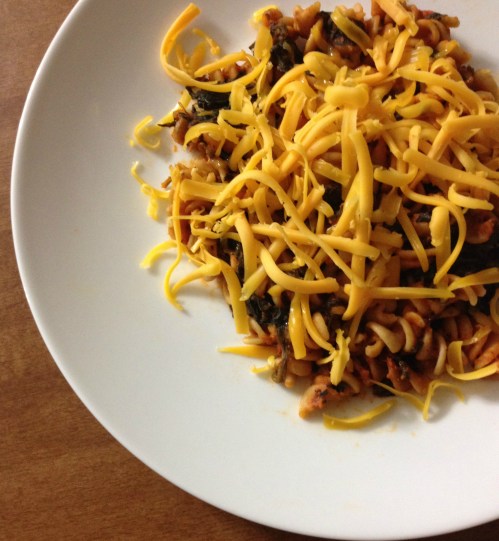
photo-4-2

Cheese covers a multitude of faults. It also covers a multitude of glories. Let’s all just agree that cheese is a good cover.

Yesterday, we listed basic staples for the kitchen. Today, we’re expanding the staples ever so slightly to include specific meals. I like to do this because, no matter how specific my basic list is, there are meals that I know I love, and I don’t want to have to go to the grocery store every time I want to enjoy them. Your list from yesterday will make a variety of meals; your list from today will make your specific family favorites.

When I say specific, I really mean specific. Like, kale and goat cheese lasagna specific.

Making this list is simple:

1. Choose a few meals (I suggest 5-10) that you and your people particularly love.

2. Write down all the ingredients you need to make that meal and add it to your staples list from yesterday.

My meal staples vary seasonally. I have three or four meals that I make during a certain time of the year, and I try a new meal or two every season just to keep things interesting. For example, my meal staples for every winter are the aforementioned lasagna, split pea soup, and roast. I make them all at least once a month when it’s cold outside (sometimes twice), so I go ahead and keep what I need to make them on hand. Last winter, though, I went through a serious warm salad phase. One of my favorites was this roasted broccoli and peanut salad. So instead of going to the store every time I wanted it, I just made a little room to stock the few ingredients that weren’t already on my basic staples list.

Dividing my meals seasonally also gives me a built-in schedule for re-evaluating my staples. If, while I’m making my list of specific meal ingredients, I notice that there’s a basic staple that has been hanging out in the pantry for months without being used, I retire it for that season and see how that goes. It keeps me from perpetually adding things that will eventually spill over to my counter tops and table.

You, of course, don’t have to divide your meal staples out seasonally. Maybe you love tacos (and really? Who doesn’t? People with bad taste?) and know that it’s something your family will eat all the year long. That makes it a great meal staple. Or maybe you have family recipes that have been passed down that encompass all that is comfort and home to you. You get to choose what meals work for you.

So list your favorite meals and everything you need to make them, and add that to your list of staples.

I’m sharing my Epic Meal Planning strategies for Write 31 Days – click to see the master list.
Read Full Post »

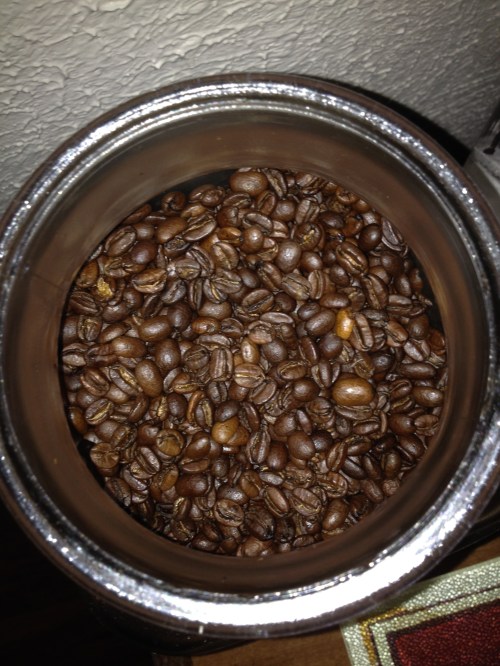
photo-3-1

Coffee – my most important basic staple

Congratulations! You made it! Whether it’s actually Day 7 for you or Day 72, you have gotten your kitchen and life ready for Epic Meal Planning. Take a little moment to celebrate.

For the next three days, we will be talking about staples for your pantry, fridge, and freezer. Today we’ll cover basics, and this weekend we’ll talk about the special staple lists that will give your plan the fluidity to keep it interesting.

Your basic staples list will be the guiding force of your meal planning. You can search all over for a basic list to get you started, but the truth is that, unless you are also willing to follow someone else’s meal plan and eating patterns to a T, your list will be different from theirs. I recommend making your own list because you are more likely to commit and follow a plan that works specifically for you than if you are constantly trying to make someone else’s love of walnuts your own.

The purpose of your basic staples are to give you a myriad of options for meals. They need to be foods that you can combine to make several different things, which will infuse your meal planning with endless variety, the lack of which is probably the greatest reason people give up on plans they’ve had in the past.

An easy way to start your list is to choose categories. My categories are pretty standard:

  • Grains
  • Beans
  • Dairy/dairy substitutes
  • Meat
  • Vegetables (frozen)
  • Produce (fresh)
  • Canned goods
  • Condiments
  • Spice rack
  • Beverages
  • Baking

But that’s where the standard ends. To illustrate, I have listed some (not all – my spice and tea collections are massive – another reason to buy the book /shameless plug) of my basic staples for each category below:

  • Grains – long grain rice, arborio (risotto) rice, brown rice, corn tortillas, oatmeal
  • Beans – cannellini, black, pinto
  • Dairy/dairy substitutes – almond milk, coconut milk (canned and refrigerated), goat cheese, butter
  • Meat – ground beef, canned chicken
  • Vegetables (frozen) – spinach, broccoli, peas, lima beans
  • Produce (fresh) – onions, celery, carrots, seasonal fruit
  • Canned goods – roasted red peppers, black olives, veggie broth, chicken broth, applesauce
  • Condiments – brown mustard, yellow mustard, balsamic vinegar, apple cider vinegar, Worcestershire sauce, homemade pesto (frozen), olive oil, vegetable oil, coconut oil, grade B maple syrup
  • Spice rack – curry, my custom Italian blend, cayenne pepper, vanilla beans
  • Beverages – coffee, at least one black tea (current obsession – Irish Breakfast), peppermint tea, green tea, Emergen-C, red wine
  • Baking – bread flour, AP flour, self-rising flour, eggs, yeast, baking chocolate, baking cocoa, baking powder, baking soda

Just looking at that truncated list makes me hungry for the hundreds of meals I could make from these items alone. And, because it is specific to my tastes and preferences, I would actually be excited about eating them. Alone, not many of them are very invigorating, but with their powers combined, the choices are gloriously endless. Because I have limited storage space, I have to limit variety of most items (although clearly rice is not one of those items – I love all the rices), but across categories, I’ve chosen items that mix and match nicely so that I don’t have to limit the variety of my meals.

The beauty of having a good plan for cooking for yourself is that you are never at the mercy of something you only sort-of like. You don’t have to keep mayonnaise if you don’t want to. So your task today is to think of the things you like to eat most often and use that to form a list of staples that you will be able to keep in your house in the space you have available. Start with some basic categories and see where that leads you.


I’m sharing my Epic Meal Planning strategies for Write 31 Days – click to see the master list.

Read Full Post »

photo-13

Some of my overflow. I love bread flour for pizza crust. Not oranges, though. That would be weird.

Today is the last prep day before we begin setting up your meal planning system. Until now, we have been preparing your kitchen (and possibly your heart) for implementation. If this process were a painting, we would be finishing the canvas-stretching and gesso portion of the work. Tomorrow, we start the brush strokes.

This blog series will run 31 days, but keep in mind that the time needed to complete the process varies greatly from person to person, and most of that variation depends on these first few preparation steps. If you were able to map out several weeks of meals with the ingredients you already have, then it will delay the time when you will need to make your first grocery trip. You will still be able to plan your system this month, but implementation will take a little longer. So don’t worry if you see that happening. That’s part of why it was easy to expand this series into a book – not everyone starts at the same place, and that changes the timing of the process a little. Well, that and I think you’re really going to want my slow cooked tomato sauce recipe.

This first trip to the grocery store will happen toward the end of the meals you have planned for your snowed-in period, whether that’s two days or two weeks.  This is the trip where you take the list designed to help you use up random strange ingredients and buy as close to the amounts needed as possible.

In talking to people about this project, I discovered three main groups of grocery shoppers – those who stick to their lists, those who use the list more as suggestions rather than rules, and those who shop without any list at all. Obviously for this step you don’t need to fall in that third category (and frankly, if meal planning is something that interests you, you probably don’t fall in that category anyway). But I want to address those who tend to fall in the middle category. I consider myself to be one of you. I have a list for things I absolutely must get, but I budget for more, knowing that I will run into something extra that I want (usually of the cheese or bread variety, both of which always find a home in my kitchen).

For this particular step, however, it is vital that you stick exactly to your list. The whole purpose of this trip to the store is to help you prepare for the next step, and extra bread doesn’t help you (scandalous statement – I know). Extra anything doesn’t help you. Resist! There will be room for extra bread soon enough.

Tomorrow we will start building your fridge, pantry, and calendar to make them work better for you.

I’m sharing my Epic Meal Planning strategies for Write 31 Days – click to see the master list. 

Read Full Post »

photo-12

I write my shopping list directly in my planner – i.e., my lifeline – so that I know I won’t forget it.

Once you finish the meals you can make now, your next steps will be preparing for and going to the grocery store. This, however, is not going to be a regular store visit.

Three times during this process, you will have a specific shopping list and grocery trip, and they all have different purposes. The purpose of the first list/trip is to help you finish reducing the pantry to its bare bones so that it is ready to be built up with the staples that you use regularly.

In order to do this, though, you will need to confess.

That jar or box you still have in your pantry that you did not give away, throw away, or find a use for? You know the one I’m talking about – don’t try to act innocent with me.

We need to find something to do with it. We need to find something to do with all the things in your pantry or refrigerator that you don’t use very often but couldn’t bring yourself to get rid of when you were cleaning them.

When I first started putting my meal planning system in place, I had jars and jars of pickles. I had taken a canning class, and that was one of the things we made. It was a great class; I enjoyed it immensely.

The problem is that pickles aren’t my favorite food. I like pickle slices on hamburgers, and I will occasionally eat a pickle spear as part of an antipasto plate. But I had opened one of the jars for myself, and I had given several jars to friends. I still had five jars of pickles left. I knew that if I didn’t do something with them before I started filling my pantry back up, those five jars would stay there indefinitely, taking up space where food I actually wanted to eat could be stored.

So I searched for recipes that used pickles. For the next two months, my diet was pickle-intensive. I ate:

  • Pickle slices in my grilled cheese
  • Pickle hummus
  • Pickle chunks in tuna salad
  • Pickle chunks in pasta salad
  • Fried pickles
  • Pickle-brined chicken breast

With every meal until those jars were gone, if I could throw a pickle in it, I did.

(Do not try to make savory pickle waffles, even if you liberally spread sour cream all over them. Oh, the humanity! /psa)

I got really sick of pickles. You know what else I got? I got rid of all those jars so that I could move on with my life.

And that is what I want for you. So here are your tasks for this step:

  • Identify your outlier ingredients that you held onto.
  • Search for recipes in which to use said ingredients.
  • Based on the recipes, make a shopping list of the things you will need to buy in order to use up those ingredients. Be very specific about the amounts needed and make plans to purchase as close to exactly what you need as possible, because if you just end up accumulating an overflow of different random items, that doesn’t help you.
  • Plot the meals you will make with these recipes on the next open spots on your calendar.

This may be the weirdest shopping list you’ve ever made and the weirdest food you’ve ever eaten. I promise it won’t last forever (although if you have five jars of pickles, it may seem that way). When you are finished with this phase, you will actually have the space in your kitchen to make it start working better for you.


I’m sharing my Epic Meal Planning Strategies for Write 31 Days – click to see the master list.

Read Full Post »

photo-11

Sometimes, when the weather is hotter than I like (i.e., approximately 96.84% of the time), I crank up the A/C so I can snuggle in a blanket and pretend Texas has real seasons.


This is one of my favorite steps of the Epic Meal Planning process. This is the part of the process where I get to put a number on exactly how many days I could feed myself without leaving the house. This nourishes my rich fantasy of one day being a hermit.

I’m kidding. Sort of. Most days.

Let’s move on.

Today, we will break out our calendars and write down meals that we can make right now without having to buy anything extra to put with them. We are going to identify meals, count servings, and plan the days that we can go without shopping.

Identify meals

If you already cook a lot, this part will be easy. After spending the last couple of days peering at your fridge and pantry, you could probably do it without even looking. If you don’t cook a lot, take a few minutes and look back at your inventories to see what you have available. It’s not cheating to search for an ingredient via Google or Pinterest and see if there’s something interesting you can do with it.

List the different types of meals you can make. In order to count as a meal, it has to be able to make enough to feed everyone you feed on a daily basis at least once. For me, that’s one, but if you have a spouse/kids/roommates, you, of course, will make sure your ingredients cover enough for them, too.

Example: Right now, I can make…

  1. pasta and some sort of sauce
  2. pizza
  3. antipasti platters
  4. chicken salad
  5. frittata
  6. vegetable soup

I also note that I have sufficient breakfast supplies for three or four weeks.

Count servings

After you know what you can make, you need to determine how much of it you can make. This will determine your number of servings. Take your list above and calculate the number of times you can get a full meal out of the ingredients (again, a meal – even of leftovers – equals a meal for everyone you feed). If it’s something you can cook twice (see examples below), note that as well.

Example:

  1. pasta and some sort of sauce – 8 servings (cook twice – 4 servings each)
  2. pizza – 12 servings (cook three times – 4 servings each)
  3. antipasti platters (cheese, deli meat, bread, olives, roasted red peppers) – 6 servings
  4. chicken salad – 4 servings
  5. frittata – 6 servings
  6. vegetable soup – 6 servings

I’m ridiculously excited about these numbers.

Plan your days

Pull out your calendar. First, choose the days when you are going to cook. If you have multiple servings, and you embrace leftovers, try to space out your initial meal cooking days. Keep in mind days when you have plans in the evening to make sure you have time to cook.

Once you have all your meals plotted on their cooking days, fill in the extra servings on subsequent meal times. Try not to stretch one meal too long, because mold and bacteria are not proper food groups.

Example:

After plotting cooking days and taking into account meal times when I have planned to go out with friends (and thus don’t need to plan for a meal at home), I can eat heartily without going to the grocery store for about three and a half weeks. My inner hermit rejoices!


All hermit “jokes” aside, I actually recommend going through this step before each trip to the grocery store, particularly if it’s not your favorite errand. Either you will discover some hidden gem meals that allow you to postpone your market trip (and the hefty bill that goes with it) for a little while, or the random meals you find will be so unappetizing that a trip to the store will suddenly seem fun in comparison to enduring them. Either way, you win.

I’m sharing my Epic Meal Planning strategies for Write 31 Days – click to see the master list.

 

Read Full Post »

photo-2-3

I confess an unholy obsession with jarred roasted peppers.

My pantry stays pretty well organized. Before you prepare to pat me on the back and ring out a hearty, “Great job!” you should know that this accomplishment is due more to the necessity of small space rather than to my organizational diligence. I have six shelves that are approximately a square foot apiece, and those few shelves house all shelf-stable food – from dry beans and jars of sauce to baking basics.

I was raised on a farm under the wide West Texas sky, so I like a lot of space. For everything. I have a few friends who love the tiny house movement, and when they post pictures of their favorite layouts, I think, “Oh, what a cute closet that is.”

But being short of space in the pantry has been a gift. It means that unless I want my stockpile to leak out onto my table and cabinet tops (which I do not, for the record), I have to keep it organized. It forces me to use the space wisely. I have to keep in mind what items are staples (which we will discuss later this week) and what items are extraneous.

Today, you have two tasks:

Task 1 – Take inventory of your pantry space by answering these questions:
1. How much space do you have? Is it enough? Is it too much?
2. Which of the items currently in your pantry are staples (i.e., things you use frequently)? Which of the items currently in your pantry are extras (e.g., junk food, leftover jars from a former recipe that you no longer plan to use, etc.)?

Task 2 – Reorganize your pantry, prioritizing things you will actually use. To do this, follow these steps:

  • Take everything out of the pantry and set it on a table or some other open space.
  • Divide items into these categories: keepers (things you know you will use within the next month or two), give-aways (things you will not use but can still be used by someone), and throw-aways (things you will not use and should not be ingested by anyone ever).
  • Cut your pantry space in half. Yes – half. Don’t worry – this will not last, and you’ll have your space back by next week. We’re just carving out a little space to work with when we talk about staples.
  • In your new, smaller space, put your keeper items back in. They may not all fit right now, and that’s okay. Just leave them out in the organizing space, and alert family, housemates, etc., that they are a temporary work in progress.
  • Find friends or a local food bank where you can donate your give-aways. Toss your throw-aways in the garbage.

Once you have completed this, you will be ready to make your first meal plan tomorrow!


I’m sharing my Epic Meal Planning strategies for Write 31 Days – click to see the master list.

Read Full Post »

« Newer Posts - Older Posts »