Feeds:
Posts
Comments

Archive for the ‘31 Days’ Category

I’m finishing up a week off from my job at UNT. I used the week as intended for the most part. I got some things done around the apartment that I had been neglecting, worked a few extra hours than usual on my writing job, and got to do some things (long weekend at the farm, long lunch with a friend, late night listening to live music) that I don’t usually get to do. It was busy but manageable. I was able to take care of both my life and myself. I actually slept well and drank enough water and ate well-planned meals.

The only thing I wanted to do that I ended up not doing was driving to San Antonio to visit Nowhere Bookshop in person. I could have done it – I technically had the time and the money. I could have spent a few hours in the hotel working on articles and been frugal with my spending so that next month’s budget wouldn’t be strained.

The only problem with that is that I don’t have frugal feelings about bookshops.

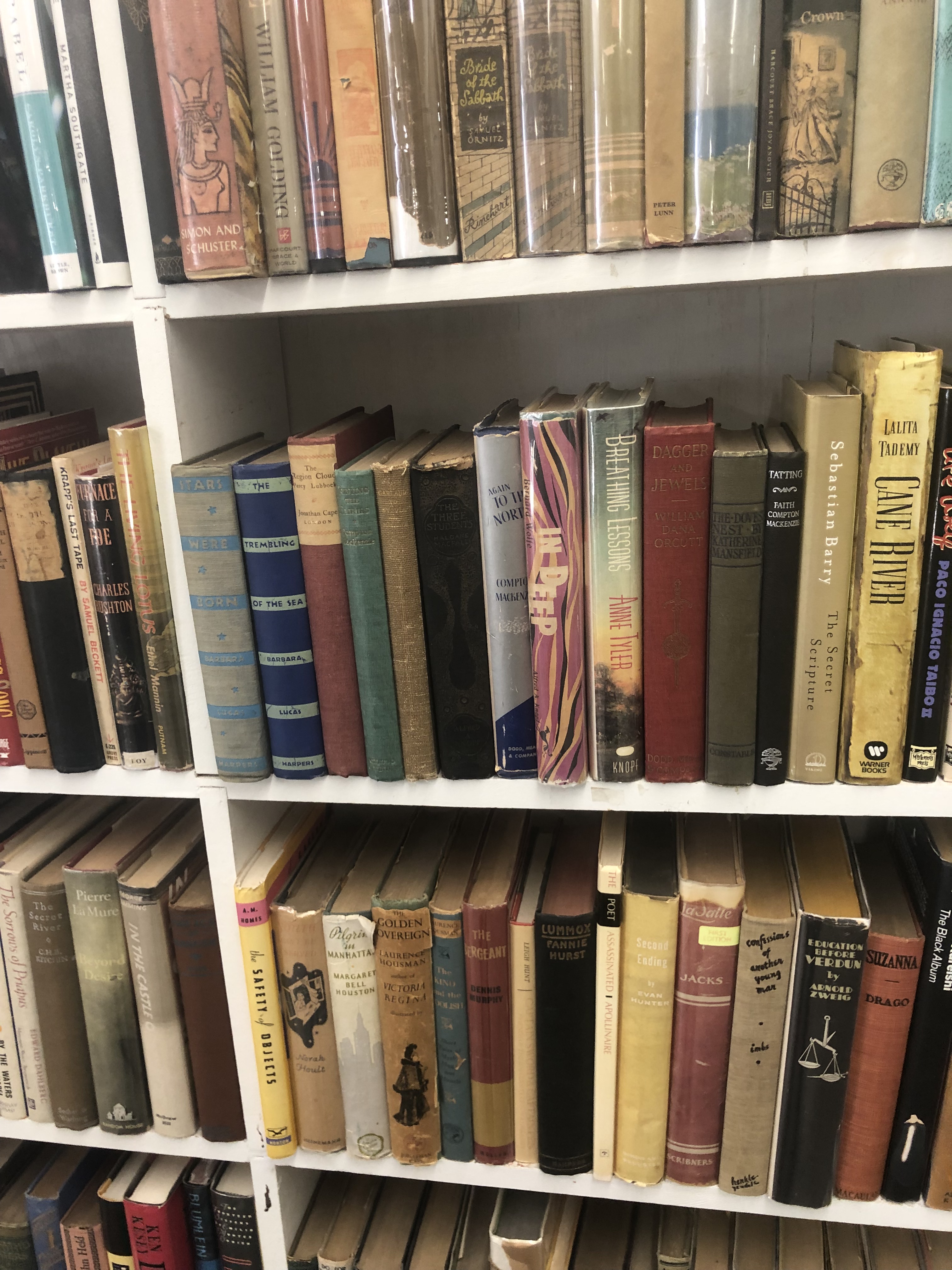
I love the way they smell. While it varies a bit depending on whether I’m walking into a used bookstore like Booked Up or a store that sells only new books, that underlying scent of ink and paper is always there. I am generally an impatient, get-in-and-get-out shopper in most places, but I can completely lose track of time in a bookstore. If I have someplace else to be that day, I actually have to set an alarm because otherwise hours sail by unnoticed. I always assume I’m going to spend at least $50 with each trip, and that’s if I’m very careful.

My favorite places are the ones with cushy armchairs and coffee shops inside. They invite patrons to stick around and thumb through what they find. It would be easy to be stingy – to have a strict buy-before-you-try policy. But bookshops that are owned by people who love books are designed to give everyone who walks through the door the opportunity to do the same. They want you to take all the time you need to find a book you adore. They would rather risk you walking out empty-handed than end up with something that sullies your reading experience. They have faith that if you find what you’re looking for, you’ll be back time and time again when you seek your next literary loves.

I have a list of bookshops I want to visit. Nowhere is at the top, but the list also includes:

I’m happy to add your favorite shop to my list, so feel free to drop a link in the comments. Even better – go give them some love yourself. I know Amazon is easy, and I don’t begrudge anyone taking extra work out of their busy lives. But if all of us committed book lovers could manage to spend in an independent shop at least once a month, it could really make a difference. It could keep the places I love alive.

I’ve talked about books all month, and it’s been so much fun.

Read Full Post »

I am skeptical about self-help books. I want to know the author’s credentials (formal or experiential) before I commit to taking what they have to say seriously. But credentials are not enough. If, at any point, I get the sense that the author is trying too hard to make a point or wrap something up in a neat, little trite bow, it’s hard for them to get my attention back. I will DNF* a book meant to advise or inspire me faster than any other type of book if I am the least bit dissatisfied with it. Or worse, I will finish it out of spite just so I can rant about how bad it is on the internet.

Sloppy advice books are the Twilight saga of nonfiction.

But when the writers get it right, these books become some of my favorites. I 5-star them on Goodreads, give them away as gifts, and recommend them with reckless abandon. Here are the first five that come to mind.

  1. Year of Yes by Shonda Rhimes – I didn’t expect to like this one as much as I did. I thought it would be a fun weekend read from the person who writes some of my favorite TV dialogue. But I hadn’t even finished the first chapter before I was reaching for my notes journal and scribbling down all the lessons I was learning. If you feel stuck and suspect it may be nerves or fear holding you back, this is just the kick in the pants you need.
  2. The Creative Habit by Twyla Tharp – Speaking of kick in the pants, this is one of the best books I’ve ever read to get out of creative slump. Tharp’s main art is dance, but the principles in this book can easily be applied to any creative pursuit. Highly recommend to artists of any kind.
  3. Burnout by Amelia Nagoski and Emily Nagoski – In all my therapy sessions, not once have I ever been taught how to complete a biological stress cycle. Or – that’s not completely true. I have been given good advice on things I can do to relieve stress, but this book breaks down why it works and what to do when it doesn’t. Reading this book cut the occurrence of my panic attacks in half because I learned how to identify the signs that lead up to them so I can head some of them off at the pass. Eternally grateful.
  4. Quiet by Susan Cain – I apparently have not marked this one as read or rated it on Goodreads, but I have pages and pages of notes on it. Before reading this book, I knew in my head that there was nothing wrong with being an introvert, but Cain’s social commentary showed me that it’s not just not-wrong. It’s a superpower. This is a very gratifying and encouraging read.
  5. The Life-Changing Magic of Tidying Up by Marie Kondo – Ok, hear me out. This book is not just about having an organized home. I mean, it is, and it will absolutely help you do that. But it also reminded me not only of the importance of surrounding myself with beauty and joy but also just how easy that is to do.

Honorable mention goes to The Artist’s Way by Julia Cameron and Professional Troublemaker by Luvvie Ajayi Jones. Both of these books remind me to stay focused and give practical advice for doing so. Also, if Luvvie doesn’t make you cackle out loud, your sense of humor is broken.

What books inspire you?

I’m writing about my favorite books this month.

*DNF = Did not finish

Read Full Post »

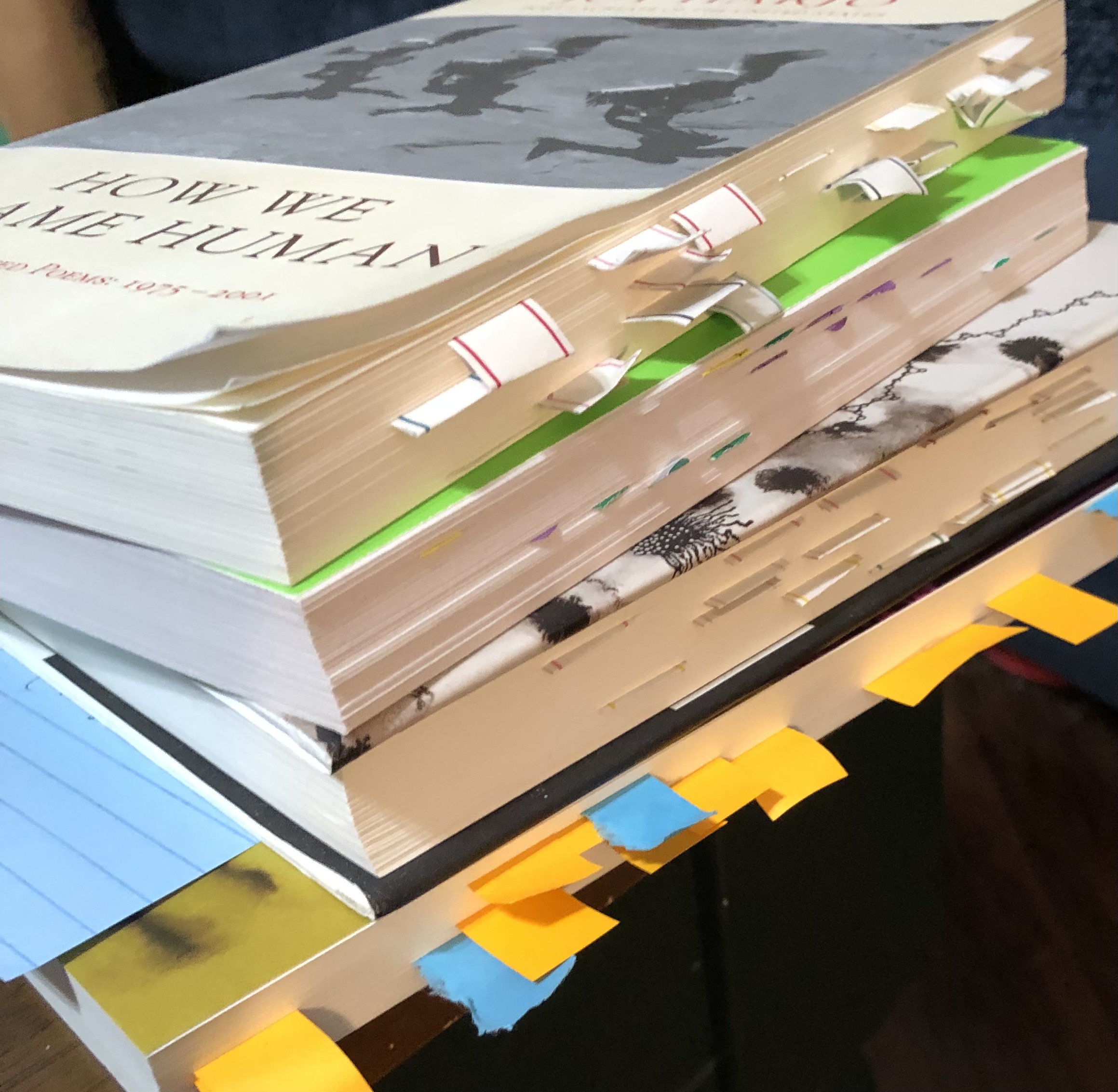
Tabbed for discussion

For years I had seen signs around town for Spiderweb Salon shows. I may have even stumbled into a few of them. They were odd and subversive and breathtaking and challenging and magical and haunting and angry and hopeful.

In a word, perfect. Exactly what art is meant to be.

True to my observer persona, I watched and admired from afar, happy to get a once-in-a-while glimpse of this lovely art collective. Sometimes I considered introducing myself, but I held back. After all, I already had two thriving online writers groups and a group of writer friends I met sporadically with in person. I kept in touch with writing/artist friends from fandom and other spaces through Facebook groups and blogging. And while I was an active member of my church choir, I hadn’t really performed or played piano or danced in so long that I was sure I would never find time to practice enough again to pursue it for real.

Then in January 2019, Sarah invited me to the first meeting of Follow the Reader, Spiderweb’s new book club. We had a main book selection and a supplemental read. Sphinx, written by Anne Garréta, was the centerpiece, and it was unlike anything I’d ever read before. I don’t want to give away the linguistic restraint the author used, because I really want you to read it and discover it for yourself. Garréta is a member of Oulipo (Google it if you’re a fan of rabbit holes. And welcome to freakin’ Wonderland), which is the experimental literary collective that Daniel Levin Becker writes about in Many Subtle Channels, our supplemental reading that month.

These book selections would have been enough to keep me coming back. But that’s not all I found that evening.

The people in this group talk about books, reading, and literary life the way I talk about books, reading, and literary life. We discussed the books we read, but we didn’t just muse over the content within, as if something written by a human being could ever be discussed in a vacuum, separated from its place in humanity. The conversation flowed from art to history to oppression to current events to community support and back to art.

Spiderweb had my full attention and loyalty from that first meeting.

I went home and immediately committed to being a monthly supporter of their Patreon (shameless plug – support artists!). It took me a couple of months to start making an appearance at shows, but soon I was showing up at every performance and event scheduled.

I thought I was coming to this book club to reconnect with a friend from high school in a way that guaranteed we’d at least see each other once a month. And I got that (we’re currently working on an album together!). I also found a loving and beloved community that invites me to their stage and supports me in whatever I’m working on. We’re collaborators but we’re friends first, and that fosters an inspiring space for creation of all kinds. They’re the reason I’m dancing again and considering perhaps one day even doing it on stage again (maybe).

And, of course, it all started at book club.

I’m writing about books and people who love them as much as I do this month.

Read Full Post »

Day 27 – Memoirs

Memoirs take up about half of my nonfiction shelf. Well, memoirs and good advice (more on those on “Day 29″…later today)

I know I spent a whole post on food memoirs, which are my absolute favorite nonfiction books. But I also read/own a lot of other types of memoirs as well. I love hearing people’s stories. It’s one of the (only) things I miss about teaching public speaking. No matter what the assignment, if you give people a chance to share themselves, most of the time they will.

I like funny memoirs, family memoirs, travel memoirs, and cultural memoirs. I even like sports memoirs (particularly ones about running, it seems). A friend in my writing group once took my willingness to read just about any memoir as proof that I really will read anything. I understand her general sentiment – it feels good to read stories from people with lives and interests similar to your own – it’s comforting to know you’re not alone. But it’s also good to step outside of the inherently limited experience of one human life and learn how other people experience the world. That’s the real draw of memoir for me.

In a way, reading memoir is research (well, research-ish. Focused research is a lot more intense and intentional.). Writers are often admonished to write what we know, but even if you’ve lived the richest, fullest, most adventurous, long life, what you know firsthand is still just the information you can glean from one person’s experience. In the grand scheme of knowledge, that’s not a lot to go on. So if I’m going to write – about anything – why wouldn’t I want to know as much as possible about as many experiences and perspectives as possible? I need to hear other people’s stories to do that. For example, the main character in the novel I’m working on is dead but can see the effect his passing has on the ones he loves most. I know how I experience grief, but reading what others have gone through when a loved one died helps me understand my own characters in a way I could never get to on my own.

[Important aside – I am not a proponent of writers telling (and profiting from) other people’s stories, particularly when those people are perfectly capable of and actively telling those stories themselves (and inevitably doing a much better job of it). Even if a writer is going to write about another person who is no longer available to tell their story, they must do a hell of a lot of work and give credit (and even payment) where it’s due in order to write about them in an honorable way. Andi Cumbo-Floyd put in countless hours of piecing together genealogy records, researching local history, conducting interviews, and learning from those who write about slavery and racism before writing her young adult novels that delve into the subject, and as a result, her main character in the Steele series models this self-education process in a realistic way. Jennifer Koshatka Seman wrote Borderlands Curanderos, and her bibliography and research notes take up a solid third of the total pages of the book. That’s how you write about other people’s lives with integrity, and there’s no shortcut.]

Anyway…

A few memoirs I recommend (that I don’t think I’ve mentioned yet this month):

Do you have any favorite memoirs?

I’ve spent October writing about books.

Read Full Post »

As I mentioned last Friday, I will read anything Louise Penny writes. I am particularly fond of the Inspector Gamache series. I didn’t even start it until my church book club decided to read the “newest one” a few years ago (I think it was maybe the 11th or the 12th book in the series). I had a few months to catch up and get to know all the characters, and it was an easier task than I bargained for. I love the characters in Three Pines. I even like the main officers in the books, and it’s hard to write a law enforcement character that I like. But after 16 (and a half) books, we seem to have come to an understanding.

I wouldn’t have sped through the series in time to get to the book we were discussing in book club if I hadn’t enjoyed the audiobooks. The original narrator, Ralph Cosham, had the most lovely voice. He died after the 10th book, though. Robert Bathurst (Sir Anthony Stallan in Downton Abbey, if such a reference is helpful to you) took over reading from there. I had grown so used to Cosham’s portrayal that I only made it through about ten minutes of the reading until I had to finish the 11th book in print. I’ve since grown accustomed to the change…but I still miss Cosham.

It may technically take more hours for me to listen to an audiobook than read the print version, but I still finish them faster. Because I can take them anywhere. Audiobooks are the multi-tasker’s dream. I listen to them in the car. I listen to them while I’m cooking or washing dishes or doing some other mindless task. I usually speed them up to 1.5x, unless it’s a memoir read by the person who wrote it. Then I feel like I’m rushing them, which seems impolite.

There is a certain faction in bookish circles that turns its nose up at audiobooks. They scoff at the idea that it could be considered reading. To them, proper reading is only done with print book in hand. As I’m sure you’ve guessed, I find this needless gatekeeping absurd. Of course, listening to audiobooks is reading. Different people process information in different ways, and if you’re an auditory learner, it makes sense that audiobooks would be your reading method of choice. No matter how you absorb the words, the end effect is the same – reading.

This limited definition of reading is also ableist. There are many people for whom – for various reasons – reading a print copy is simply not an option. For many of them, audiobooks are the primary way they read. To consider it a lesser method has ugly implications.

In addition to being a convenient way to continue reading while I’m performing dull tasks, an audiobook is sometimes the only way I can read. When my anxiety is in overdrive and I cannot physically sit still, here comes an audiobook to the rescue. When there’s too much sensory information afoot for me to pay attention to a print copy, I can put in my earbuds, close my eyes, and still focus on what I’m reading. When I was overwhelmed by the combination of isolation and every single life task suddenly getting more complicated at the start of the pandemic, audiobooks were friendly voices that demanded nothing in return.

I love reading print books, but I’m a big fan of audiobooks as well.

I’m a big fan of a lot of books, and I’m talking about them all month.

Read Full Post »

Just off camera, any time I have a Zoom meeting in my home office, there is this little cart. The top of the cart holds my art journal (and various other journals), a book I read while waiting on Zoom meetings, and several things I need to file but have yet to do so. The lower levels of the cart hold books that don’t have a place on a shelf yet because the existing shelves in my apartment where they would belong are full.

I’m in constant need of more shelves.

There was a meme that went around for a while that looked like a floor plan of a home, but instead of the usual rooms, it had a bathroom and kitchen, and the rest of it was just labeled “library.” I’m sure it was meant to be amusing but for me its wit was a funny-because-it’s-true sort of situation. I would love a house where every room had at least one wall of bookshelves. Preferably more.

A life with books is the exact kind of life I want.

I have a lot of idea about the specifics of how this could look. Do I just go ahead and line all the walls of my apartment with shelves, and take the inevitable full capacity as a sign it’s time to move? When I am eligible to retire from UNT, do I work part-time in a bookstore or library? Maybe I could work part-time in a bookstore or library now (lol but WHEN. When would I even do that)? Maybe if I finished this damn novel, I could find a publisher who loves it and wants to sell it so I can afford more time with my books (or will I just spend that time on tour or doing something gross like publicity…and is that really better than what I’m doing now?). Or is it enough that I have a few quiet evenings a month alone with the books I love now and a space to talk about them here?

I’ve been musing about the next phase of my work life for the last few years, and I still don’t have a clear picture of what exactly I want it to look like (which makes it hard to get there. How do you plot a path to a place you aren’t sure exists?). I do know one thing, though.

Wherever it is, I’m surrounded by books.

Welcome to a peek into my bookish life this month.

Read Full Post »

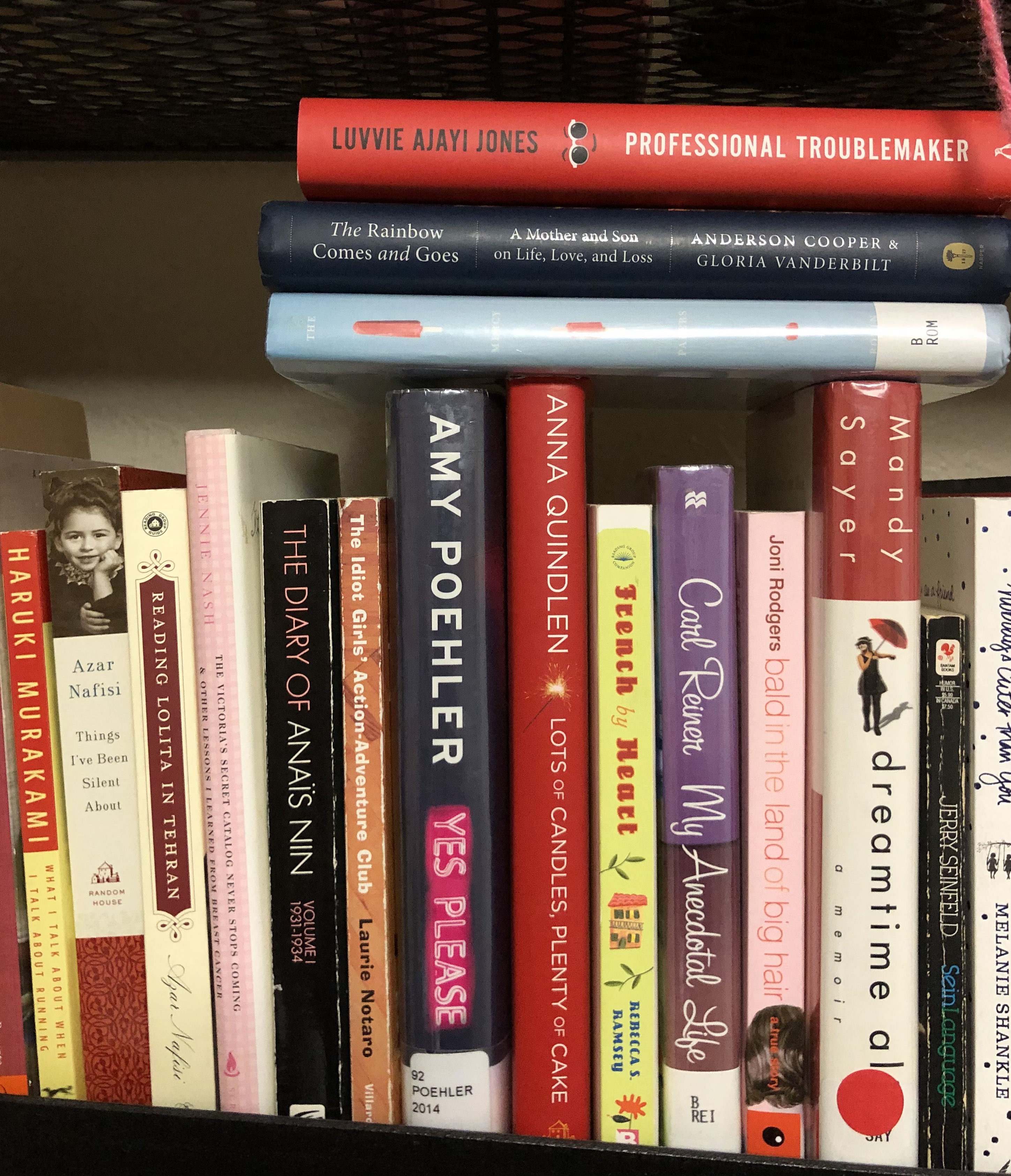
I think all (most?) of these have been book club subscription picks?

Before the pandemic, I was very excited about the new bookshop opening in San Antonio to be owned by one of my favorite people on the internet, Jenny Lawson (aka, The Bloggess). A long-time subscriber to her blog, I was super pumped to get to visit Nowhere Bookshop once its doors were open.

Then everything shut down.

Instead, she and her skeleton crew of a starter staff started an online book club called Fantastic Strangelings (which, of course, I immediately joined). Every month, I pay the same price and get a new book shipped to me. There is an online discussion that I can join (or lurk through), and sometimes there are Zoom sessions with the authors. I have read about half the ones I have received, and they’ve all been great selections. Jenny Lawson can pick out a book. I trust her with all my reading needs.

You can see the list of books picked out for the club (including those sent and supplements recommended – because who can limit suggestions to one a month?) here. Like I said, I haven’t read one I didn’t like.

A few months ago, Nowhere started another book subscription/book club, the Happy Endings Book Club. The theme is romance and the requirement is that things work out in the end (you thought we were going somewhere else with a name like that, didn’t you? I mean, it is romance, so…). I have started The Charm Offensive and will probably read Not Your Average Hot Guy later this week. Quick, easy, fun reads.

These are the perfect book clubs for introverts, which makes sense, as they are run by an introvert who understands this unique quality in all its glory. Meetings are online, and you can participate or not participate as much as you want. I usually check out the discussion, but I seldom make it to the Zoom calls. Because reasons (which, as all introverts can attest, is a perfectly valid reason).

I meant to go to Nowhere in person for the first time this week while I’m off, but it didn’t quite work out. No worries. Someday, I will go to this magical place where it all began, and it will be lovely.

I’m talking about reading, reading with friends, good books, and other happy things this month.

Read Full Post »

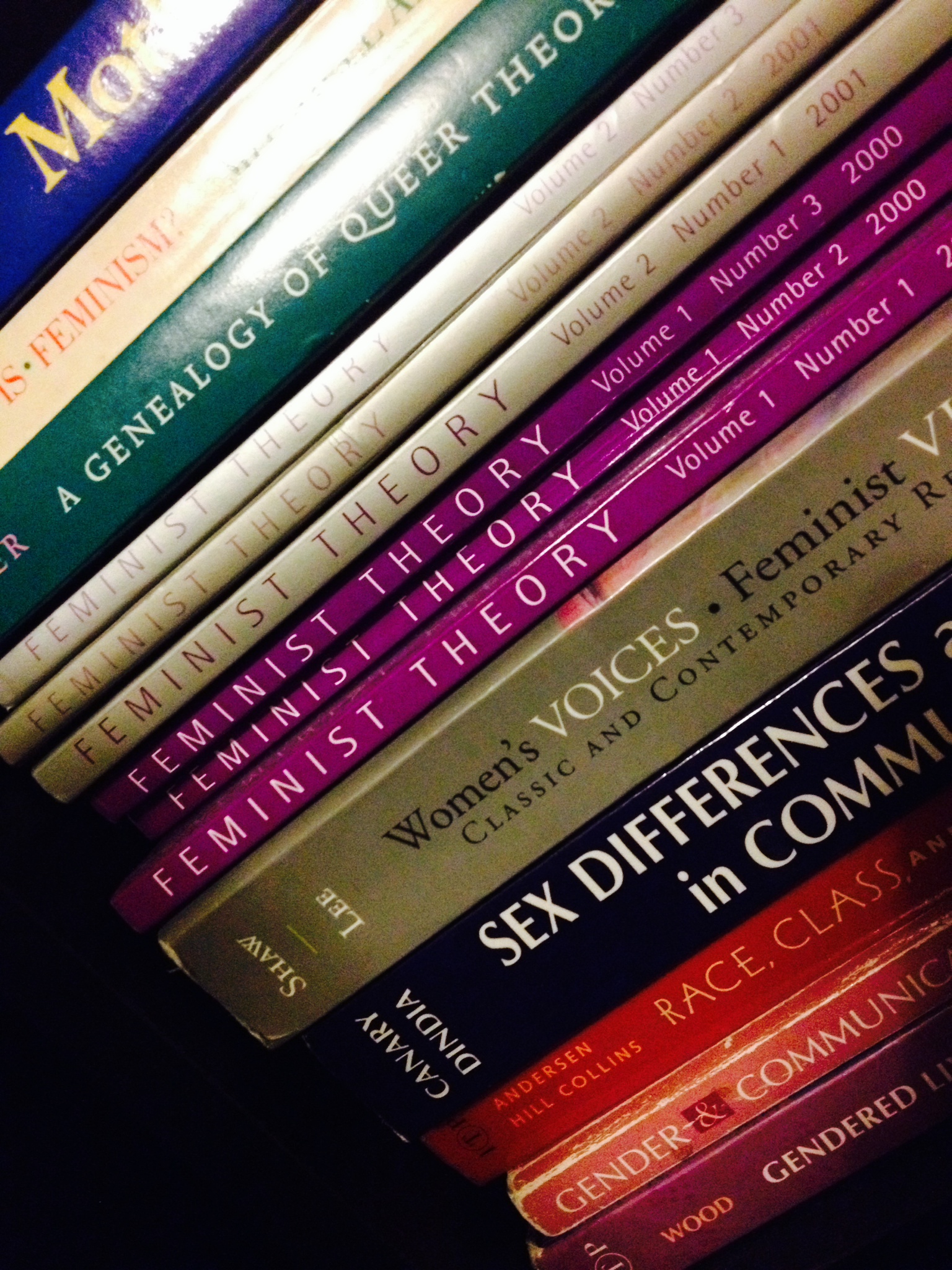
A small portion of my collection from grad school

Reading is fun, but it’s also my favorite way to learn. It has been especially helpful when it comes to recognizing systemic inequities that don’t necessarily have a negative effect on me personally. Those were the classes and books I was drawn to in college, and I am still drawn to them to this day. I read about injustice, and I get mad.

Anger is useful but not always sustainable (Allegedly. I can hold on to some anger.). If I hear something that shocks or offends me, my first response is to ask why. My second response is to read more on the subject so that my actions are not limited to my emotional reaction. For someone for whom emotions – both positive and negative – are usually overwhelming, this is an important step. I inform my opinion, changing it if that’s what the facts and evidence require, and thus I am better equipped to move forward.

There’s also something wonderful about reading a book that tells a story similar to your own. The New Yorker ran an article written by Michael Waters earlier this month on a book club that gained popularity through the underground and by word of mouth. People who were told they didn’t have a place in society sought out books that told their stories, and it helped spark the Gay Rights Movement. Despite censorship and other factors working against them, people were able to connect through books, and it changed (and continues to change) the world.

My Christmas gift to myself this year may be a Literati subscription. I love that leaders are using their influence to recommend readings to inspire others to make the world a better place. It’s like taking a perpetual humanities class, only a little more renegade.

What is the most important book you’ve read? What did you learn? How did it change you?

I’m writing about a hundred or so of my favorite books this month.

Read Full Post »

My vacation officially started yesterday, so I’m looking forward to a lot of reading in the next week. I’ve already finished two books that I had begun earlier, so we’re off to a good start. When I plan vacation reading, I typically lean toward favorite series and authors. There are many authors who, when their new books come out, I will always read. Here are the first five who came to mind.

  1. ACF Bookens – One of my favorite cozy mystery authors. I am heavily invested in the lives of both the St. Marins and the Stitches in Crime characters, and I am super excited to read anything she comes up with in the future.
  2. N.K. Jemisin – If you haven’t read The Broken Earth Trilogy, stop reading this and go read that instead. It’s so good. Anyone who enjoys fantasy or sci-fi should check her out. The City We Became is very close to the top of my TBR list, and I may just have to push it ahead next week while I have some time.
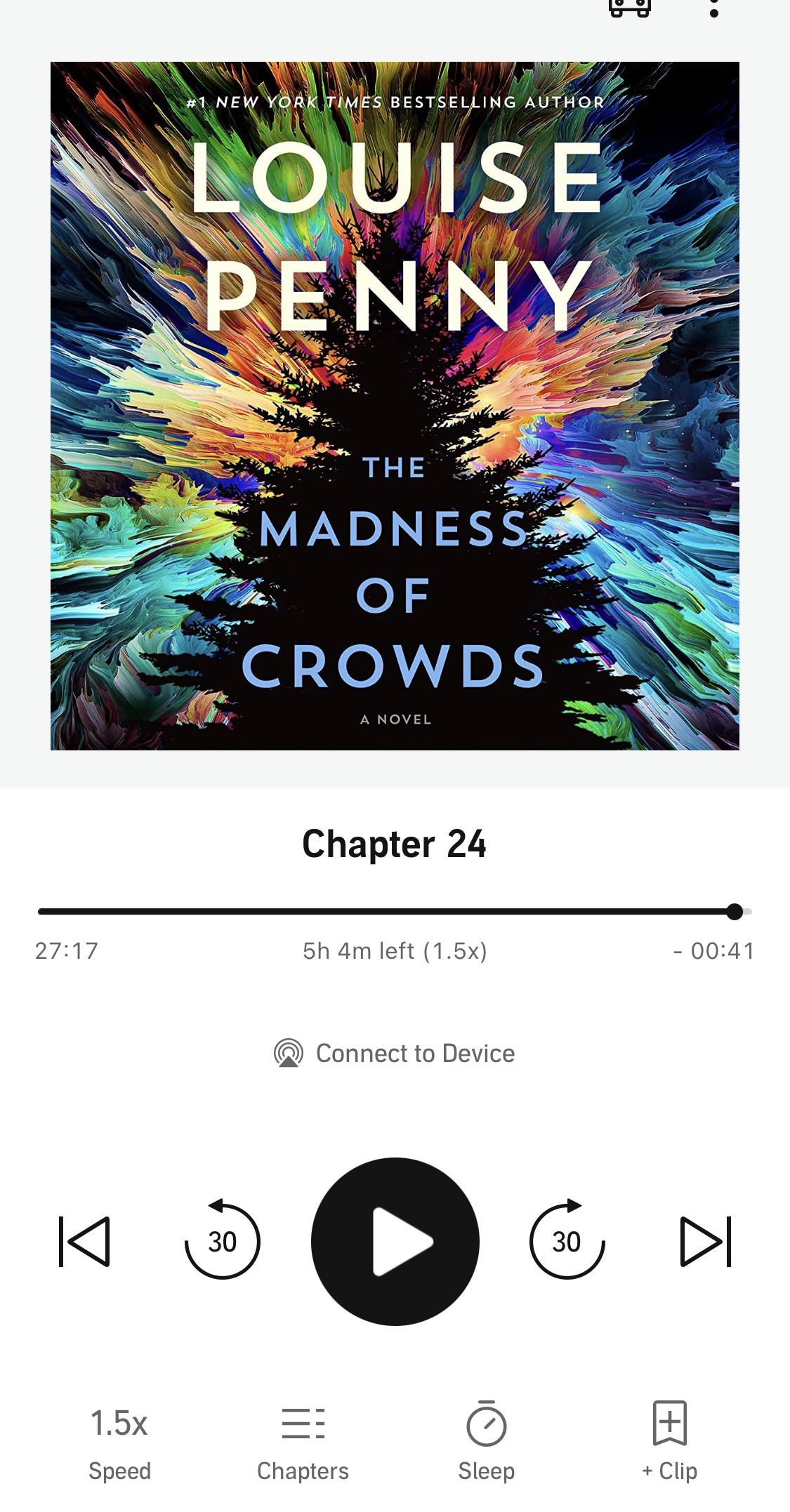
  3. Louise Penny – I was delighted to remember that I already had purchased the audio of The Madness of Crowds when I was preparing a list of books to bring with me on the trip to the farm. I’m about 2.5 hours into it, and of course I’m already hooked. I love the Three Pines mysteries, and I still mourn the original audio reader for the series (RIP).
  4. Jasmine Guillory – Damn, she can write a sex scene. You don’t have to start with The Wedding Date, as each novel can stand on its own, but that’s where I would start.
  5. Helen Hoang – Also very hot sex scenes. I love the incorporation of neurodivergent characters in her romantic stories. The Kiss Quotient is my favorite, but they’re all fantastic.

There are so many others that come to mind, but I never hesitate to pre-order new books these authors put out the moment I’m able to do so.

What authors are on your “always read” list?

I’m writing about the books I love this month.

Read Full Post »

I am a pretty steady reader, but sometimes I go through phases where I can’t seem to finish anything because I don’t really feel like reading. It happens when I’m very busy in several areas of my life, so when I get home all I want to do is decompress in front of the television, preferably with a show or a movie I’ve already seen several times so that I don’t have to think about it at all. Or, less frequently, during a month when most of my book club selections are things I normally wouldn’t have chosen to read myself, so reading all of them one right after another seems more like homework than pleasure.

Whatever the reason for the rut, I don’t quite feel like myself again until I’m out of it. There are a few tactics I use to jostle my enthusiasm back to life.

Read Short Stories

We were just talking about this on Tuesday in book club. When I’m super tired at the end of a busy day, the idea of reading a novel seems overwhelming. But a short story doesn’t seem so bad. Depending on how short it is, I may be able to finish the whole thing in 10-15 minutes. If it’s good, I may even read the next story. The next night, I read for more than half an hour. Before I know it, I’m back to my regular reading habit.

Choose Comfort Books

I have several comfort genres. Foodie fiction or memoir. Cozy mysteries, the next book in a series I like, or books about books (or in the case of ACF Bookens’s St. Marin’s series, all three in one). I grab a warm beverage and tuck into one of these, and it’s like visiting with a good friend.

Take it on the Road

One of the things I love about audiobooks is that they give me something to listen to when I’m driving without being plagued by commercials or having to skip a song that I’m not in the mood for. They also help me get out of ruts. I go for a drive in the country (or what passes for country near me) every once in a while, and even if I only get 30 minutes into an audiobook, I’m usually hooked enough to want to finish it.

Don’t Worry About It

Sometimes, you’re just not in the mood to read, and that’s ok. There’s no need to force it. I used to actually feel bad when I got into a reading rut, but when I stopped to ask myself why, I didn’t have a good answer. I’m not sure there is one. As much as I love reading, sometimes I just need a break, and it’s ok to take one. The books are always there when I get back.

Do you get in reading ruts? What do you do (if anything) to pull yourself out of it?

I’m writing about books all month.

Read Full Post »

« Newer Posts - Older Posts »