Feeds:
Posts
Comments

Archive for the ‘31 Days’ Category

Day 19 – Sabbath

photo (10)

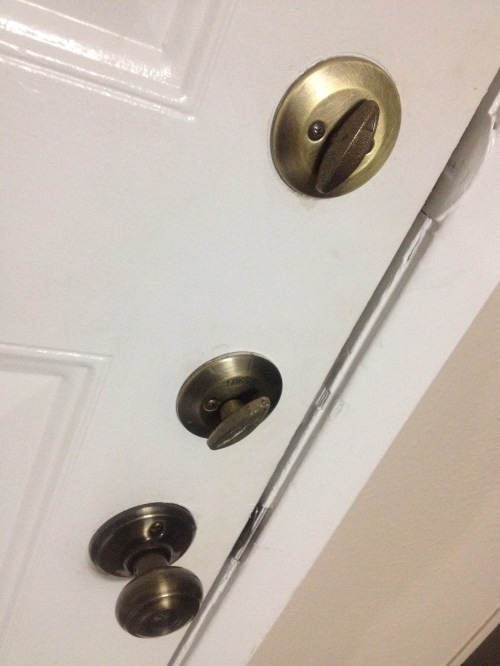
Days when both locks stay locked are the best days.

Yesterday, I posted about small things every day you can do to incorporate some balance into your day; today we are going to go back to full days of rest. Earlier this week, I talked about whole rest days, but I focused on physical rest. I believe that psychological and spiritual rest are equally important.

Enter Sabbath.

The idea of Sabbath rest springs from the creation story where God took the proverbial six days to create the earth and all its critters and then took a day off. But Suzanne, you might be saying. I don’t really look to the Bible as an authority. Fair enough. That’s your choice to make. But there are a lot of texts I don’t consider authoritative from which I can still learn something that is practical and helpful to me, and I propose that this might be one of those situations for you, so hear me out.

I like how the story doesn’t say exactly what God did on the day of rest. Just…God rested. Certainly, it includes resting from work. I’d like to think there was an element of enjoyment as well. After all, boredom is not what comes to mind when I think “restful.” In reading around about this concept before writing this post, I discovered people certainly have detailed opinions on what it means to keep the Sabbath.

I tend to fall in the dissatisfying, vague camp of “whatever God (etc.) tells you it means.” That Sabbath would be different for different people makes sense to me. For example, as a pretty intense introvert, rest happens best when I don’t even walk out my door to get the mail. For an extrovert, however, this could be exhausting and hellish. I try to put aside 16-18 hours a week where I can be at home, taking a break from working and striving and checking things off my beloved to-do list and worrying that they aren’t getting checked off fast enough. There’s no set schedule or demands on any time or attention. I am free to do (or not do) anything that makes me happy.

That might sound like a large amount of time, but really, it’s just the waking hours of one day. If I don’t have a whole Saturday to myself, I find myself looking for hours to steal during weeknights. I definitely notice a difference when I don’t find the time. I become more irritable, less productive, and more stressed out. Not only am I more likely to miss meeting goals, I am more likely to not even try to meet them.

I take a Sabbath because I want to live, and getting stuck in survival mode isn’t living.

How do you recharge?
 

I’m spending 31 days running wild.

Read Full Post »

photo 3 (15)

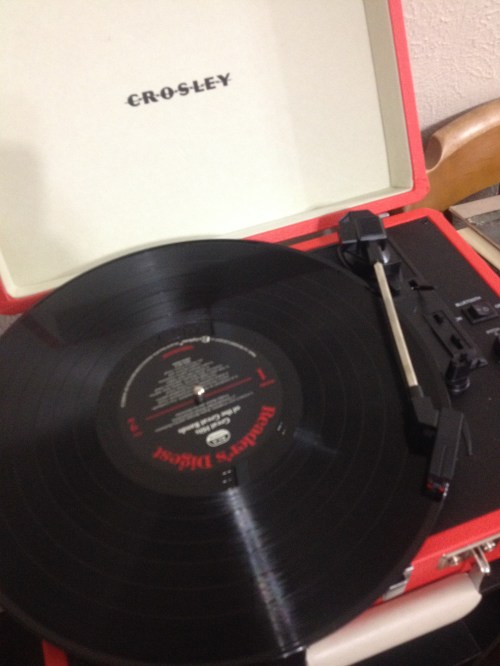
There are few sounds that soothe me more than the sound of a record playing.

The perfect relaxing evening for me is the calm trifecta – records playing with a good book and soothing beverage in hand. I love evenings like this. I don’t get them every day, though, so do I just accept that I’m going to be stressed out until I can get to my next relaxing evening? Oh, no. That would be madness.

Rest is more than sleeping and taking time off. It doesn’t have to take large chunks of time that you have set aside. There are ways to incorporate a state of restfulness into your day, and they don’t have to be complicated. Doing so helps you maintain some of the balance and bypass some of the (*W#&(*#(@)Q! I don’t know about you, but I could do with a little less punctuational angst.

Mostly, restfulness hinges on something simple like remembering to take breaks. In said break, you can stretch, clear your head, breathe, or do any number of things that calm you down. Sometimes, you can do them right at your desk.

Part of the reason I am listing something that I do to rest everyday is to remind myself to take breaks. Most of the things I mention are longer activities, but I don’t want to discount the small things, because they add up.

So today, my restful act is remembering to take a few 5-minute breaks during the workday. So far, I’ve taken two, and it’s amazing how much more relaxed I feel than usual. Sounds like something I may want to consider making a part of every day.


I’m spending 31 days running wild. 


Read Full Post »

Day 17 – Sleep

photo 2 (19)

Cozy bed, I miss you. I’ll see you again tonight.

It’s funny for me to be writing this post on a day when I overslept. I did not practice good sleep habits last evening. I had both coffee and gobs of sugar in the form of cookies (shortbread, which is easily one of my top three favorite cookies, and those grocery store bakery cookies that are like crack) at book club. It’s challenging for me to turn down either one on their own, but with their powers combined…well, I’m not even sorry. It was delicious, and I enjoyed it.

It made getting to sleep before 3:00 a.m. downright impossible, though.

Good sleep is necessary for everyone, but it is especially important if you are making extra demands on your body (like a regular running practice). You simply cannot run at your full potential if you are not practicing good sleep hygiene. I first heard the term “sleep hygiene” when I started working the night shift at a residence hall, which was also the last time I ran with any regularity. Having never been a great sleeper and then adding to the mix that I was sleeping against the natural clock (i.e., when it was light outside instead of dark), I was desperate to find a way to get some rest so that I didn’t go through my night shift like a zombie. Good sleep hygiene involves doing things that help you fall asleep faster and stay asleep longer (at least long enough to get through a few good REM cycles).

Sleep experts (real experts, not the mattress company, although they know what’s up, too) tend to agree on five things you need to do to practice good sleep hygiene. The list below is compiled from information gleaned from the American Sleep Association, the Division of Sleep Medicine at Harvard Medical School, and the National Sleep Foundation.

  1. Create an atmosphere that’s actually conducive to getting good sleep. The bedroom is not Grand Central Station. Most experts agree that, in order to get good sleep, the bedroom should be a sanctuary reserved for only bedroom activities (i.e., sleep and sex). Our bodies tend to rest better at lower temperatures, so maybe turn the thermostat down a few degrees when it’s time to go to bed. Having a comfortable mattress not only helps you fall asleep faster, it also helps to prevent the musculoskeletal issues caused by sleeping wonky. Because noise is a factor that both keeps me awake and wakes me up easily, I have a white noise machine that masks the intermittent jarring of things that go bump in the night. And finally, avoid using your phone in bed. Not only does the glaring light from the screen confuse the brain that thought it was sleepytime, it also pisses off your retinas, at least temporarily.
  2. Use light to your advantage. The first thing I did when I started working night desk is invest in blackout curtains. They block a significant amount of light from entering the room. I still use them, because there is a security light outside my window. When you are ready to wake up, however, light is your friend. The body naturally wants to wake up when the sun hits your face. Turning lights on or throwing open the curtains (if you have a job that means you get to wake up after the sun…also tell me what you do, because I feel that I would enjoy that) can help set your natural sleep schedule. Which brings me to…
  3. Have a routine sleep schedule. For most people, this involves limiting naps during the day, because your body only needs a certain amount of sleep, and getting more during the day can make it harder to fall asleep at night. It’s also important to establish a bedtime routine. The bedtime routine that works for me (when I use it, that is) means
    – No social media after 9:00.
    – A cup of herbal tea or half a glass of wine as I read for 30 minutes to an hour.
    – Warm shower or at least soaking my feet.
    A few yoga stretches to work out the day’s kinks.
  4. Take care of yourself overall. A body that is getting good nutrition and exercise tends to function better in other ways, including sleep. It’s also important to pay attention to the time of day you are eating and exercising. Limiting caffeine intake (I know – limits are the worst – but I begrudgingly admit that coffee after 5:00 p.m. makes me want to stay awake forever) and not eating heavy foods or engaging in strenuous workouts right before bed are all part of good sleep hygiene.
  5. Don’t fight with sleep. If you lie awake in bed for more than 20 minutes (some people say 5, but some people have ridiculous expectations about how easy it is to fall asleep), don’t get mad – get up. Repeat one of your relaxing practices from your nightly sleep regimen until you feel sleepy, and then give it another try. The chemicals produced by your frustration with the inability to fall asleep just add to that inability.

Despite my terrible (and by terrible, I do mean delicious and awesome) food choices last night, I did practice rest by taking the afternoon off to go to the salon. How did you practice rest yesterday?


I’m spending 31 days running wild.

Read Full Post »

Day 16 – Rest Days

photo 1 (3)

Rested feet are less swollen feet. Also, I have a lot of pictures like this. I could make a weird lounging foot collage.

Let’s just go ahead and admit it – running is hard on the body. Yes, it’s a weight-bearing exercise that builds bone density, but it is jarring. You are literally pounding parts of your body into a hard surface, and the whole body feels the impact. Rest and recovery days, therefore, are vital to maintaining a healthy running practice and avoiding injury.

At least every other day that you run needs to be a recovery day [aside – read that article. It’s pretty entertaining. I am a fan of any writer who can work in the phrase “vegetate like an eggplant.”]. That means you are running at a marathon-ish (i.e., slow and steady) pace. Recovery days are great, because they still give you aerobic benefit, which can actually speed up recovery more than total rest does.

But some days need to be full-on rest days.

A rest day is not sitting on the couch all day, doing as little as possible. It’s still good to incorporate some kind of exercise that’s easier on the joints, like swimming or some of the safety moves we talked about a few days ago. Rest days mean you are avoiding the moves that jolt your body so that it can recover. An experienced runner needs a rest day at least once every week and a half, while a novice probably could use two in that time frame.

How do you know you’re not getting enough rest days? Simply put, you will feel like crap. Pushing yourself too hard as a runner almost feels like you’re coming down with the flu. If you feel bad, do what your body says it needs. Rest.

On Monday, I practiced daily rest by turning off all media a few hours before bed and reading with a cup of tea. How are you practicing daily rest?

I’m spending 31 days running wild.

Read Full Post »

IMG_0108

Our daily mosey back to the office after lunch
(Photo courtesy of my coworker Debra)

When you work – no matter what kind of work it is – you need to rest. Sometimes, I am very good at resting. For example, last Friday and Saturday, I did not leave my house at all. Not even to get the mail. I still stretched and yoga-ed and did a few things around the house at a leisurely pace. I relaxed well, and it was restorative.

At other times, though, I am not so great at resting.

Goal-tracking is both my saving grace and my downfall. It absolutely helps me achieve goals. As I am super task-oriented, it is gratifying to count the number of check marks I’m able to make at the end of each day. When it comes to rest, however, sometimes my glee in achieving overshadows the minor detail that I’m exhausted.

This week, we are going to look at rest as part of the goal of running wild. Just like eating well helps you run better, so does resting well. Each day, I will be talking about what I did that day to take a break, because good rest is a daily necessity. Each day, I will also be talking about a different aspect of rest, because rest is also something we can all learn to do better.

The first day will be about enriching your walking/running practice by incorporating days when you don’t run. The second day, we will discuss the importance of getting good sleep (spoiler alert – I am so bad at this. We’ll bring in the experts.). The third day, we will talk about things that calm us down and help us cultivate a practice of rest even as we are going through our day. The fourth day we will explore cautionary tales about the importance of taking it easy after an injury. And on Friday, we will list five small things you can do to incorporate rest into your life.

Sunday (when this overview was originally scheduled to post), was not a restful day overall. I had church and meetings and nine SEO articles to finish. I knew, however, that if I did not take a couple of breaks, I would burn out long before all my tasks were complete. When I ate lunch, I sat down at the table and ate slowly, savoring each bite (this is just a good idea in general – more on this next week), without any distractions like television or checking email. Between each article, I took five minutes to stretch and breathe deeply. This not only saved me from the ache that comes from sitting too long but also gave my mind a few minutes to clear. Resting made the busy day doable.


I’m spending 31 days running wild.

Read Full Post »

IMG_0107

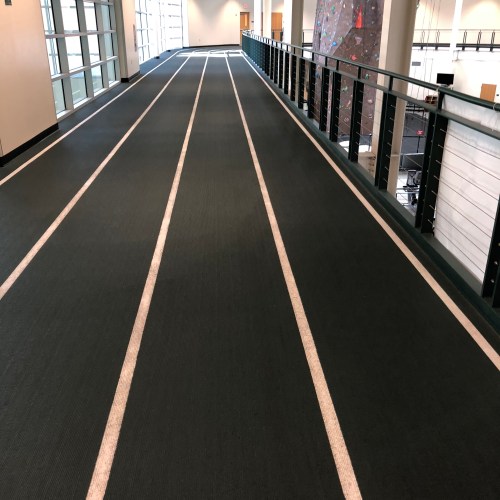
UNT’s running track at the rec center – sometimes brave is sweating in front of people 20 years your junior.
(photo courtesy of my coworker Debra)

Week 2 Progress:

Miles completed this week: 2.14 (out of 10 that I planned)
Total miles completed: 8.19 (6.81 behind schedule)
Days of proper hydration: 3/7
Days of good food choices: 4/7

Hmm.

I did not have a productive week as far as my mileage goal is concerned. I’m not sure why, but I have a few guesses.

It could be that I was on vacation, so my schedule was off-kilter (6/10 probability – this was the biggest difference between last week and this week).

It could be that I was writing about safety and, conversely, all the ways that running can put me in a not-safe situation, and that was enough to push what little desire I generally have to exercise off the ledge (3/10 probability – no remarkable spike in anxiety levels, which I would expect to accompany this reason).

It could be that I didn’t have time (1/10 – lol no – I stayed busy, but I had plenty of time to get 10 miles in if I’d made the effort).

The good news is that my water intake and healthy (and also delicious) food choices improved. I cooked more than usual, so eating well was easy.

Every time I take a holiday from work, I am more convinced that I will be excellent at being retired. I eat better, I rest better – I do everything better. I actually have time to take care of my life.

What I learned, therefore, from this week off is that I might need to reexamine my priorities and drop some things that keep me from doing better at the basic things that sustain my health (and thus life). I haven’t gone much farther in the thought process than just musing, “Hey, maybe I’m too busy,” but I guess that’s a start.


I’m spending 31 days running wild.


Read Full Post »

Not Friday Five

So it’s not Friday…but I’m almost caught up!

We have talked a lot about actions you can take to make yourself safer when you run, but here are five types of classes you can take or exercises you can do to stretch, strengthen, and protect yourself.

  • Pilates is helpful because it works your core. Every exercise, whether it is designed to stretch or strengthen (or both), relies on isometric core work. My favorite is still Winsor pilates. The 20-minute workout doesn’t take a lot of time, but try it a few times a week, and you’ll start noticing differences in your balance and endurance quickly.
  • Another good way to stretch and strengthen is to incorporate a regular yoga practice into your life. I like yoga because there is something for everyone. It’s also mentally soothing, which is a plus for most of us.
  • My inner ballerina loooves barre. In fact, the first Pure Barre class I took reminded me of ballet warm-ups. You know, if warm-ups lasted an hour and kinda made you want to throw up (in the best way possible, of course). Do not be fooled by the fact that most of the class takes place on the floor. This is the best strengthening workout I’ve ever done. Hydrate, though. Also, don’t eat before you go to your first class.
  • Kickboxing is a great way to work on your agility. It’s great for runners because it teaches your body how to use its strength in directed movement. As an added bonus, it lets you practice kicking which might come in handy if someday you need to take out an attacker’s knee. Just sayin’.
  • If you’re going to be out and about on your own (running or otherwise), it’s a good idea to have some basic self-defense moves under your belt. There are a lot of videos online, but I recommend taking classes so that you can practice and get feedback right away. I sort of want to take Krav Maga classes.

Tomorrow we wrap up safety week and start our discussion on rest.


I’m spending 31 days running wild.


Read Full Post »

photo (9)

My back porch is as close as I get to hanging outside by myself in the dark.

In planning this post, I had a confusing monologue running through my head: Running in the dark is okay. It’s completely your choice if you prefer it. But do not run in the dark. People are awful and you could die. I mean, you’re a grown person who makes your own choices, and it’s much cooler and less crowded, so run in the dark if you must. But also…don’t. It’s harder to see you and also there are fewer people to hear you scream when you’re attacked. It’s totally your right to run in the dark – why should you give up your freedom because of other people’s potential choices? Because see previous statement re: the terribleness of humans and, subsequently, their potential choices. So when you run in the dark, maybe just lie to me and tell me that you don’t. If you must run in the dark and also tell me about it because you enjoy seeing me cry, you forfeit all rights to be surprised if you get a lecture.

Clearly, I am conflicted on this issue.

Ideally, you could run anywhere at anytime wearing anything and be safe from the degrading behavior of other people. That is not often the reality of the world, though. So with the same intensity that I support your choice to run alone outside, I also worry that you’re going to do so and that bad things will happen to you when you do.

This series is about running wild, and part of that is about facing fears. Suzanne, you might be saying, isn’t running in the dark part of facing fear and blah blah blah. Yes…asterisk. It absolutely can be, and if that is how you are facing your fear, don’t let me stop you. And if you do run outside in the dark and get attacked, it is not your fault. In any way. At all. Period. Exercising your basic right to be out in the world is not an invitation for trouble. The responsibility for an attack lies 100% in the hands of the person who made the choice to perpetrate the attack.

I am not asking you to shoulder the responsibility of someone else’s decision. I am asking that you ponder the difference between brave and reckless and lean away from the reckless end of the spectrum.

For example, when you run in the dark, wear reflective clothing. It might seem like you are safer if no one can see you, but if drivers can’t see you, they might not stop in time to miss hitting you. And as I mentioned yesterday, take your phone.

And perhaps pepper spray.

Or a taser.

[Check the legality of things in your area before you carry them. It doesn’t help you to become a criminal while fending one off. /psa]

Everything you do to stay aware of your surroundings during the daylight? Multiply by two in the dark. This is a time to be at your most heightened attention.

Hypothetically speaking (because remember – we’re not telling me if you actually do run alone in the dark), what are some other tips you might have for night runners?


I’m spending 31 days running wild. 


Read Full Post »

photo 2 (1)

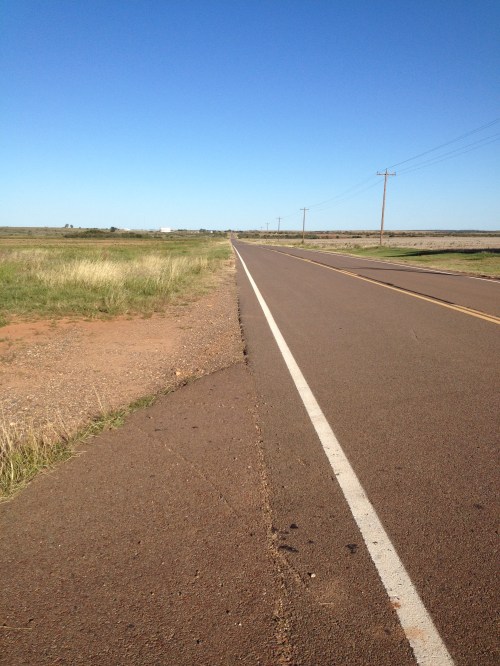
Road and sky

I love this view.

I love a long road stretched out before me so far that I can actually see its two sides meet on the horizon. I love the way the wind sweeps through, breaking on nothing.

I love the big, big sky.

I especially love that, with this view, I can see trouble coming from far off.

You may have a path designated for pedestrians that you run, but if you run on the road, there are a few safety precautions that help keep you safe.

First, take your phone. Just because you can see trouble doesn’t mean you can stop it, and you might need to call for backup. This, of course, is perhaps not as big a deal within the city limits where there are witnesses aplenty, but while strangers can be helpful, it’s not always wise to assume you can depend on it.

If you are running a path that is new to you, and you are going it alone, it’s a good idea to let someone know where you’re going to be. I’m not saying it has to be your overprotective friends that will call 911 if you are a minute later texting them that you’re home safe than they expected you to be. But maybe let the park ranger know if you’re hiking their most challenging trail by yourself.

Second, stay aware of traffic. A good way to do this is to run facing traffic. That is, on a two-way street, run on the left side. When you are facing the cars, you can not only hear them but you can see them without having to twist around.

Speaking of hearing your surroundings, it’s also a good idea to run without headphones. I know that sounds weird coming from a music lover, not to mention from someone who generally would not be described as outdoorsy, but hear me out. If I’m going to be outside, I’m going to make an effort to engage with the outdoors with all my senses. Otherwise, what’s the point? If I’m going to purposely distract myself from my surroundings, I might as well run on a treadmill in the relatively safe, temperature-controlled, bugless environment of the gym. In addition to keeping you in the moment, running with your full aural faculties also allows you to be more aware of your surroundings. You can hear what’s going on around you and give yourself more response time.

What are some other running rules of the road that you use?


I’m spending 31 days running wild.


Read Full Post »

Day 10 – Good Form

photo 1 (2)

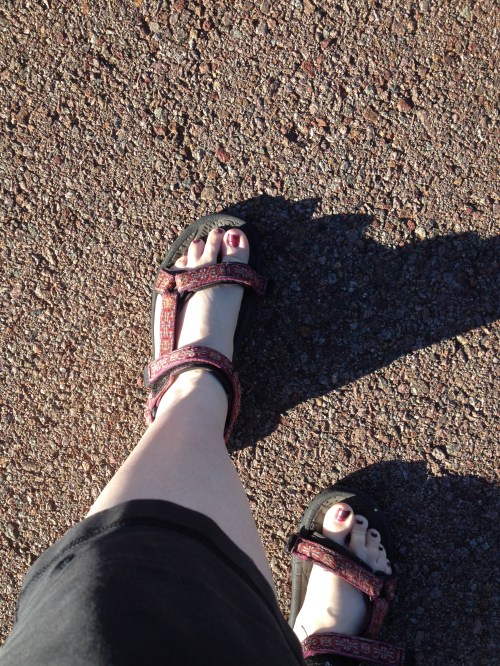
Posed during amphibious walk (thus the shoe choice. Do not run in these. /psa). When actually walking, view from the top should look more like right foot than left. Watch your knees!

Once you have the right gear, you are ready to hit the road safely. Sort of. First, let’s talk about form. How you run is just as important as how much and how often you run. When it comes to running safely, there are four main things to look out for – your alignment, your cadence, your foot strike, and your breathing.

Almost every aspect of good running form begins and ends with alignment. Alignment basically means that every body part stacks and lands where it’s supposed to during an activity. For those of you who are dancers, you know how vital proper alignment is not only to execute a move correctly but also to do so without hurting yourself. Running is no different. As in dancing, it starts with your core. Keep your stomach muscles engaged to protect your back and guide your hips. When your foot strikes the ground, everything should line up. The hips should be over the knee, and the knee should be over your foot.

Your arms can also help you with this. Arms should stay at a 90-degree angle by your side, and hands should be loose. Keep swinging arms by your side, and avoid crossing your arms in front (i.e., don’t cross the zipper line), because this can knock the rest of your body off course.

When runners decide they want to get faster, many will lengthen their stride. This is a mistake. Unless you have extraordinarily developed hip flexors (and let’s presume that, unless you are a pretty serious dancer or runner, you don’t), you are setting yourself up for injury. A safer and more effective way to increase your speed is simply by speeding up your cadence (total number of foot strikes per minute).

Some experts will say that it doesn’t matter how your foot hits the ground, but a heel strike inevitably slows down your cadence, because since you don’t push off with your heel, your foot then has to roll to a push-off position. If you strike and push in the same position, you can increase speed more easily.

Heel strikes also increase the chance of injury, especially for beginners or those with knee issues. Until running with proper alignment is second nature to you, you should avoid a heel strike. When you land on your heel, your hips tend to hang back to prevent you from falling, which means that your hips, knees, and foot aren’t aligned when your foot strikes the ground. I can personally attest that a heel strike makes it super easy to hyper-extend your knee.

Practice running barefoot through grass to get used to a natural heel strike. You’ll probably notice that in this natural state, your body doesn’t land on the heel or, if it happens to, it doesn’t feel good. That’s not an accident. Listen to your body. It knows what works best for it.

Finally, remember to breathe. Of course, breathing is important to keep your body fueled with the oxygen it needs. But how you breathe is important, too. Many experts, including my junior high running coach, suggest inhaling for three steps and exhaling for two. This pattern is not arbitrary. Remember those core muscles that keep your body aligned? When you exhale, your diaphragm relaxes, and so do the core muscles surrounding it. When this happens, other muscle groups in action will compensate for the lost support. By inhaling for an odd number of steps and exhaling for an even number, you alternate the side of your body that’s compensating for that initial exhalation release. This spreads the work evenly and helps prevent injury that might occur if one side gets overworked.

In the next post, we will talk about what to do when you’re out on the road to keep yourself safe.


I’m spending 31 days running wild. 


Read Full Post »

« Newer Posts - Older Posts »